
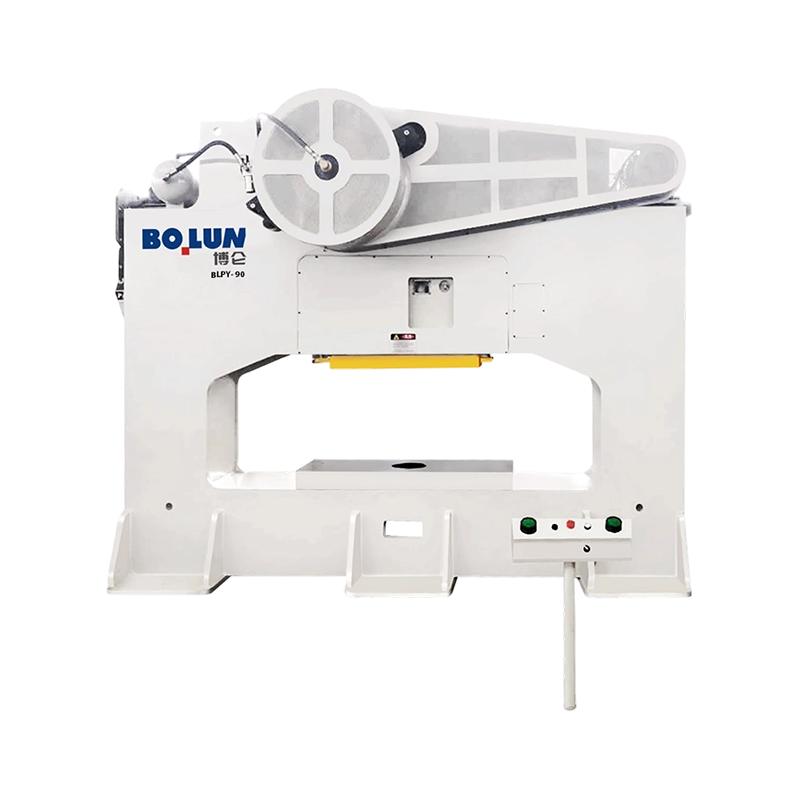


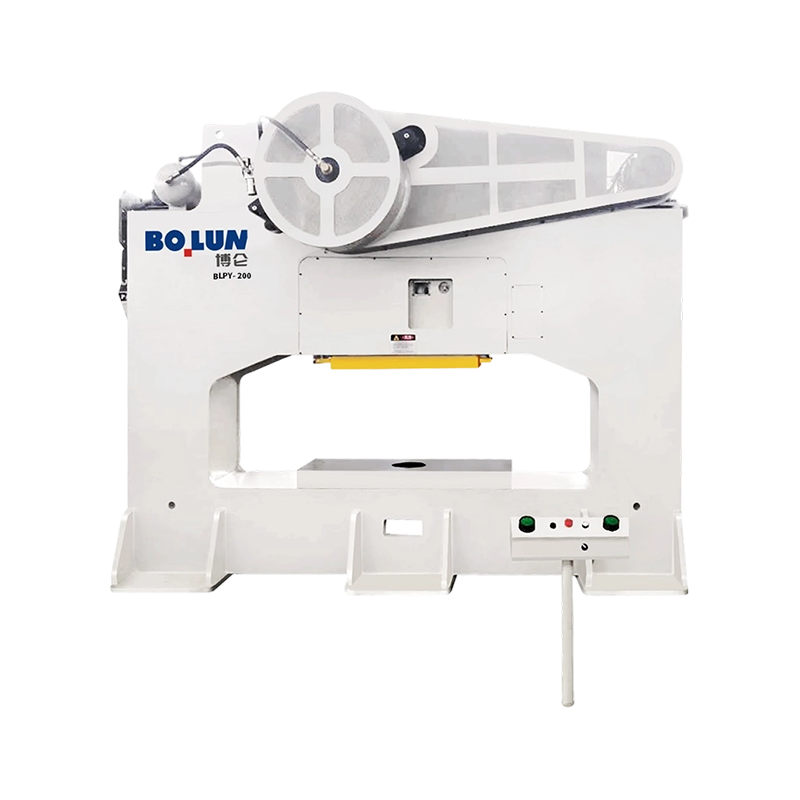
The Bolun Closed-Type Single-Point Wide-Door Power Press is engineered for manufacturers who demand absolute structural integrity and high-precision performance under heavy-duty loads. Combining the legendary stability of an H-frame design with the operational flexibility of wide side-access windows, this press is the ultimate choice for automotive, appliance, and heavy industrial stamping.
Ultra-Rigid H-Frame Construction
The defining feature of this series is its closed-type H-frame structure. Unlike standard C-frame presses, the symmetrical box-type design virtually eliminates "angular deflection" or frame opening during high-tonnage impacts. This ensures that the punch and die remain in perfect vertical alignment, significantly extending tooling life and maintaining micron-level part consistency, even when processing high-strength alloys or thick materials exceeding 3.2mm.
Wide-Door Design for Automation Integration
The "Wide-Door" or wide-side-opening configuration provides a strategic advantage for modern production lines. These spacious side windows allow for effortless integration of automated transfer systems, robotic arms, and complex coil-feeding mechanisms. Furthermore, the wide-door design simplifies tool maintenance and die-change operations, drastically reducing downtime in high-frequency production environments.
High-Torque Transmission and Core Excellence
Inside the machine, Bolun’s commitment to quality is evident. The press features a forged 42CrMo alloy steel crankshaft and premium CuSn12 tin bronze bushings, providing a transmission system that is both smooth and incredibly durable. Equipped with a high-performance pneumatic friction clutch and a precision brake unit, the press offers rapid response and reliable single or continuous strokes.
Intelligence and Safety
Safety and precision are managed by a sophisticated PLC-based control system with a high-resolution HMI. Every unit includes a hydraulic overload protector to safeguard the machine from tonnage spikes and a dual solenoid safety valve to prevent accidental strokes. Whether you are performing deep drawing, heavy blanking, or multi-stage stamping, the Bolun Wide-Door Press provides the rigid foundation and digital intelligence required for the next generation of smart manufacturing.
Bolun Machinery: Uncompromising Rigidity, Unmatched Accessibility.
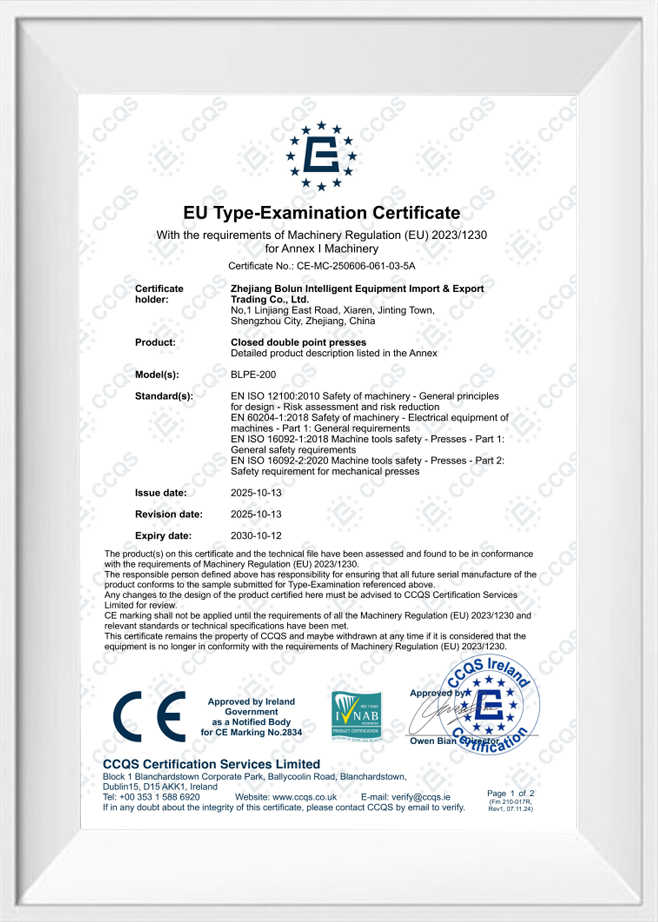
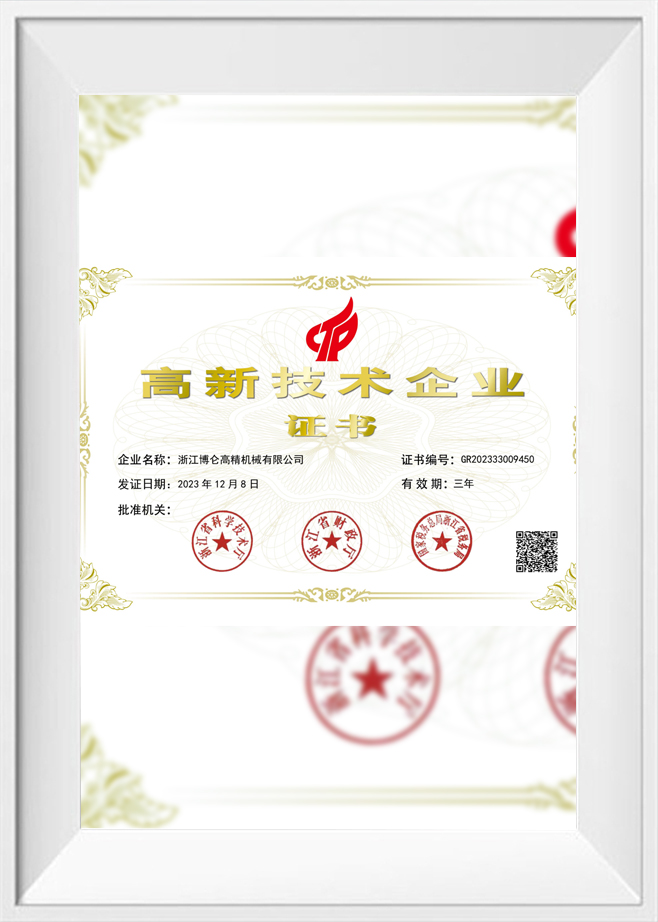
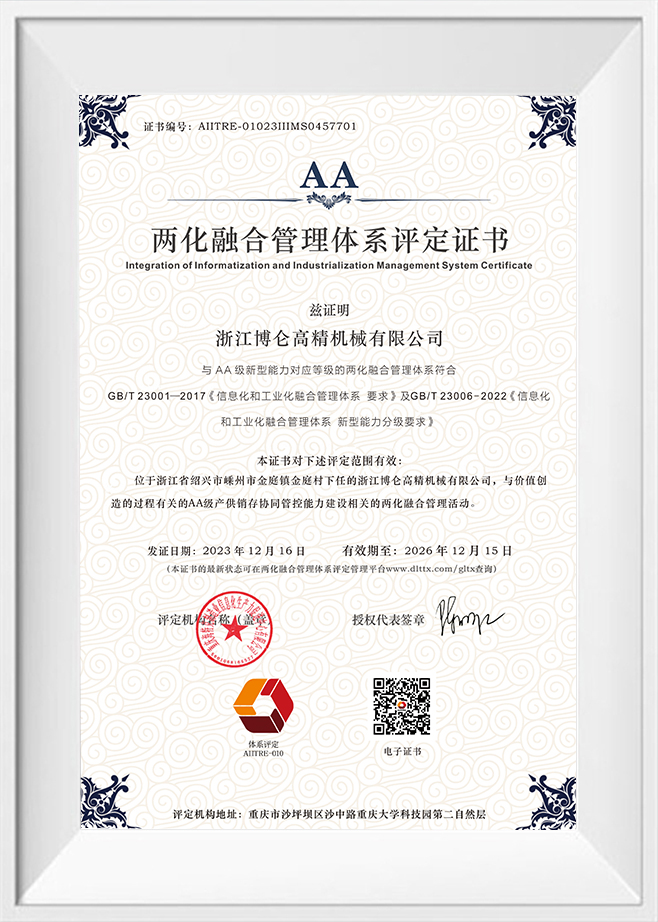
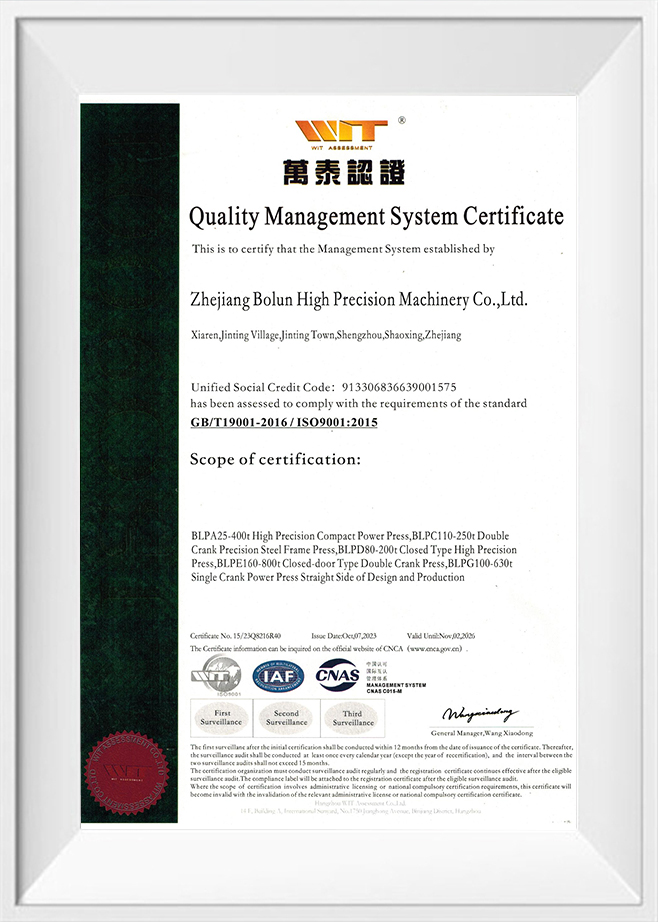
As China Closed-Type Single-Point Wide-Door Power Press Manufacturers and Closed-Type Single-Point Wide-Door Power Press Suppliers, Zhejiang Bolun High-Precision Machinery Co., Ltd. is located in Zhejiang, the heart of China’s precision manufacturing. With two decades of deep roots in the machinery manufacturing industry, the company has leveraged profound industry accumulation and technical breakthroughs to evolve into a modern, leading enterprise in high-precision forming equipment. We integrate R&D, design, production, sales, and service. From our early days of persevering through challenges to our current leadership in the fields of forging and casting machinery, Bolun Machinery has established a professional, mature, and efficient production management system. We are dedicated to providing global customers with superior industrial machine tool solutions.
 More About Us
BOLUN
More About Us
BOLUN

0+
years
Industry Experience

0+
Units Produced (Previous Year)

0+
Number of Employees

0+
$
Million Annual Output Value

Put a 160-ton open-frame press and a 160-ton closed-frame press side by side and the difference is visible from thirty feet away. One leaves the die area open on three sides so an operator can slide a wide blank in by hand; the other wraps the same die inside a box of stress-relieved steel that barely flexes at full l...
Start With the Purchase Decision, Not the Definitions A procurement engineer comparing a 200-ton hydraulic press quote with a 200-ton mechanical power press quote often finds two different machines, two different cost structures, and two different production promises, even when the tonnage number is identical. That ha...
A tooling engineer quotes a new bracket program and specifies a 160-ton press. The die is built, the machine is installed, and on the first production run the slide stalls six millimetres above bottom dead centre. Nothing is broken. The tonnage was rated at the bottom of the stroke, and the work is being done higher u...
In high-capacity automated production lines, the transition of materials between stamping stages requires rapid lateral movement. A closed-type single-point wide-door power press addresses this logistical need by incorporating wide side openings directly into the vertical pillars or uprights of the frame. These openings, commonly referred to as side doors, allow automated transfer arms, coil feeders, and scrap conveyor belts to pass through the sides of the press structure rather than relying solely on the front and rear access points. This access is crucial for progressive and transfer dies that process wide sheet metal coils or require heavy-duty scrap evacuation systems on either side of the bolster bed. However, cutting large windows into the load-bearing columns of a press frame alters the direct vertical path of the stamping forces, requiring specialized engineering adjustments to ensure that the overall stability of the machine remains intact under peak tonnage loads.
The main challenge of incorporating wide side doors is managing how the vertical and torsional stresses distribute themselves around the cutout areas. In a standard solid-column closed press, the stamping force travels downward through the uprights in a uniform, linear path. Introducing a side opening creates stress concentration points at the corners of the window, where the structural metal is forced to redirect the load. If the structural layout is not compensated with additional material and reinforcing geometries, these side-door cutouts can become bending points, leading to elastic frame deflection during high-tonnage impacts. Consequently, structural designers must utilize finite element analysis to determine exactly how to redistribute the cross-sectional mass of the columns around these window cutouts.
To prevent the side-door openings from compromising the overall frame rigidity, engineers modify the geometry of the vertical columns to compensate for the lost material. Instead of a simple flat plate column, the uprights of a closed-type single-point wide-door power press are fabricated with heavy-duty box-type structures. This box configuration utilizes internal diagonal ribbing and thick flange plates that encase the perimeter of the side openings. By increasing the thickness of the steel surrounding the cutout, the moment of inertia of the column is kept equivalent to, or greater than, that of a solid column without side access. This structural optimization ensures that the vertical stiffness of the uprights remains high, keeping frame elongation to a minimum when the press delivers its full tonnage.
Additionally, the corners of the wide-door openings are engineered with generous radii rather than sharp ninety-degree joints. Sharp corners act as stress multipliers, concentrating the tension and compression forces into a localized spot, which can lead to micro-fractures over millions of operating cycles. Using large curved fillets at the top and bottom of the side-door windows allows the operational stresses to flow smoothly around the cutout, distributing the structural load over a larger steel surface area. Zhejiang Bolun High-Precision Machinery Co., Ltd. incorporates these curved stress-distribution profiles and reinforced box weldments to ensure that the physical columns maintain high torsional and vertical rigidity during continuous high-impact cycles.
The structural response of a press frame varies significantly depending on the design of the column profiles and the reinforcement techniques applied to the window cutouts. The table below compares the deflection characteristics of different column structures under full vertical load.
| Column Structure Design | Door Opening Width (mm) | Cross-Sectional Steel Thickness (mm) | Average Stress Concentration Factor (Kt) | Vertical Elastic Deflection (mm/m) | Torsional Resistance Rating (kNm/rad) |
|---|---|---|---|---|---|
| Solid Column (Standard Closed Frame) | None | 45 | 1.0 | 0.035 to 0.045 | High |
| Unreinforced Wide-Door Column | 650 | 45 | 2.4 | 0.085 to 0.110 | Low |
| Reinforced Box-Type Wide-Door | 650 | 65 | 1.3 | 0.040 to 0.050 | High |
| Heavy-Flange Pre-Stressed Column | 800 | 80 | 1.1 | 0.030 to 0.040 | High |
As shown by this comparison, an unreinforced opening substantially increases both the stress concentration factor and the vertical deflection rate. However, by upgrading to a reinforced box-type or heavy-flange design, the deflection of the wide-door frame can be restored to a level that closely matches the performance of a solid column. This data demonstrates that wide side-door openings do not compromise the machine's structural limits if the surrounding frame is engineered with adequate plate thickness and appropriate cross-sectional geometry.
The primary concern with any structural deflection is its indirect effect on the slide guiding system. If the columns of a closed-type single-point wide-door power press flex or twist during a forming stroke, the guide rails attached to the inside of those columns will shift out of vertical alignment. This misalignment causes the slide to tilt, which alters the clearances of the cutting tools and leads to uneven burrs on the finished parts. To prevent this, the guide rails must be mounted on reinforced structural sections of the uprights that are isolated from the bending stresses of the side openings.
By using extended, full-length adjustable eight-point guiding gibs, the press restricts any lateral movement of the slide assembly. The mounting surfaces for these guides are machined in a single setup after the entire welded frame has undergone thermal stress relief. Bolun Machinery emphasizes these rigorous thermal treatment and precision machining processes to ensure that the guide gib surfaces remain parallel even when the main pillars experience cyclic loading. This alignment stability keeps the tool entry path perpendicular, safeguarding sensitive progressive dies and ensuring consistent part quality over years of production.
The durability of a wide-door press frame under continuous dynamic loading depends heavily on the quality of its manufacturing and assembly phases. The frames are fabricated from high-tensile steel plates that undergo double-sided full-penetration welding to form the box uprights and corner reinforcing gussets. Once welding is complete, the entire frame structure must undergo a comprehensive thermal annealing process. This heating cycle eliminates the residual localized stresses left behind by the high temperatures of the welding arcs, which would otherwise cause the frame to slowly warp or distort during its first few years of active service.
Stabilizing the internal grain structure of the steel through thermal annealing prevents the columns from shifting, ensuring that the critical clearances around the side-door openings remain consistent. This fabrication step is vital for wide-door configurations, as any post-manufacturing warping would directly misalign the automated feed mechanisms that pass through the side openings. By pairing heavy-duty box reinforcement with thorough stress-relieving procedures, industrial manufacturers can safely implement wide side-door presses to achieve high-speed automated throughput without sacrificing the structural rigidity and accuracy of their forming lines.
Q: How do the wide side-door openings on the pillars of this press maintain structural rigidity under full tonnage loads?
A: Zhejiang Bolun High-Precision Machinery Co., Ltd. designs these columns with heavy-duty box-type structures featuring internal diagonal ribbing and extra-thick flange plates around the door perimeters. This specialized geometry, combined with generous radii at the opening corners, successfully redistributes the stamping forces and prevents stress concentrations, maintaining a high level of vertical and torsional stiffness.
Q: Can the wide-door configuration support automated transfer systems and high-speed coil feeding through the sides of the press?
A: Yes, the primary purpose of the wide side-door design is to facilitate seamless lateral material flow. The generous clearances in the pillars allow transfer arms, robotic feeders, and scrap conveyors to pass directly through the side of the closed-type single-point wide-door power press, which is ideal for fully integrated and automated progressive production lines.
Q: How does Bolun Machinery ensure the guide rails remain perfectly aligned if the columns experience cyclic load deflection?
A: The adjustable eight-point guiding gibs are mounted on reinforced structural sections of the uprights that are isolated from the bending stresses of the side openings. Furthermore, the entire frame undergoes complete thermal stress-annealing before the guide surfaces are machined, ensuring the slide travels on a strictly vertical and parallel path over years of continuous operation.
Q: What measures prevent the heavy welded steel frame from warping or shifting over long-term 24/7 production cycles?
A: After fabrication, the entire wide-door frame structure undergoes a rigorous thermal stress-relieving process in our advanced production facility. This annealing cycle eliminates localized residual welding stresses, ensuring the physical frame remains permanently stable and preventing any dimensional drift that could misalign the press or the automated feeding devices.
Q: Is it possible to customize the side-door window dimensions to fit our specific automated handling equipment?
A: Yes, we utilize our robust R&D and engineering capabilities to customize the width, height, and position of the pillar openings. Our engineering team conducts individual structural and finite element analyses on every custom modification to ensure that the altered column design continues to meet your required rigidity and accuracy standards.
Contact Us

+86-575-83362228

+86-13735238388

+86-575-83362999

+86-15158259588

Hangzhou Office Add: No. 332 Wangjiang East Road, Shangcheng District

No.1 Linjiang Road East, Xiaren, Jinting Town, Shengzhou City, Zhejiang Province, China
Ready to Begin?
Get in Touch

Now!

ZHEJIANG BOLUN
 English
 中文简体
中文简体