
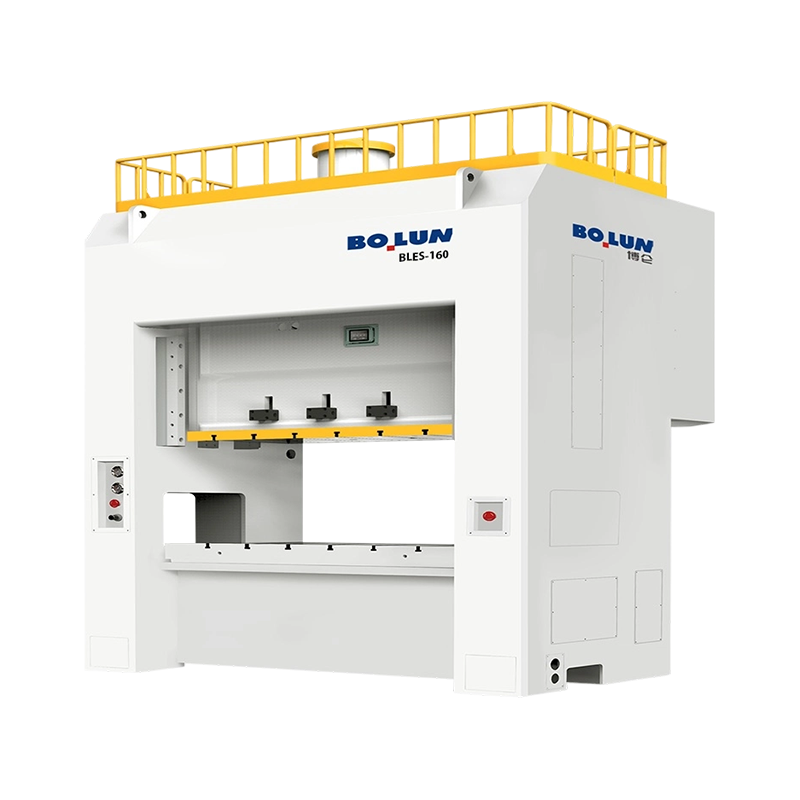


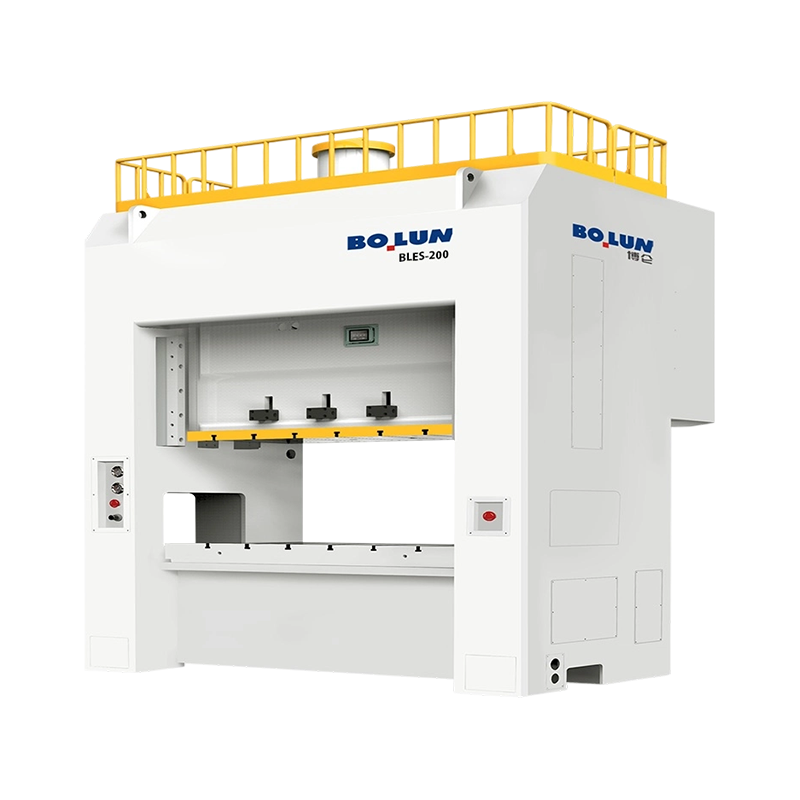
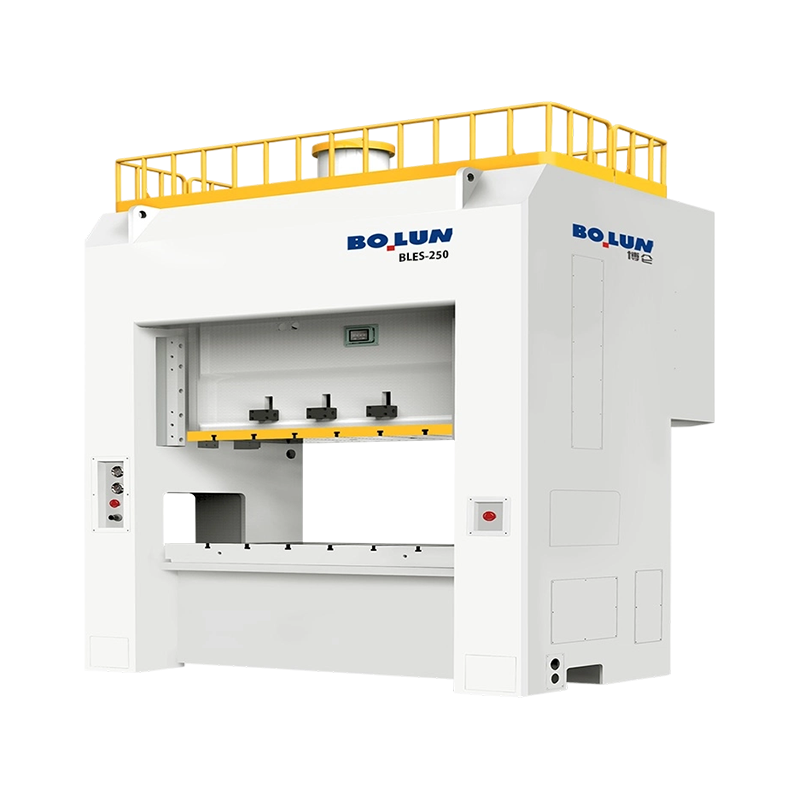
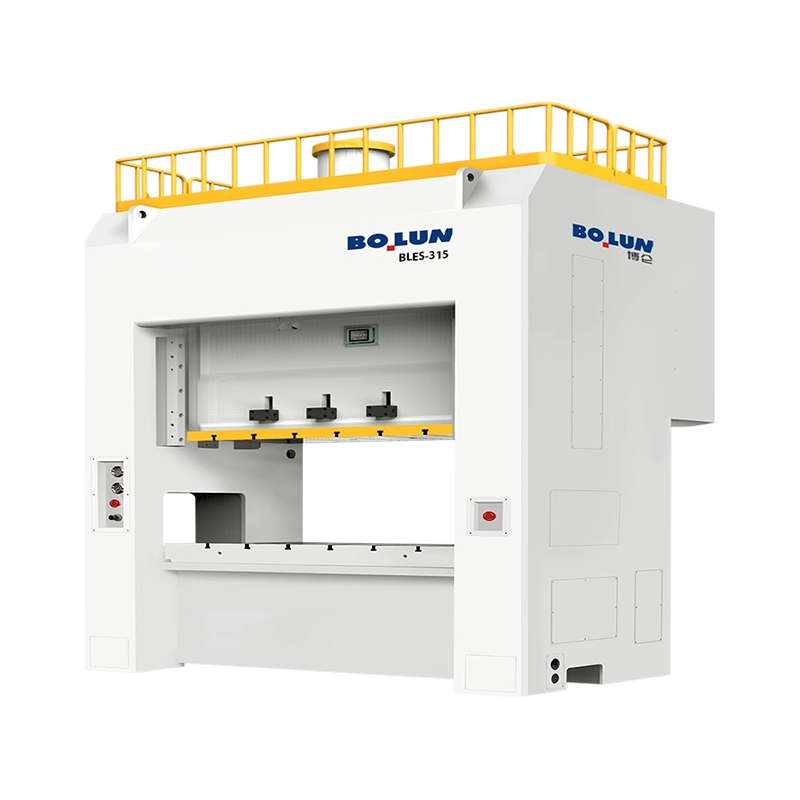
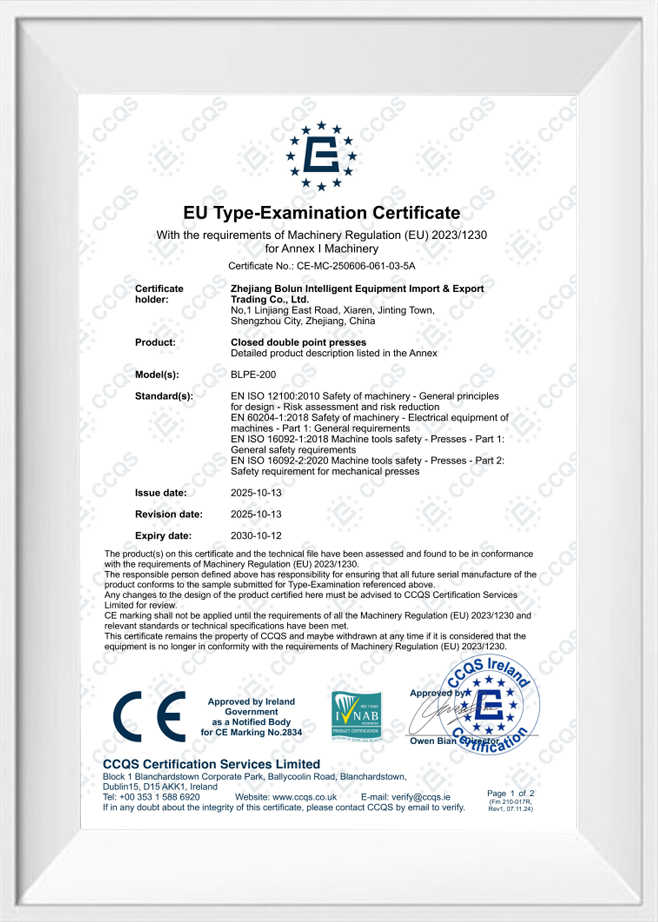
The Bolun Closed-Frame Double-Point Servo Power Press represents the pinnacle of modern metal forming technology. By fusing the extreme structural integrity of a symmetrical H-frame with the limitless flexibility of digital servo-drive systems, this machine is engineered for manufacturers who refuse to compromise on precision, speed, or tool longevity.
Unmatched Structural Rigidity (Zero-Deflection)
The defining feature of this press is its closed-type H-frame construction. This heavy-duty, stress-relieved steel structure virtually eliminates "angular opening" and frame deflection under maximum tonnage. For processing high-strength alloys or materials exceeding 3.2mm, this zero-deflection environment ensures perfect vertical alignment between the punch and die, resulting in micron-level repeatability and a massive reduction in tool wear.
Programmable Servo Motion Profiles
Driven by a high-torque dedicated servo motor, the slide motion is fully programmable via a sophisticated HMI. Users can select from specialized motion curves—such as pendulum, link-motion, or "soft-touch"—to optimize metal flow and minimize material spring-back. This programmable control allows for the production of complex part geometries with superior surface finishes, making it the ideal solution for high-end automotive sensors, electronics, and aerospace components.
Double-Point Stability for Eccentric Loads
The double-crankshaft drive system provides exceptional resistance to eccentric (off-center) loading. When utilizing wide progressive dies or multi-station transfer tooling, the dual-point synchronized force ensures the slide remains perfectly parallel to the bolster. This stability is critical for preventing uneven thickness and maintaining the integrity of delicate part features across a large workspace.
Sustainable and Intelligent Manufacturing
Our servo technology captures energy during deceleration and recycles it, reducing electrical consumption by up to 50% compared to traditional presses. With no pneumatic clutch to maintain and a PLC-based smart control system that supports seamless "handshaking" with NC servo feeders and robotic transfer arms, the Bolun Closed-Frame Double-Point Servo Press is the definitive cornerstone for any fully automated, eco-friendly smart factory.
Bolun Servo Solutions: Where Uncompromising Rigidity Meets Infinite Flexibility.
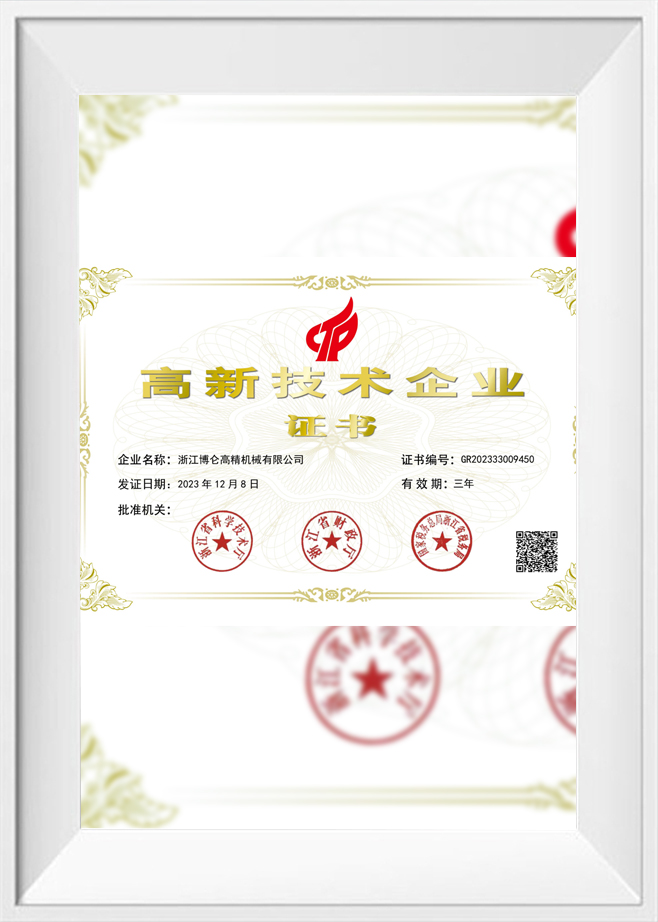
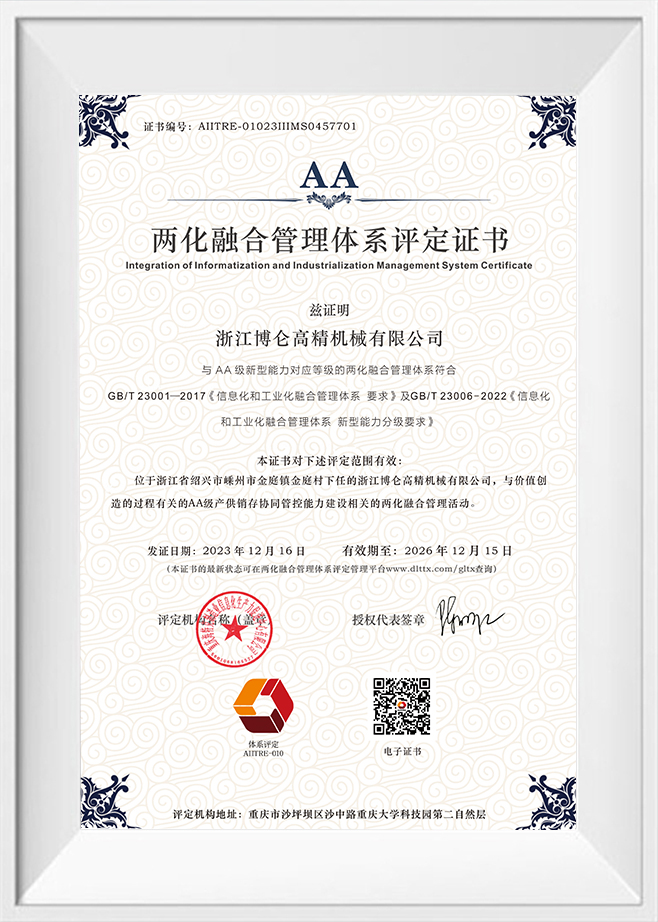
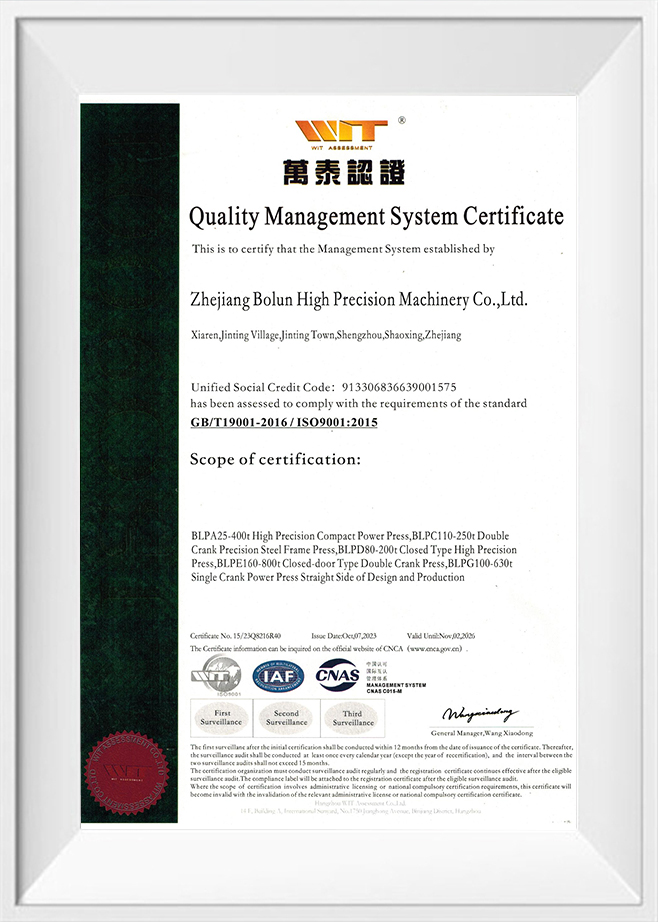
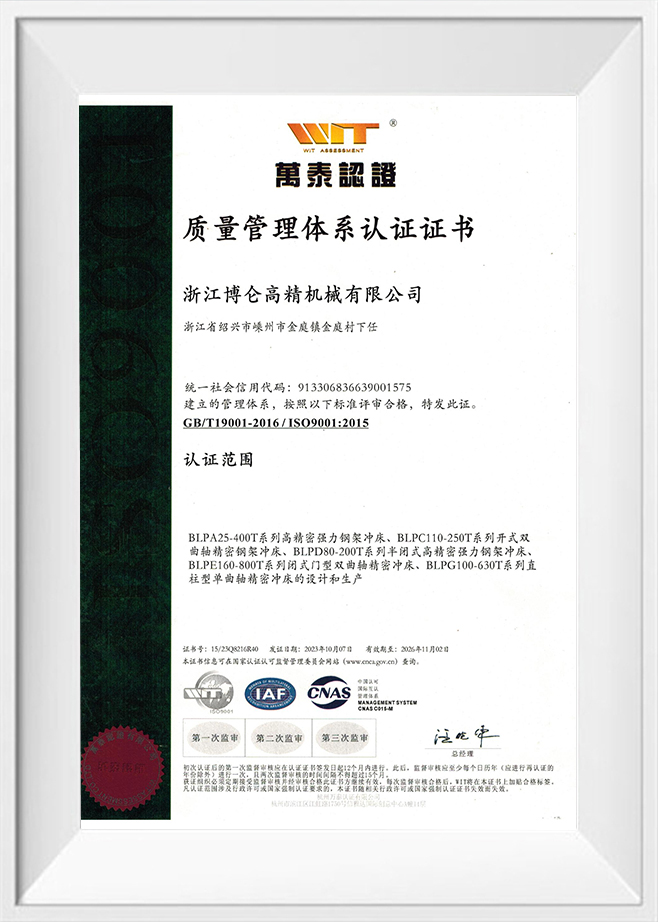
As China Closed-Frame Double-Point Servo Power Press Manufacturers and Closed-Frame Double-Point Servo Power Press Suppliers, Zhejiang Bolun High-Precision Machinery Co., Ltd. is located in Zhejiang, the heart of China’s precision manufacturing. With two decades of deep roots in the machinery manufacturing industry, the company has leveraged profound industry accumulation and technical breakthroughs to evolve into a modern, leading enterprise in high-precision forming equipment. We integrate R&D, design, production, sales, and service. From our early days of persevering through challenges to our current leadership in the fields of forging and casting machinery, Bolun Machinery has established a professional, mature, and efficient production management system. We are dedicated to providing global customers with superior industrial machine tool solutions.
 More About Us
BOLUN
More About Us
BOLUN

0+
years
Industry Experience

0+
Units Produced (Previous Year)

0+
Number of Employees

0+
$
Million Annual Output Value

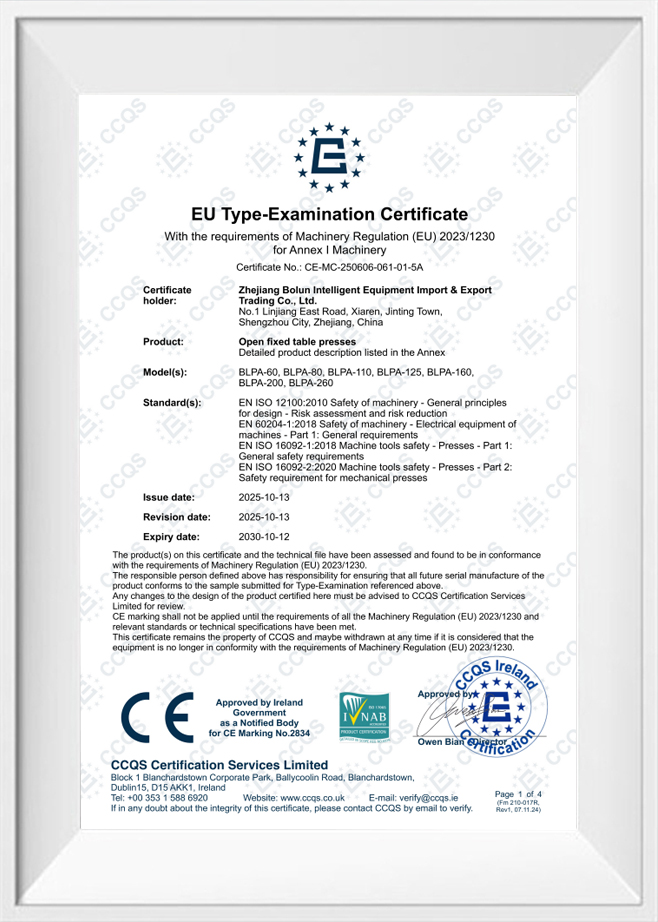
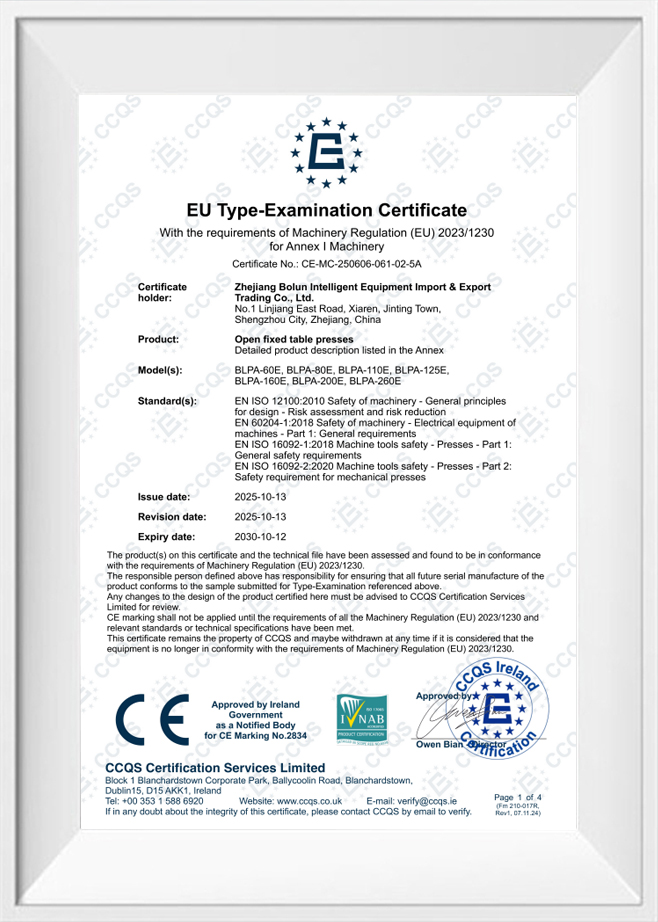
Put a 160-ton open-frame press and a 160-ton closed-frame press side by side and the difference is visible from thirty feet away. One leaves the die area open on three sides so an operator can slide a wide blank in by hand; the other wraps the same die inside a box of stress-relieved steel that barely flexes at full l...
Start With the Purchase Decision, Not the Definitions A procurement engineer comparing a 200-ton hydraulic press quote with a 200-ton mechanical power press quote often finds two different machines, two different cost structures, and two different production promises, even when the tonnage number is identical. That ha...
A tooling engineer quotes a new bracket program and specifies a 160-ton press. The die is built, the machine is installed, and on the first production run the slide stalls six millimetres above bottom dead centre. Nothing is broken. The tonnage was rated at the bottom of the stroke, and the work is being done higher u...
In high-capacity metal forming, a closed-frame double-point servo power press relies on high-torque, low-inertia motors to achieve programmable slide profiles. Unlike standard mechanical presses that run continuous flywheels at relatively constant speeds, a servo-driven press dynamically changes its rotational velocity within each cycle. During high strokes-per-minute (SPM) operations, the main drive motor must rapidly accelerate, decelerate, and sometimes reverse direction. This constant fluctuation in speed and rotational force demands high electric current spikes, which generate resistive heat inside the motor windings. Similarly, when performing a Bottom Dead Center (BDC) dwell—where the slide holds full pressure at the bottom of its stroke to reduce material springback—the motor is subjected to heavy current loads while static. Because the motor shaft is not rotating during a dwell, it lacks the self-cooling benefits of rotational airflow, causing heat to build up rapidly in the localized coils of the stator.
If this thermal energy is not actively managed, the temperature rise can degrade the insulation of the motor windings, reducing the service life of the drive system and potentially causing unexpected downtime. Furthermore, excessive heat can transfer through the shaft to the main gear train and the press frame, causing localized thermal expansion that alters the tight geometric clearances of the slide guide rails. Managing this thermal output is essential for keeping the machine within its designed accuracy limits and ensuring repeatable forming quality across long, continuous production runs.
To dissipate the heat generated during rapid cycles and prolonged holding pressures, modern servo motors are built with integrated liquid cooling jackets. A closed-loop cooling system circulates a mixture of water and anti-corrosion additives directly through precision-machined channels wrapped around the stator housing. This fluid carries the heat away from the motor coils to an external chiller unit, where the thermal energy is transferred to the ambient air. To ensure consistent performance, the system is monitored by real-time thermal sensors, such as PT100 platinum resistance temperature detectors, embedded in the stator windings and bearing blocks. This setup allows the central controller to adjust the flow rate of the cooling liquid dynamically based on the actual thermal load of the press cycle.
In addition to monitoring the coolant fluid, the physical structure of the drive unit is isolated to limit heat transfer to the rest of the machinery. Zhejiang Bolun High-Precision Machinery Co., Ltd. builds robust mounting interfaces that reduce the thermal conduction path between the high-torque motor and the main gear crown. By combining active fluid cooling with structural isolation, the machinery prevents localized heat zones from expanding the side uprights of the closed-frame, ensuring that the critical slide-to-bolster parallelism remains stable even when the press is run at high capacities for multiple shifts.
A significant portion of the motor's heat generation occurs during the deceleration phase of the slide stroke. Rather than using mechanical brakes that convert kinetic energy into friction heat, a closed-frame double-point servo power press utilizes regenerative braking. When the slide slows down, the servo motor acts as a generator, converting the mechanical momentum of the slide and upper die into electrical energy. Instead of dissipating this electricity through resistive grids that create more heat inside the press crown, modern control cabinets use regenerative drive modules to feed this electrical energy back into the factory grid or store it in localized capacitor banks for use during the next acceleration cycle.
This energy recovery system serves a dual purpose: it reduces the overall electrical consumption of the stamping line and limits the thermal load on the motor. By capturing the kinetic energy instead of turning it into waste heat, the drive system experiences lower thermal stress, which helps stabilize the temperature of the internal electronics and winding coils. By managing the electrical energy flow in this manner, the system supports stable high-frequency operations without overloading the cooling system.
The efficiency of thermal management is directly related to the coolant type, flow velocity, and system capacity. The table below compares typical temperature rises and energy recovery rates under different operational setups during continuous high-SPM runs.
| Cooling Method Type | Operational SPM Range | Typical Stator Temp Rise (deg C) | Max Permissible Dwell Time (s) | Regenerative Efficiency (%) | Cooling System Power (kW) |
|---|---|---|---|---|---|
| Forced Air Fan Cooling | 30 to 60 SPM | 45 to 55 | 1.5 to 2.5 | 40 to 50 | 1.5 |
| Standard Liquid Jacket | 60 to 120 SPM | 22 to 32 | 4.0 to 6.0 | 75 to 82 | 4.5 |
| High-Flow Closed Chiller | 120 to 180 SPM | 12 to 18 | 8.0 to 12.0 | 85 to 92 | 7.5 |
| Dual-Phase Evaporative | Over 180 SPM | 8 to 12 | Over 15.0 | 90 to 95 | 11.0 |
This comparison indicates that standard air cooling is typically insufficient for the demanding cycles of modern servo presses, especially when BDC dwelling is required. Implementing high-flow closed-loop liquid systems allows manufacturers to run long dwell times without risking motor overheating, keeping the thermal expansion of the drive system within safe limits while maximizing energy recovery rates.
To reduce the physical workload on the servo motor during continuous cycles, pneumatic counterbalance cylinders are integrated into the slide assembly. These cylinders exert an adjustable upward force that balances the heavy weight of the slide and the upper tooling. By adjusting the air pressure within the cylinders, the motor is relieved of the static gravitational load of the heavy reciprocating parts. This load reduction is helpful during both high-SPM runs and BDC dwelling operations, as the motor does not need to use continuous electrical current just to hold the physical weight of the slide against gravity.
With the gravity load neutralised, the motor can dedicate its torque capacity entirely to the acceleration and deceleration phases of the stroke. This balance reduces the average current draw during the dwell period, lowering the thermal output of the motor. Bolun Machinery coordinates the control of these pneumatic counterbalancers with the servo programming, ensuring that the upward tension is dynamically balanced to match the weight of the active tool set, which prevents unnecessary heating of the drive train and prolongs the life of the internal bearings.
Since thermal shifts can still occur in extreme working environments, the press frame must be structurally designed to resist warping from minor temperature variations. The closed-frame structure is manufactured from thick, high-tensile steel weldments that undergo rigorous thermal stress-annealing. This heat treatment stabilizes the internal metal structure, ensuring that any residual manufacturing stresses are fully relieved. By creating a structurally stable body, the press frame resists distortion from ambient or operational temperature changes, keeping the dual-point slide guide paths in line and preventing geometric inaccuracies in the stamped parts over long operational lifetimes.
Q: How does your closed-frame double-point servo power press manage motor heat during continuous high-SPM runs?
A: Zhejiang Bolun High-Precision Machinery Co., Ltd. integrates high-flow liquid cooling jackets directly around the high-torque servo motor stators. This active closed-loop system, monitored by embedded thermal sensors, continuously extracts heat generated by rapid deceleration and acceleration cycles, protecting winding insulation and ensuring consistent thermal stability.
Q: Why does the slide remain perfectly parallel during off-center loading on a double-point servo press compared to single-point machines?
A: The closed-frame double-point servo power press utilizes two synchronized connection points driven by high-rigidity gear linkages, which distribute the vertical loads evenly over a wider bolster area. Supported by extended, full-length eight-point gib guides, this setup physically restricts slide tilting and horizontal drift even under asymmetrical drawing pressures.
Q: Does holding a long BDC dwell to prevent material springback risk overheating the press drive motor?
A: No, because the press is equipped with adjustable pneumatic counterbalance cylinders that support the static gravitational weight of the slide and upper die. By neutralizing this physical load, the servo motor requires minimal electrical holding current during Bottom Dead Center (BDC) dwells, significantly reducing heat buildup while holding full tonnage.
Q: What energy-saving benefits does the regenerative braking system provide during continuous high-speed stamping?
A: During the deceleration phase of every stroke, the servo motor acts as a generator to capture kinetic energy. Our advanced power management system converts this momentum into electrical energy and feeds it back into the factory power grid or capacitor banks, rather than dissipating it as waste heat within the press crown.
Q: How does Bolun Machinery ensure that the heavy closed-frame box structure maintains its alignment over millions of high-impact servo cycles?
A: Our production management system subjects every thick, high-tensile welded steel frame to comprehensive thermal stress-annealing. This rigorous process eliminates all residual manufacturing stresses, preventing structural warping or dimensional drift under the continuous mechanical impact of fast, programmable servo motion profiles.
Contact Us

+86-575-83362228

+86-13735238388

+86-575-83362999

+86-15158259588

Hangzhou Office Add: No. 332 Wangjiang East Road, Shangcheng District

No.1 Linjiang Road East, Xiaren, Jinting Town, Shengzhou City, Zhejiang Province, China
Ready to Begin?
Get in Touch

Now!

ZHEJIANG BOLUN
 English
 中文简体
中文简体