
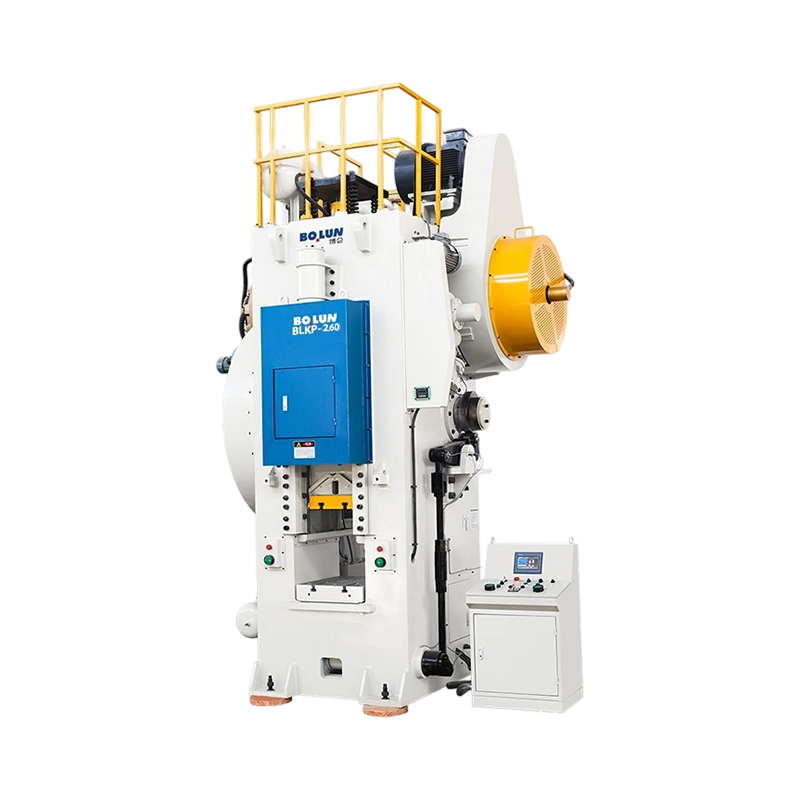


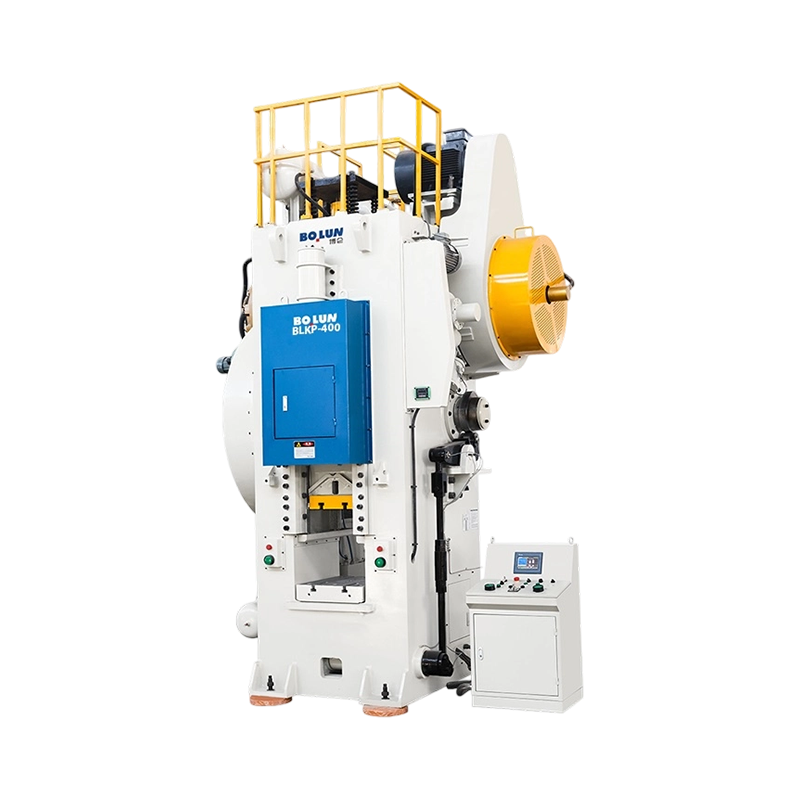
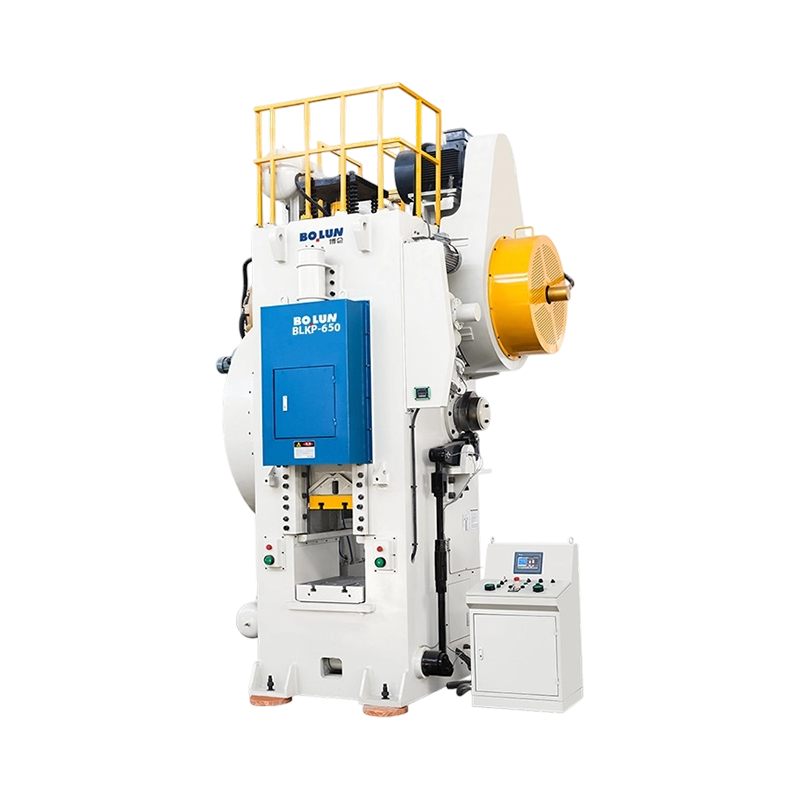
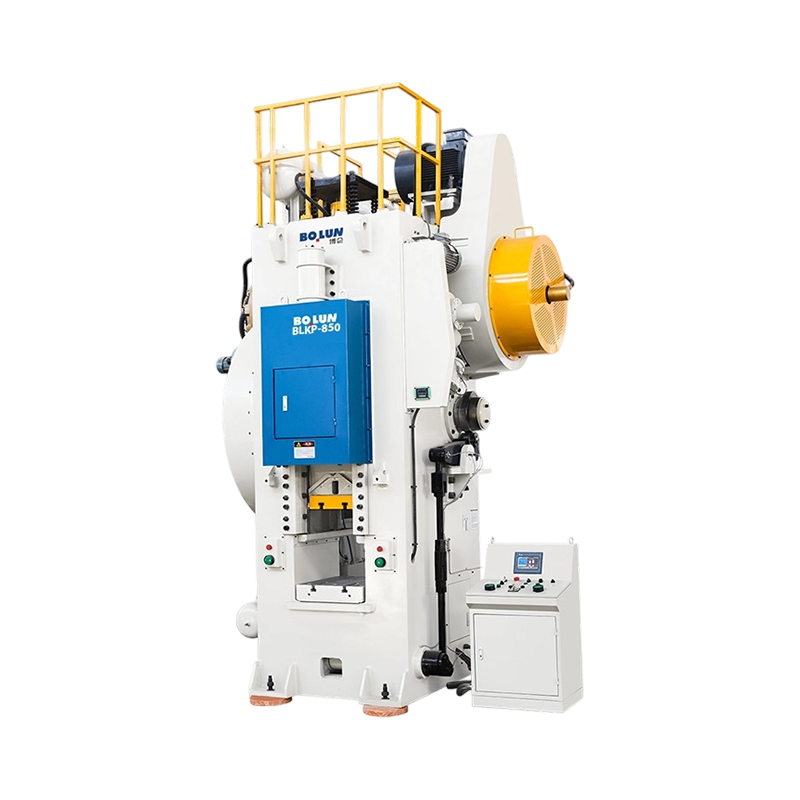
The Bolun Cold Forging Toggle Type Power Press is a premier engineering solution designed for the most demanding cold extrusion and near-net-shape forming applications. By utilizing a specialized toggle (knuckle-joint) mechanism instead of a standard crank drive, this press delivers the extreme tonnage and specific kinematics required to flow metal in a cold state with unmatched accuracy and surface finish.
Optimized Kinematics for Cold Forging
The defining advantage of the toggle-type design is its unique slide velocity profile. As the slide approaches the Bottom Dead Center (BDC), the mechanical advantage of the toggle links increases exponentially while the slide speed slows down significantly. This "dwell" effect provides a longer duration of peak pressure, allowing for better material flow into complex die cavities and a massive reduction in material spring-back. This is essential for producing high-precision automotive shafts, gear blanks, and heavy-duty fasteners.
Enhanced Tool Life and Impact Reduction
Cold forging involves immense resistance. The Bolun Toggle Press minimizes the initial impact speed when the punch contacts the workpiece. This "soft-touch" characteristic significantly reduces the shock loads transmitted to your high-cost carbide dies, extending tooling life by up to 2-3 times compared to conventional mechanical presses. The result is lower operational costs and reduced downtime for die maintenance.
Ultra-Rigid Construction for Extreme Tonnage
To handle the massive reaction forces of cold forging, the press features an ultra-reinforced, stress-relieved steel frame. True to Bolun’s high standards, the transmission system is built with a forged 42CrMo alloy steel crankshaft and premium CuSn12 tin bronze bushings. This rigid foundation ensures minimal frame elongation and maintains perfect alignment, ensuring that even under maximum loads, the parts produced meet the strictest dimensional tolerances.
Intelligent Control and Safety
Integrated with a PLC-based smart control system and a high-resolution HMI, the press allows for precise monitoring of every stroke. Standard safety features include a high-torque pneumatic friction clutch, a hydraulic overload protector, and a dual solenoid safety valve. Whether you are aiming for high-volume production or complex precision forming, the Bolun Cold Forging Toggle Press is the definitive cornerstone for heavy-duty industrial excellence.
As China Cold Forging Press Manufacturers and Cold Forging Toggle Type Power Press Suppliers, Zhejiang Bolun High-Precision Machinery Co., Ltd. is located in Zhejiang, the heart of China’s precision manufacturing. With two decades of deep roots in the machinery manufacturing industry, the company has leveraged profound industry accumulation and technical breakthroughs to evolve into a modern, leading enterprise in high-precision forming equipment. We integrate R&D, design, production, sales, and service. From our early days of persevering through challenges to our current leadership in the fields of forging and casting machinery, Bolun Machinery has established a professional, mature, and efficient production management system. We are dedicated to providing global customers with superior industrial machine tool solutions.
 More About Us
BOLUN
More About Us
BOLUN

0+
years
Industry Experience

0+
Units Produced (Previous Year)

0+
Number of Employees

0+
$
Million Annual Output Value

Put a 160-ton open-frame press and a 160-ton closed-frame press side by side and the difference is visible from thirty feet away. One leaves the die area open on three sides so an operator can slide a wide blank in by hand; the other wraps the same die inside a box of stress-relieved steel that barely flexes at full l...
Start With the Purchase Decision, Not the Definitions A procurement engineer comparing a 200-ton hydraulic press quote with a 200-ton mechanical power press quote often finds two different machines, two different cost structures, and two different production promises, even when the tonnage number is identical. That ha...
A tooling engineer quotes a new bracket program and specifies a 160-ton press. The die is built, the machine is installed, and on the first production run the slide stalls six millimetres above bottom dead centre. Nothing is broken. The tonnage was rated at the bottom of the stroke, and the work is being done higher u...
In high-capacity industrial manufacturing, a cold forging toggle type power press is commonly utilized to deform raw metal components near room temperature. Unlike standard crankshaft systems, the toggle mechanism relies on a series of pivoting linkages that generate an extreme mechanical advantage as the slide reaches the lowest point of its travel. While this force multiplication is highly effective for filling complex die cavities, it subjects the press frame to intense, rapid load spikes. The sudden buildup of pressure at the bottom of the stroke generates a powerful structural shock wave that travels outward through the main columns and bed. Over millions of continuous cycles, these repetitive shock waves induce cyclic tensile and compressive stresses within the steel plates, creating a high risk of fatigue cracking near the main joints and connection welds.
Because cold forging requires much higher force than hot or warm forming, the frame must withstand these sudden load applications without experiencing permanent deformation. If the structural layout cannot absorb this energy, micro-cracks will gradually form at the molecular level of the steel. Once initiated, these cracks propagate under the influence of continuous vibration, eventually leading to catastrophic structural failure. Understanding how these dynamic forces distribute themselves through the press frame is the first step in engineering a stable housing that can survive decades of continuous high-tonnage operation.
To prevent the initiation of fatigue cracks, designers focus heavily on the physical mass distribution of the welded frame. Modern finite element modeling allows engineers to locate stress concentration points where forces naturally pool during a stamping cycle. Based on these calculations, the cross-sectional thickness of the vertical pillars and crown is increased in areas of high tension, while non-critical areas are kept thinner to avoid unnecessary weight. Internal reinforcing ribs are welded inside the box-type columns to distribute the vertical forces across a larger surface area, preventing localized plate buckling and reducing the overall deflection rate of the press under peak load conditions.
In addition to wall thickness, the geometry of the internal corners and transition joints plays a fundamental role in fatigue prevention. Sharp ninety-degree corners act as physical stress multipliers, concentrating the dynamic impact forces into a single line. To eliminate this hazard, all internal cutouts and plate joints are designed with generous, pre-calculated fillet radii. Bolun Machinery utilizes specialized structural design guidelines that mandate large curved fillets on all structural gussets and rib interfaces. This curved geometry allows the mechanical forces to transition smoothly from the horizontal crown to the vertical pillars, preventing the concentration of stress that leads to early material failure.
While structural mass provides the necessary resistance to bending, managing the residual vibration of the impact requires a comprehensive damping design. When the punch strikes the cold metal workpiece, a high-frequency reverse shock is sent back through the slide and frame. To prevent this vibration from causing structural fatigue, specialized damping devices are integrated at critical connection interfaces. Elastomeric isolators and heavy-duty hydraulic damper cylinders are positioned beneath the press bed and at the primary joint pivots. These devices absorb the kinetic energy of the impact and convert it into low-grade thermal energy, which is then safely dissipated into the surrounding environment.
By dampening the structural oscillations within a fraction of a second, the press limits the duration of the cyclic stress waves traveling through the steel plates. This rapid stabilization is particularly important during high-frequency runs, as it prevents subsequent impact forces from compounding with unresolved residual vibrations. Reducing this dynamic stress accumulation not only protects the main frame from fatigue cracking but also minimizes wear on the slide guide rails, maintaining the tight tolerances required for high-precision cold forging operations.
Selecting the appropriate frame geometry and damping configuration depends heavily on the nominal tonnage of the press and the intended operating speed. The table below compares the deflection and stress characteristics of various structural layouts under continuous cold forging impacts.
| Frame Construction Method | Damping Configuration Type | Peak Stress Concentration (MPa) | Dynamic Deflection Rate (mm/m) | Vibration Dissipation Time (s) |
|---|---|---|---|---|
| Standard Welded Frame | Passive Foundation Pads | 210 to 240 | 0.080 to 0.110 | 1.8 to 2.4 |
| Reinforced Box Frame | Internal Elastomeric Dampers | 130 to 160 | 0.045 to 0.060 | 0.8 to 1.2 |
| Pre-Stressed Tie-Rod Frame | Active Hydraulic Dampers | 75 to 95 | 0.020 to 0.035 | 0.2 to 0.4 |
The tabulated data demonstrates that integrating active hydraulic damping with a pre-stressed tie-rod frame minimizes both peak stress and dynamic deflection. Keeping these values within safe limits is essential for high-tonnage cold forging, as it prevents the physical structure from stretching beyond its elastic boundaries, which is the primary cause of alignment drift and micro-cracking in industrial machine tools.
For high-tonnage applications, relying solely on welded joints to resist vertical stretching is often insufficient. To provide a high margin of safety, many advanced presses utilize a split-frame design held together by massive pre-stressed tie rods. These high-strength steel rods run vertically through the hollow core of the columns, physically linking the crown, uprights, and bed into a single compressed unit. During the assembly process, the tie rods are heated using electric elements or hydraulic tensioners to expand their length, and the heavy retaining nuts are tightened down against the frame plates.
As the steel rods cool, they shrink back to their original dimensions, placing the entire vertical frame under a constant, highly calculated compressive pre-load. Because this compressive force is designed to exceed the maximum upward tensile force generated during the forging stroke, the welded joints and columns never experience actual tension. Instead, the frame remains under compression throughout the entire forming cycle, which successfully prevents the initiation of tensile cracks and ensures that the physical structure behaves as a highly rigid, unified block over millions of high-impact cycles.
The long-term durability of a press frame depends not only on its geometry but also on the metallurgical condition of the steel plates after welding. The high temperatures generated by welding arcs create localized thermal expansion and contraction, which leaves behind severe residual stresses trapped inside the joints. If the frame is placed into service without treating these internal forces, the residual stresses will combine with the operational forging loads, causing the welded seams to fail rapidly under cyclic loading. Zhejiang Bolun High-Precision Machinery Co., Ltd. addresses this issue by implementing strict thermal stress-relieving procedures across all fabricated structures.
After welding is completed, the entire frame assembly is placed into a large, computer-controlled annealing furnace. The structure is heated slowly to a specific soaking temperature, held for several hours to allow the carbon steel grain structure to relax, and then cooled at a gradual, uniform rate. This process eliminates the trapped localized stresses and ensures that the material properties remain consistent throughout the frame, preventing post-machining distortion and safeguarding the machinery against early structural cracking during demanding cold forging applications.
Q: How does the toggle mechanism design in this press reduce the dynamic impact force transmitted to the frame during cold forging?
A: Zhejiang Bolun High-Precision Machinery Co., Ltd. designs these presses with specialized multi-linkage toggle systems that slow down the slide speed near the Bottom Dead Center (BDC). This dwelling action allows the raw metal to flow smoothly into the die cavity, reducing the sudden breakthrough shock and lowering the dynamic vibration transmitted to the frame columns.
Q: What measures are taken to prevent fatigue cracking in the welded joints of a cold forging toggle type power press?
A: The press frame is constructed from thick, high-tensile steel plate weldments featuring internal reinforcing ribs and generous curved stress-relieving fillets at all joint transitions. After welding, the complete frame undergoes a comprehensive thermal annealing process to release trapped residual stresses, ensuring high structural stability under continuous high-impact loads.
Q: How does the pneumatic counterbalance system support the high-torque linkages of the toggle press during fast cycles?
A: The machine integrates heavy-duty pneumatic counterbalance cylinders that pull upward on the slide assembly. This continuous tension offsets the heavy weight of the upper tooling and linkages, removing mechanical clearances within the connection pin bushings to ensure a stable, play-free downward stroke.
Q: Can the hydraulic overload system react fast enough to protect the toggle linkages from severe cold forming resistance?
A: Yes, a rapid-acting hydraulic overload protection system is integrated directly beneath the drive connection points. If the forging resistance exceeds safe limits, the hydraulic pressure chambers release instantly in milliseconds, allowing the slide to collapse slightly to prevent permanent damage to the expensive toggle joints and dies.
Q: How does Bolun Machinery ensure consistent lubrication across the numerous pivoting joints of the toggle mechanism?
A: Our cold forging toggle type power press features a centralized, automatic high-pressure oil lubrication system. This system delivers a metered, continuous flow of cooled lubricant to every pivot pin and sleeve bearing, dissipating heat and maintaining a stable fluid film to prevent abrasive mechanical wear during extended runs.
Contact Us

+86-575-83362228

+86-13735238388

+86-575-83362999

+86-15158259588

Hangzhou Office Add: No. 332 Wangjiang East Road, Shangcheng District

No.1 Linjiang Road East, Xiaren, Jinting Town, Shengzhou City, Zhejiang Province, China
Ready to Begin?
Get in Touch

Now!

ZHEJIANG BOLUN
 English
 中文简体
中文简体