
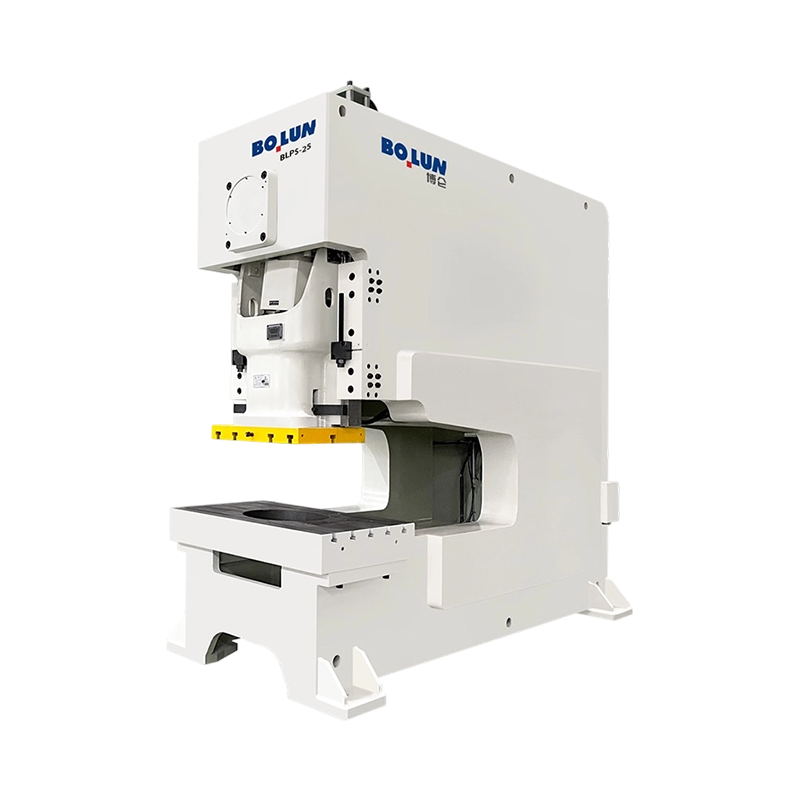


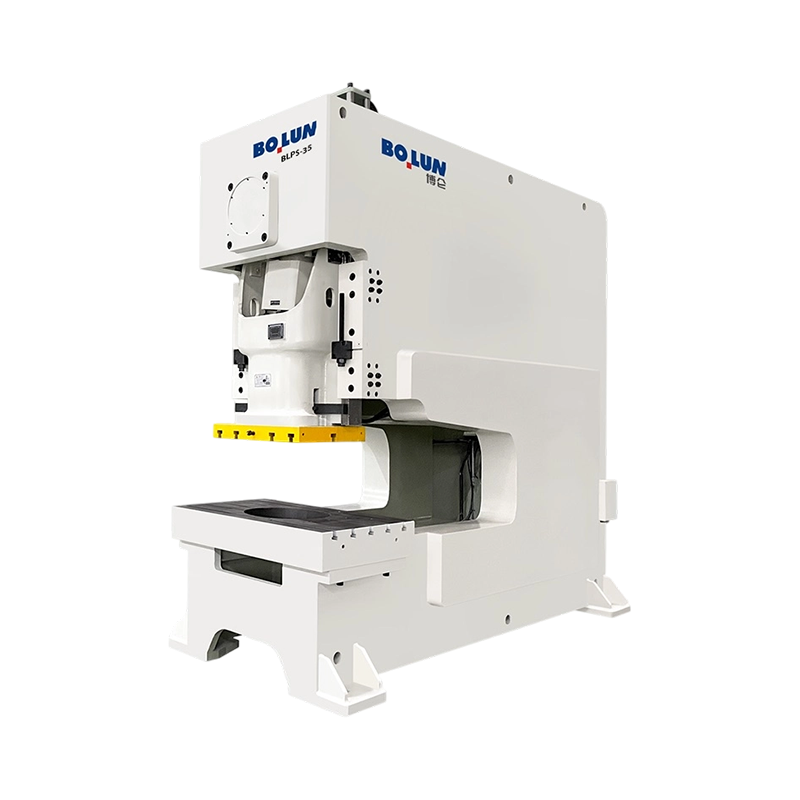
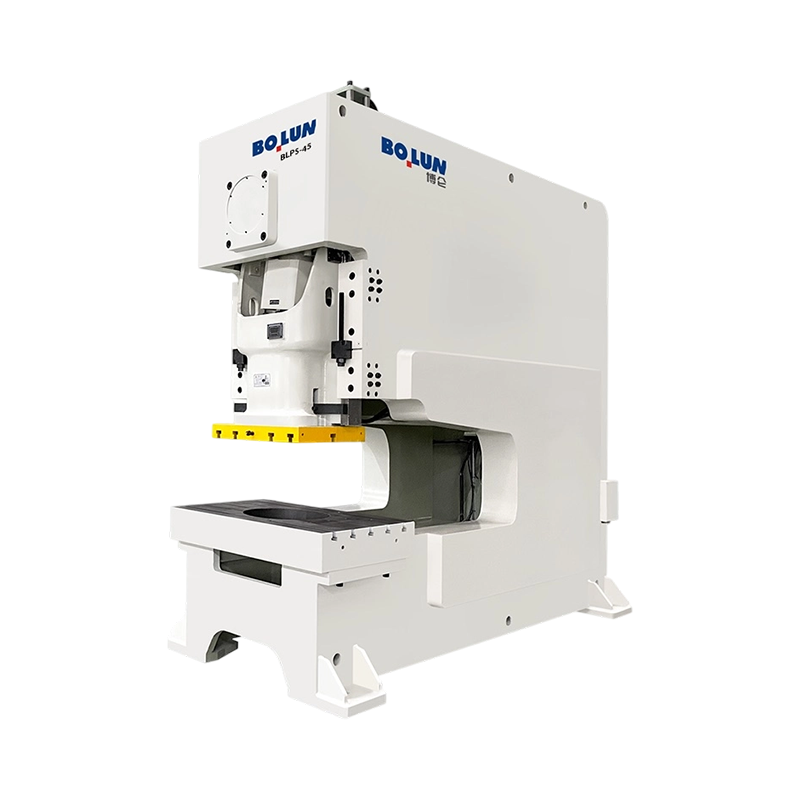
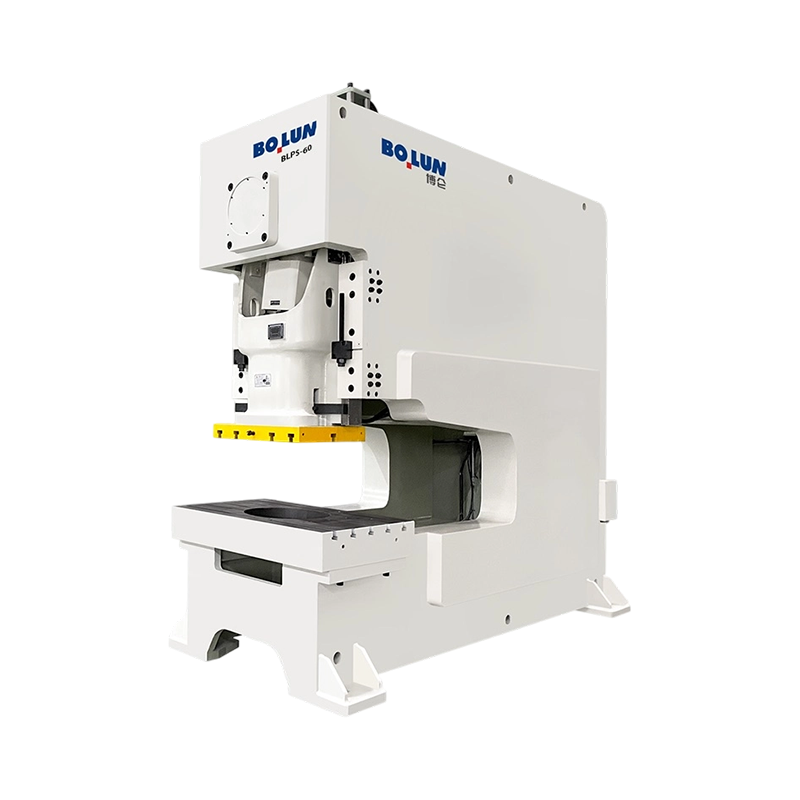
The Bolun deep throat Series is a specialized engineering solution designed specifically for large-format sheet metal processing where standard C-frame reach is insufficient. The defining characteristic of this series is its significantly extended throat depth, providing the necessary clearance to process large workpieces far from the material edges. This makes it an indispensable asset for industries such as large-scale signage, HVAC ducting, and architectural metalwork.
Construction quality is paramount in deep-throat designs. Unlike standard presses, our series utilizes an ultra-reinforced, high-tensile steel-plate welded frame that undergoes a rigorous heat treatment process for maximum stress relief. This ensures that the frame maintains superior rigidity even with the deeper throat, effectively eliminating the risk of "angular opening" or deflection during high-tonnage impacts. Such structural integrity is vital for preserving die alignment and extending the lifespan of expensive tooling.
In terms of performance, it is equipped with a high-torque pneumatic friction clutch and a precision brake unit, allowing for rapid response and reliable single or continuous strokes. Safety is integrated at every level, featuring a dual solenoid safety valve to prevent accidental strokes and a hydraulic overload protection system that safeguards the machine from tonnage spikes.
The internal transmission relies on a forged 42CrMo alloy steel crankshaft and premium CuSn12 tin bronze bushings, ensuring long-term durability and smooth power delivery. Furthermore, the PLC-based smart control system ensures seamless "handshaking" with NC servo feeders and automation robots. With its extended reach and ultra-rigid build, the Bolun our series is the ultimate solution for manufacturers seeking to overcome the limitations of standard press geometry without compromising on precision or power.
As China Open-Gap Deep-Throat Power Press Manufacturers and Deep Throat Power Press Suppliers, Zhejiang Bolun High-Precision Machinery Co., Ltd. is located in Zhejiang, the heart of China’s precision manufacturing. With two decades of deep roots in the machinery manufacturing industry, the company has leveraged profound industry accumulation and technical breakthroughs to evolve into a modern, leading enterprise in high-precision forming equipment. We integrate R&D, design, production, sales, and service. From our early days of persevering through challenges to our current leadership in the fields of forging and casting machinery, Bolun Machinery has established a professional, mature, and efficient production management system. We are dedicated to providing global customers with superior industrial machine tool solutions.
 More About Us
BOLUN
More About Us
BOLUN

0+
years
Industry Experience

0+
Units Produced (Previous Year)

0+
Number of Employees

0+
$
Million Annual Output Value

Put a 160-ton open-frame press and a 160-ton closed-frame press side by side and the difference is visible from thirty feet away. One leaves the die area open on three sides so an operator can slide a wide blank in by hand; the other wraps the same die inside a box of stress-relieved steel that barely flexes at full l...
Start With the Purchase Decision, Not the Definitions A procurement engineer comparing a 200-ton hydraulic press quote with a 200-ton mechanical power press quote often finds two different machines, two different cost structures, and two different production promises, even when the tonnage number is identical. That ha...
A tooling engineer quotes a new bracket program and specifies a 160-ton press. The die is built, the machine is installed, and on the first production run the slide stalls six millimetres above bottom dead centre. Nothing is broken. The tonnage was rated at the bottom of the stroke, and the work is being done higher u...
In sheet metal fabrication, processing oversized panels requires specialized equipment configurations that diverge from standard stamping layouts. The open-gap deep-throat power press is specifically engineered to handle wide sheets of material, such as those used in large electrical cabinets, ventilation panels, and vehicle body components. To configure this machinery successfully, three primary variables must be kept in equilibrium: the required blanking force of the application, the physical throat depth needed to clear the workpiece, and the total machine tonnage capacity. These three elements cannot be evaluated in isolation. A change in throat depth directly alters the structural leverage of the frame, which in turn dictates the required frame weight and tonnage rating needed to limit physical deflection during the stamping stroke. Balancing these factors is a fundamental challenge of metal forming engineering.
When blanking metal, the force required is determined by the perimeter of the cut, the sheet thickness, and the shear strength of the material. This blanking force creates a concentrated shock load that must be fully absorbed by the press frame. In an open-gap configuration, the lack of front tie rods or columns means that all reaction forces are transferred through the curved rear throat of the machine. The distance from the center of the slide to the back frame wall acts as a leverage arm, magnifying the bending moment experienced by the steel plates. Selecting a machine specification requires understanding how this leverage scales with deeper throat configurations.
The first step in press integration is determining the baseline blanking force of the specific metal parts. The formula used to calculate this force multiplies the total shear length by the material thickness and the ultimate shear strength. This calculated value represents the theoretical static force needed to fracture the metal. However, in production environments, additional safety margins must be applied to account for tool wear, variations in material thickness, and the resistance of die cushions or stripper plates. If a press is operated too close to its nominal capacity, the repeating impact cycles will lead to premature fatigue in the drive shaft and bearings.
Furthermore, the material behavior during the fracture phase introduces dynamic variables. Materials with high tensile strength or low ductility release stored strain energy rapidly at the moment of shear, producing a violent reverse load. This snap-through force can cause severe vibration within the drive train. Engineers must ensure that the designated machine tonnage not only exceeds the static blanking force but is robust enough to damp these dynamic shocks without causing structural misalignment or micro-fractures in the weldments over long-term operation.
Throat depth determines how deep a sheet metal blank can penetrate into the press bed before touching the rear frame. While a deeper throat offers greater versatility for processing wide sheets, it introduces a significant structural penalty. According to the principles of beam mechanics, the angular deflection, or opening phenomenon, of a C-frame structure increases proportionally with the cube of the throat depth. This means that doubling the throat depth can lead to an eightfold increase in frame deflection if the plate thickness and reinforcement structures remain unchanged.
This deflection causes the upper slide and lower bolster plate to lose parallelism during the cutting cycle, shifting the punch relative to the die. The resulting misalignment causes uneven tool clearances, leading to burrs on the stamped parts and rapid wear of the cutting edges. To maintain vertical accuracy, an open-gap deep-throat power press must feature a heavily reinforced frame. This reinforcement requires thicker steel plates, larger box-welded structures, and internal ribbing to absorb the bending moments. Thus, requesting a larger throat depth directly increases the physical mass and cost of the machine frame, even if the required blanking force remains constant.
To successfully combine these variables, designers must utilize a structured scaling method. The table below illustrates the typical structural dimensions and weight characteristics required to maintain frame stiffness across various tonnage and throat depth configurations in modern manufacturing environments.
| Machine Rating (Tons) | Standard Throat Depth (mm) | Standard Frame Weight (kg) | Deep-Throat Rating (mm) | Deep-Throat Frame Weight (kg) | Permissible Deflection under Full Load (mm/m) |
|---|---|---|---|---|---|
| 25 Tons | 180 to 220 | 1,600 | 500 to 600 | 2,800 | Under 0.12 |
| 40 Tons | 220 to 260 | 2,900 | 600 to 700 | 4,600 | Under 0.12 |
| 80 Tons | 280 to 320 | 5,800 | 800 to 900 | 9,200 | Under 0.10 |
| 125 Tons | 340 to 380 | 9,800 | 900 to 1000 | 15,500 | Under 0.08 |
To prevent the frame of an open-gap deep-throat power press from flexing open during high-tonnage blanking, advanced design methodologies are applied to the weldments. Zhejiang Bolun High-Precision Machinery Co., Ltd. analyzes these stress concentrations using finite element modeling to place reinforcement plates exactly where the tension is highest. High-tensile steel plates are welded into a closed box-type cross section along the rear column, which substantially increases the moment of inertia without adding unnecessary dead weight to the front of the machine. This ensures that the deflection is kept within strict tolerances to safeguard tooling alignment.
Another approach to control deflection is the integration of heavy-duty, multi-point slide guiding systems. By using extra-long eight-point gibs, the slide is physically constrained against tilting, even if the main frame experiences minor elastic deflection under peak loads. This guiding system absorbs the horizontal thrust forces generated during the forming cycle, translating them back into the main structure rather than allowing them to shift the punch. This combination of structural reinforcement and precision guiding allows deep-throat machines to deliver consistent part geometries over millions of cycles.
The tooling itself can be optimized to reduce the burden on the press frame. When designing dies for deep-throat applications, engineers can incorporate shear angles onto the punches or die steel. By angling the cutting edges, the material is sheared progressively rather than all at once. This simple modification reduces the peak blanking force by up to forty percent, lowering the instantaneous tonnage required from the press and reducing the resulting snap-through shock.
Additionally, centering the die set's center of pressure with the centerline of the press ram is vital. If the tool is installed with an offset, it introduces an eccentric load that amplifies the angular opening of the C-frame. In situations where asymmetrical parts make perfect centering impossible, balancing blocks or spring-loaded pads are designed into the blanking tool to distribute the reaction forces evenly across the bed, ensuring a balanced load distribution and protecting both the press guides and the dies from premature wear.
Q: How does an open-gap deep-throat power press manage frame deflection when processing heavy-gauge sheet metal?
A: The deep-throat design naturally increases structural leverage, which can amplify bending moments under load. To control this behavior, Zhejiang Bolun High-Precision Machinery Co., Ltd. utilizes extra-thick, stress-relieved steel plates and heavy box-type rear columns. This reinforced frame design restricts angular deflection, keeping tool alignment stable during high-force cycles.
Q: Are these deep-throat presses compatible with automated coil or sheet feeding systems?
A: Yes, the open-gap configuration provides wide lateral clearances that are ideal for automation. Bolun Machinery structures the electrical control systems with open-architecture interfaces, allowing the equipment to synchronize smoothly with progressive roll feeders, robotic sheet loaders, and scrap disposal units.
Q: What design features prevent uneven tool wear when dealing with asymmetrical parts on an open-gap deep-throat power press?
A: Off-center loads can exert severe lateral forces on the slide guide rails. Our presses incorporate long, precision-machined guide gibs with tight clearances to constrain slide motion along a strictly vertical axis. This guiding mechanism prevents the slide from tilting, keeping the punch and die parallel to protect cutting edges from uneven wear.
Q: How is the sudden snap-through shock of high-tonnage blanking operations absorbed to protect the drive train?
A: The machinery features integrated pneumatic balancer cylinders that maintain constant upward tension on the slide. This design removes mechanical backlash from the connection pins and crankshaft bearings, while a heavy-duty pneumatic clutch-brake unit dampens reverse shock forces to protect internal gears from impact damage.
Q: Can Zhejiang Bolun High-Precision Machinery Co., Ltd. customize the throat depth and bed size for specific production requirements?
A: We provide complete R&D and design services to adapt throat depths, bolster dimensions, and stroke lengths to custom floor layouts. Our engineering team conducts individual structural analyses to ensure that any customized frame modifications maintain the rigid tolerances required for your specific sheet metal applications.
Contact Us

+86-575-83362228

+86-13735238388

+86-575-83362999

+86-15158259588

Hangzhou Office Add: No. 332 Wangjiang East Road, Shangcheng District

No.1 Linjiang Road East, Xiaren, Jinting Town, Shengzhou City, Zhejiang Province, China
Ready to Begin?
Get in Touch

Now!

ZHEJIANG BOLUN
 English
 中文简体
中文简体