
Put a 160-ton open-frame press and a 160-ton closed-frame press side by side and the difference is visible from thirty feet away. One leaves the die area open on three sides so an operator can slide a wide blank in by hand; the other wraps the same die inside a box of stress-relieved steel that barely flexes at full load. Both are sold under the same description, "160-ton mechanical press," and both will be quoted at surprisingly similar prices. They are not the same machine.
The definition should come first, because every practical decision about a press flows out of it. A mechanical press machine is a metal-forming machine tool that stores kinetic energy in a rotating flywheel and releases that energy, through a clutch and a crank-type mechanism, into a slide that travels a fixed stroke up and down in a set of guides. The force is not constant. It builds through the stroke and peaks in the last few millimeters before bottom dead center, which is why a mechanical press is superb at blanking and coining and awkward at slow, full-depth forming.
That one characteristic explains most of what follows: why tonnage, stroke, and strokes per minute are fixed by the machine's mechanics rather than by a control setting; why frame stiffness matters more than the number on the nameplate; and why the servo-driven version of the same machine has become the fastest-growing category in stamping shops that need flexibility without giving up cycle speed.
Follow the energy path from the electrical supply to the die face and the whole machine becomes easier to reason about, and easier to specify.
Two consequences fall out of that sequence. First, a mechanical press develops its rated tonnage only near the bottom of the stroke; if a process needs high force at half-stroke, a crank press is the wrong tool and a hydraulic or servo press should be considered. Second, because the clutch and brake decide how accurately the slide can be stopped and how quickly it can be cycled, the clutch type is one of the strongest signals of machine generation. A friction clutch with an electronic brake monitor and an inch/single/continuous mode selector is what lets a press be used for die setting and for automated coil feeding on the same shift.
The transmission type is the other half of the story. A plain crankshaft is inexpensive, compact, and gives a roughly sinusoidal stroke curve, which suits blanking and general stamping. An eccentric gear drive lengthens the effective stroke and slows the slide near the bottom, producing more work energy per stroke and better performance in deep-drawing and heavy forming. A toggle linkage multiplies force dramatically near the bottom and is therefore the standard choice for cold forging, coining, and calibration work where the material needs to flow rather than shear. A servo drive replaces the flywheel-and-clutch arrangement with a high-torque motor that can program any stroke curve the process wants.
Tonnage is the headline number, but these are the components that decide whether a press still holds tolerance after five years of two-shift operation.
| Assembly | What it does | What it tells you in a quote |
|---|---|---|
| Frame | Carries the forming reaction and keeps the slide square to the bed | Welded vs. tie-rod construction; deflection figure under rated load; whether it is stress-relieved after welding |
| Flywheel | Stores the energy released during each stroke | Flywheel mass and allowable speed drop indicate available work energy, not just tonnage |
| Clutch and brake | Engage and stop the drive train each cycle | Air friction clutch with brake monitoring and inch mode signals a modern, safer machine |
| Crankshaft or eccentric gear | Converts rotation into slide motion | Determines stroke profile, work energy, and suitability for drawing versus blanking |
| Connecting rod and slide | Transmits force to the upper die | Slide area, slide adjustment range, and whether a hydraulic overload protection is fitted |
| Gibs and guides | Keep the slide parallel and resist off-center thrust | Adjustable vs. fixed gibs; clearance specification; eight-point guiding on wider slides |
| Bed and bolster plate | Supports the lower die and defines the usable die space | Bed size, T-slot pattern, cushion or die-cushion provision, and bed thickness |
| Counterbalance cylinders | Offset slide and tooling weight | Affects stopping accuracy, brake wear, and noise level |
| Lubrication system | Feeds oil to bearings, gibs, and gears | Centralized vs. manual; whether lubrication faults are interlocked into the control |
| Control and safety system | Runs the cycle and protects the operator | PLC generation, tonnage monitor, light curtains, two-hand control, and stroke mode selection |
Two entries in that table deserve extra attention because they are the ones buyers most often skim past. Frame deflection — often expressed as a fraction of a millimeter per meter of bed length at rated load — decides whether the die edges in the middle of a long bed close to the same depth as the die edges at the ends. And gib clearance decides how the slide behaves when a die is loaded off-center, which is normal in progressive and transfer work. A press with generous tonnage but a soft frame and loose guides will still produce rejected parts, just more expensively.
Presses are grouped by four things: the shape of the frame, the number of connection points between the drive and the slide, the transmission that produces the stroke, and the process the machine is built for. Those four axes generate the categories you will see in any catalog.
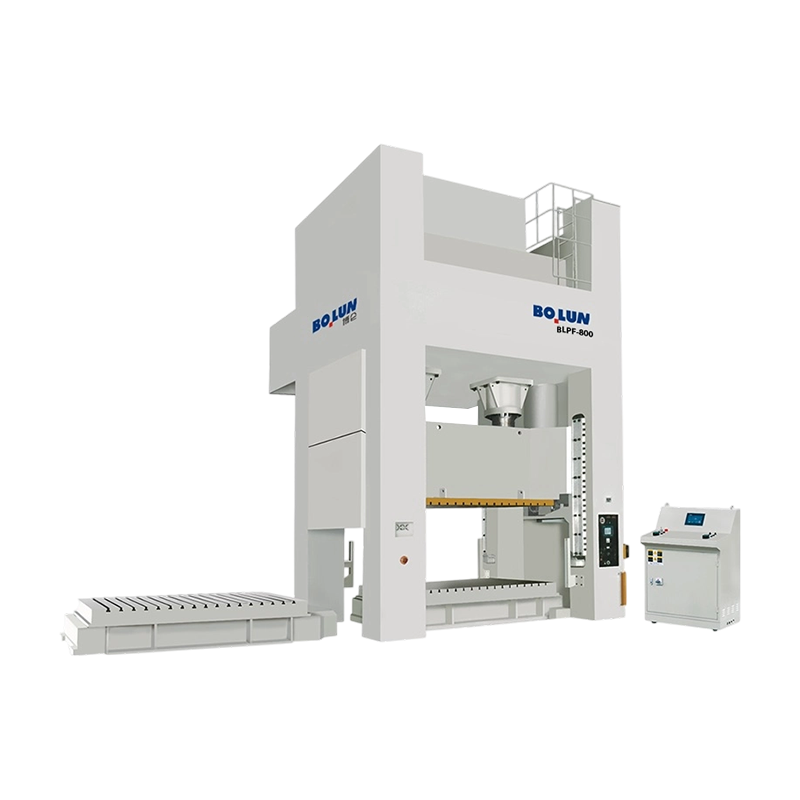
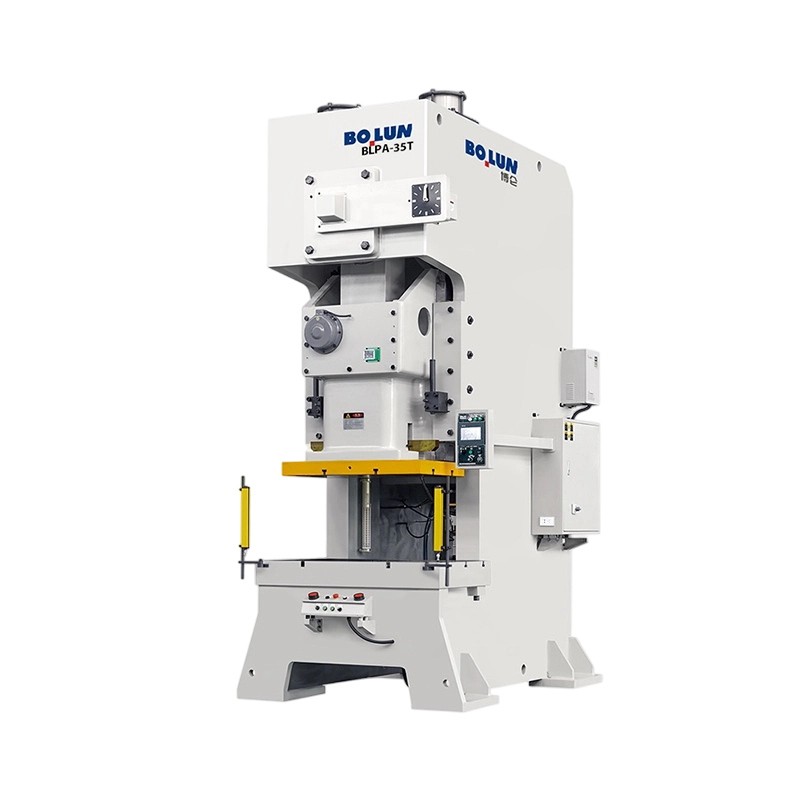
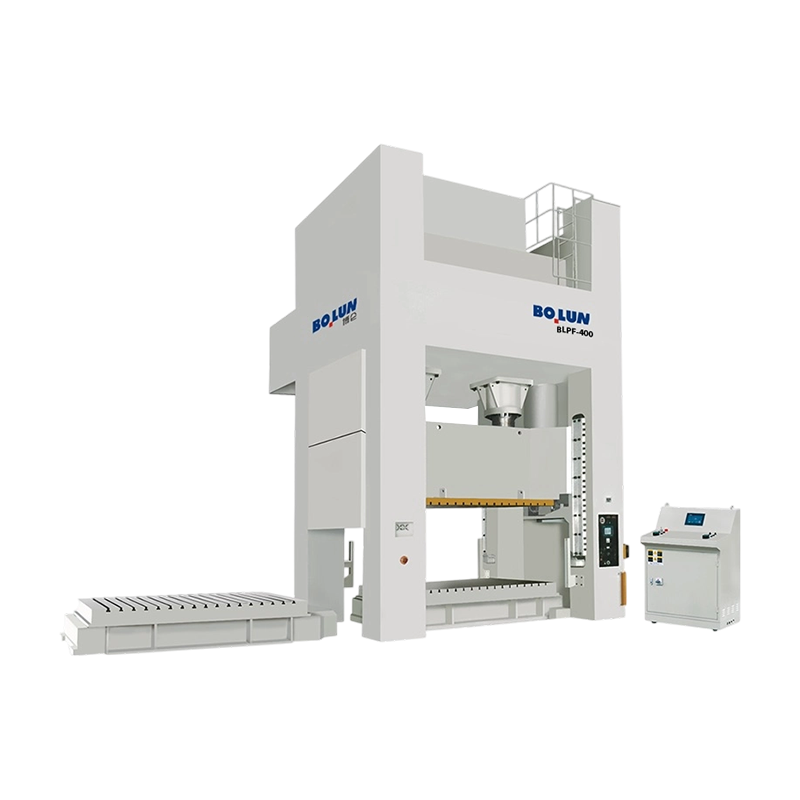
An open-type press has a C-shaped frame with the die area accessible from the front and both sides, which makes manual loading, robot access, and short-run work convenient. The trade-off is that the frame is inherently less rigid because the load path is not closed, so it deflects more and springs back more under load, which costs die life and part accuracy. A closed-type press closes the load path around the die, giving much higher stiffness and better off-center load tolerance at the cost of restricted access. Most shops running high-volume precision work eventually standardize on closed-frame machines, while open-frame presses remain the default for smaller tonnages and mixed production. The fuller comparison between the two families is worth reading before a purchase decision, and a useful breakdown of the open-type versus closed-type trade-off covers the deflection and access arguments in more detail.
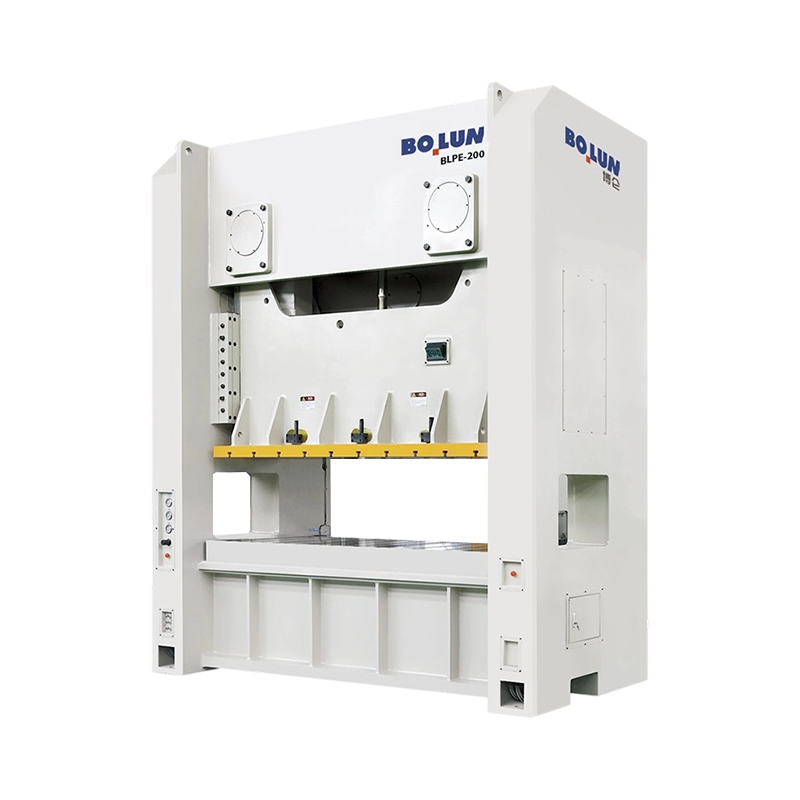
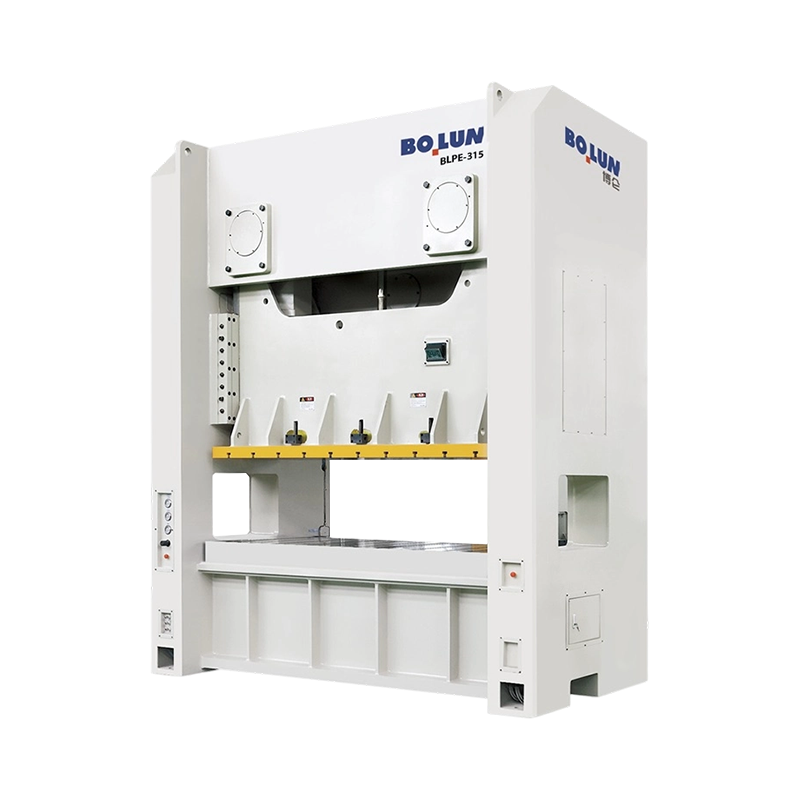
A single-point press drives the slide through one connecting rod at the center. It is simpler, less expensive, and perfectly adequate for narrow dies and moderate off-center loading. A double-point press drives the slide through two connecting rods spaced across the width of the slide, which spreads the load and dramatically improves resistance to tipping when the die is loaded off-center. If you run wide panels, progressive dies with unbalanced stations, or anything that pushes the load toward one side of the bed, the two-point machine is not a luxury; it is the difference between consistent parts and scrap. A representative example is the closed-type double-point family, where a mid-range model such as a 250-ton wide-bed machine is aimed at exactly this kind of work.
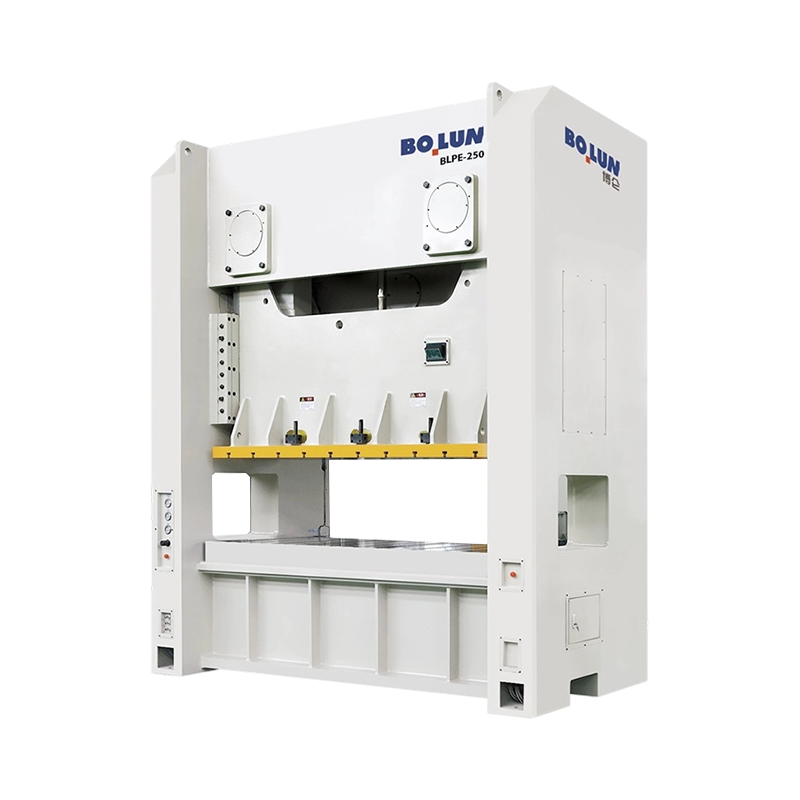 BLPE-250 Robust Wide-Bed Closed-Type Double-Point PressA 250-ton closed-type double-point press with 2,500 x 1,000 mm worktable, 22 kW motor and series data, suited to wide progressive dies and off-center loads.View Product →
The crank drive is the classic and still the most common: simple, robust, and inexpensive to maintain. The eccentric gear drive provides a longer effective stroke and more work energy, which is why it appears in heavy closed-frame machines in the 400 to 800 ton range. The toggle drive multiplies force at the bottom of the stroke, making it the standard for cold forging and coining. The servo drive removes the flywheel-and-clutch mechanism entirely and replaces it with a servomotor that can hold the slide, reverse it mid-stroke, and follow a programmable motion profile — slow approach, controlled contact, dwell at the bottom, fast return.
That programmability is what makes servo presses attractive for deep drawing, where the material must be allowed to flow rather than tear, and for forming operations that need a dwell to eliminate springback. A machine such as a 125-ton open-type single-point servo press is built specifically around that requirement, pairing servo-controlled slide motion with the deep-drawing process window.
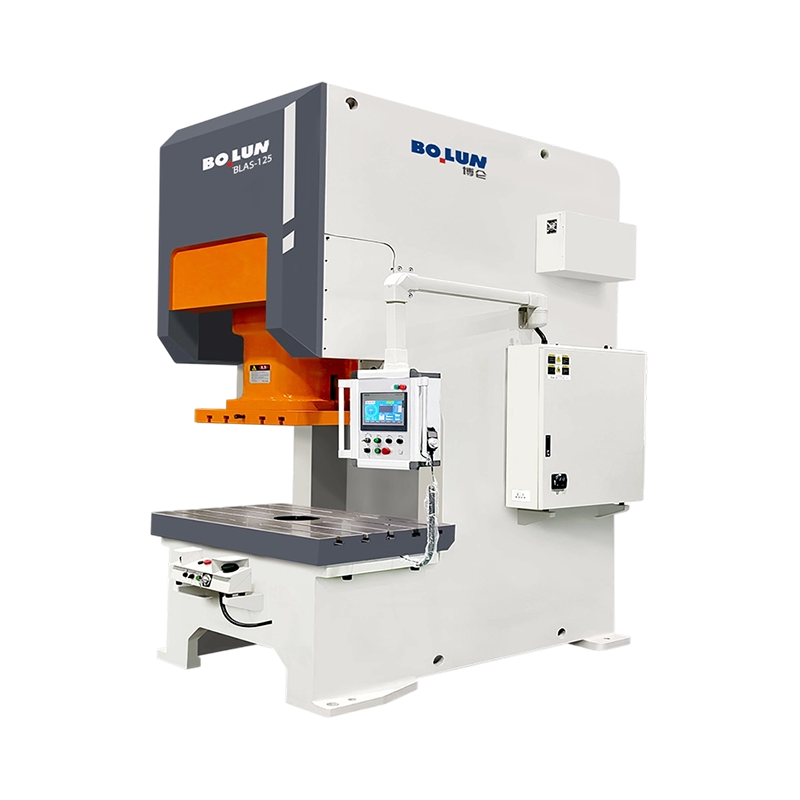 BLAS-125 Deep Drawing Open-Type Single-Point Servo Power Press125-ton open-type servo press with extended 180 mm slide stroke and 350 mm throat depth for deep drawing, where programmable slide motion supports material flow.View Product →
The practical caution is that servo presses cost more per ton and demand better process knowledge to exploit. If the part is a simple blank or a pierced bracket, the extra motion control is money spent on capability the job never uses.
A press quotation sheet contains a dozen numbers, and only a few of them decide whether the machine fits the job. These are the ones to examine first.
The most common specification error is buying tonnage without checking stroke and energy. A 200-ton press with a short stroke and a light flywheel can be beaten by a 160-ton press with a longer stroke and a heavier flywheel on deep-drawing work, and the spec sheet will not say that out loud. The second most common error is ignoring off-center loading. A die that sits entirely in the middle of the bed behaves very differently from one that spans the full bed width with the heaviest station off to one side.
Mechanical presses are general-purpose forming machines, but the processes they dominate share one trait: they need high force applied suddenly and repeatedly at a controlled position.
Blanking and piercing. Shearing sheet metal into shapes and punching holes. The material fractures rather than flows, so a fast, stiff press with good slide guidance is ideal, and tonnage requirements are easy to calculate from shear strength and cut length.
Bending, flanging, and forming. Air bending, bottoming, and flanging operations where the die sets the final geometry. Consistency depends on repeatable bottom dead center position.
Deep drawing. Cups, housings, and motor shells where the material has to flow into a die cavity without tearing. This is the process that most often forces a buyer toward a longer stroke, a die cushion, or a servo drive with a programmable speed profile.
Coining and sizing. Thin, high-pressure operations that need force concentrated at the bottom of the stroke. Toggle and eccentric gear machines excel here.
Cold forging. Solid or near-solid parts formed at room temperature, requiring very high force and large deformation. Toggle-drive machines with balanced stroke characteristics and heavy-duty frames are built for this duty, and a high-tonnage toggle press in the 650-ton class illustrates the category: balanced stroke motion, high deformation capability, and a frame intended for continuous industrial load.
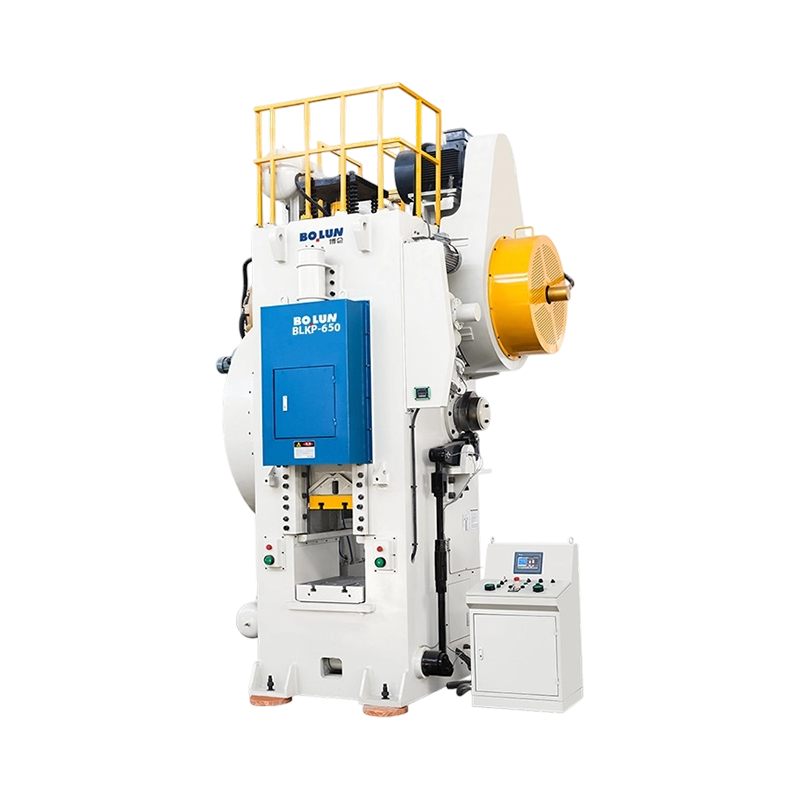 BLKP-650 High-Deformation Cold Forging Toggle-Type Power Press650-ton toggle press with 8 mm pressure stroke, integrated ejector and 75 x 4 kW motor for heavy cold forging and stable forming of thick-gauge components.View Product →
Battery shell and structural component stamping. A newer and rapidly expanding application. Battery enclosures and structural parts require very stable slide motion, high precision across multiple shell sizes, and enough tonnage to form thicker or harder alloys without distortion. Purpose-built double-point machines with wide beds have appeared specifically for this category of work.
Before a specific model is chosen, the machine family has to be right. The three families solve different problems.
| Variable | Mechanical press | Hydraulic press | Servo press |
|---|---|---|---|
| Force profile | Peaks near bottom dead center | Constant through the whole stroke | Programmable anywhere in the stroke |
| Stroke | Fixed by the mechanism | Adjustable | Fully programmable |
| Cycle speed | Fast, typically the fastest of the three | Slowest | Fast, and can be optimized per part |
| Energy efficiency | Flywheel buffers peak demand from the supply | Continuous pump load | Energy used mainly when forming |
| Best suited to | Blanking, piercing, bending, general stamping, cold forging | Deep drawing, thick plate, long dwell forming | Deep drawing, springback control, flexible, mixed production |
| Main cost driver | Frame stiffness, drive type, tonnage | Pump and valve capacity, cylinder size | Motor and drive electronics, control software |
In practice, most high-volume stamping shops still run mechanical presses for anything that involves shearing or shallow forming, keep hydraulics for the deep, slow jobs, and add servo machines where the part mix is wide and changeover time matters. The mistake to avoid is buying a servo press for a job that a well-specified crank press would do for considerably less money, or buying a small mechanical press for a deep-draw job that needs the force profile only a hydraulic or servo machine can deliver.
Once the family and the tonnage are settled, the difference between a machine that runs for fifteen years and one that fights you for five comes down to a short list of commercial and engineering questions.
Lead time deserves its own line. A standard open-frame machine may ship in a few months, while a large closed-frame or servo press built to specification can take considerably longer. If the production ramp is fixed, the press order date is effectively fixed too, and any customization should be agreed in writing before the deposit.
A mechanical press is a machine with stored energy, and it will keep that energy even when the power is off. Every safety feature on a modern press exists because of that fact: the brake must be monitored so a failed brake stops the machine rather than letting the slide fall, and lockout procedures must isolate stored energy, not just the electrical supply.
Maintenance follows from the mechanics as well. Clutch and brake linings wear and must be inspected on a schedule; gib clearance must be checked because it drifts with load and temperature; lubrication points must be fed reliably, since a starved gib will damage the slide surface long before it destroys the bearing; and the flywheel bearings, counterbalance cylinders, and overload protection devices all have inspection intervals that should be recorded in the maintenance log from day one.
The most useful habit a shop can adopt is tonnage monitoring. A press that records the force signature of every stroke will flag a worn die, a double blank, a mis-fed part, or a developing bearing problem weeks before it produces a scrap bin full of rejected parts. On a machine that runs thousands of strokes per shift, that monitoring pays for itself faster than almost any other option on the order form.
Mechanical press machines are simple in concept and unforgiving in detail. The flywheel stores energy, the clutch releases it, and the crank, gear, or toggle converts it into a fixed stroke that delivers force near the bottom. Everything that matters commercially — frame stiffness, connection points, off-center load tolerance, stroke and energy rather than tonnage alone, and the quality of the clutch, guides, and control system — is a direct consequence of that mechanism.
Get the family right first. Then match stroke, energy, and bed size to the part rather than to the number on the brochure, buy a sensible tonnage margin, and confirm who machines the frame and who stands behind the machine after installation. A press selected this way does not need to be the most expensive option in the quote; it simply needs to be the one whose mechanics match the work you actually intend to run.
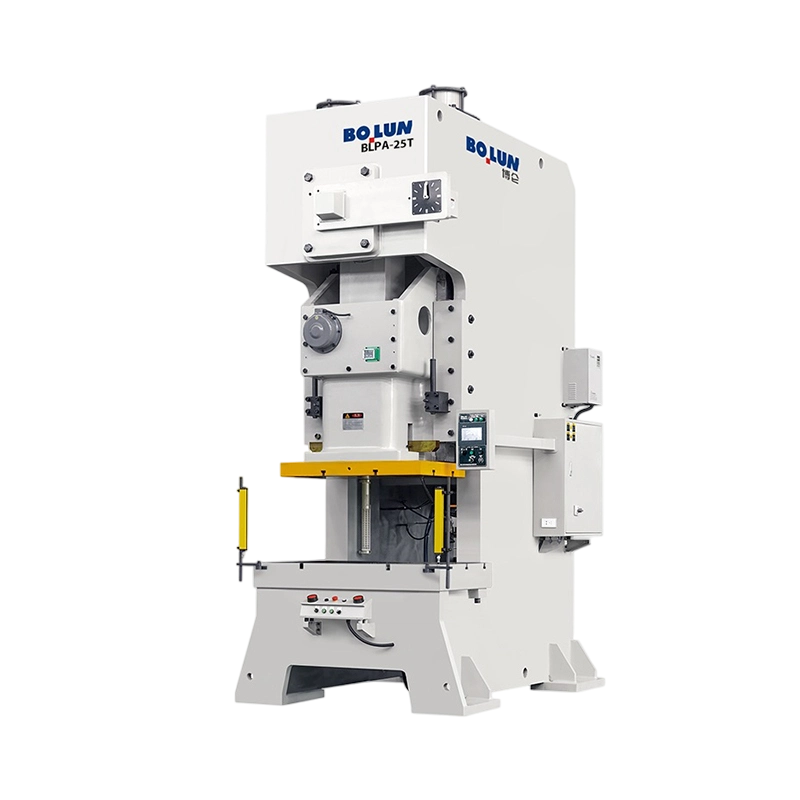


A tooling engineer quotes a new bracket program and specifies a 160-ton press. ...
A fastener plant in Taizhou receives a request from an automotive tier-one supp...
Understanding Mechanical Power Presses and Their Essential Functions A mechani...
Power press machines are classified in two main ways: by frame construction, w...
A production manager walks into an engineering meeting with a stack of drawings...
What Is a Power Press? A power press — also called a stamping press or punch pr...
Contact Us

+86-575-83362228

+86-13735238388

+86-575-83362999

+86-15158259588

Hangzhou Office Add: No. 332 Wangjiang East Road, Shangcheng District

No.1 Linjiang Road East, Xiaren, Jinting Town, Shengzhou City, Zhejiang Province, China
Ready to Begin?
Get in Touch

Now!

ZHEJIANG BOLUN
 English
 中文简体
中文简体
