
A production manager walks into an engineering meeting with a stack of drawings for a high-volume fastener, a bearing race, and a battery shell. The common question is: “Can we make these faster, with less scrap, and with better fatigue life than machining or hot forging?” The answer, in many cases, is cold forming. Cold forming is the process of shaping metal below its recrystallization temperature, typically at room temperature, by forcing the material into a die cavity under high pressure. It turns a simple wire or rod into a finished or near-finished part in seconds, while improving material strength and reducing waste. The practical challenge for a buyer is not whether cold forming works, but how to match the process to the part geometry, the material, and the press that will do the job.
Cold forming is a metalworking method that changes the shape of a metal blank or wire at ambient temperature, without heating the workpiece above its recrystallization point. The metal is compressed between a punch and a die, and the material moves plastically into the desired shape. Because the temperature stays low, the metal experiences strain hardening. That means the part becomes stronger as it is deformed, often reaching two to three times the yield strength of the original material. The process is also called cold forging or cold heading, depending on the industry and the type of part being made.
The term “cold forming” is broad. In a fastener plant, it usually means a cold former that takes coiled wire, cuts a blank, and moves it through several die stations to produce screws, bolts, or nuts. In a stamping shop, it can mean a cold forging press that forms larger parts such as gear blanks or shafts. In a sheet metal context, it can refer to roll forming or cold bending. This article focuses on the press-based forming of solid metal parts, which is where the highest tonnage and the most technical equipment decisions occur.
The key distinction between cold forming and hot forming is temperature. Hot forming works above recrystallization, so the metal remains soft and can flow into complex shapes. Cold forming works at or near room temperature, so the metal is harder and more resistant to deformation. That difference drives the equipment specification: cold forming presses need higher tonnage, more rigid frames, and often a more sophisticated stroke profile than a hot forging press of the same capacity.
Cold forming exploits the fact that ductile metals can be permanently reshaped when the stress exceeds their yield point. The punch pushes the metal into a die cavity, and the material flows along the path of least resistance. Because the metal does not recrystallize during the operation, the grain structure is elongated, and the material becomes harder. This strain hardening is a double-edged sword: it increases strength, but it also reduces ductility, so the amount of deformation per step is limited.
There are three basic deformation modes that govern most cold forming operations:
In forward extrusion, the metal is pushed through a die opening in the same direction as the punch travel. The blank is placed in a container, and a punch compresses it from one end, forcing the material to flow through a smaller orifice. This is a standard way to create shafts, stepped pins, and tubular components. The pressure needed depends on the reduction ratio and the material’s flow stress.
In backward extrusion, the metal flows in the opposite direction to the punch travel. The punch enters the blank and forces the material to flow upward around the punch, forming a cup or a tube-like shape. This is common for making hollow parts such as hex sockets, battery shells, and automotive plungers. Backward extrusion can produce deep cavities with little material waste, but it requires a very rigid press because the punch experiences high compressive loading.
Upsetting is the process of reducing the length of a blank while increasing its diameter. The metal is compressed between a flat punch and a die, and it bulges outward. This is the basis for forming bolt heads, rivets, and flanges. Multiple upsetting steps are often used in cold heading machines to build up material progressively.
Most cold formed parts require a combination of these modes. A typical fastener, for example, uses upsetting to form the head, forward extrusion to create a shank, and maybe a trimming or pointing operation at the end. The press must deliver the correct force, stroke, and velocity for each station, which is why the machine design matters as much as the tooling.
Cold forming on a multi-station former follows a repeating cycle that is remarkably consistent across different part families. Understanding the cycle helps a buyer evaluate what the press must deliver.
The speed of the cycle is measured in strokes per minute or parts per minute. A high-speed nut former can run at 200 to 400 parts per minute, while a heavy cold forging press for large parts may run at only 20 to 60 strokes per minute. The press structure, the clutch, and the control system must be selected to match the required speed and load profile.
People use these three terms almost interchangeably, which causes real confusion when selecting equipment. The distinction is not academic; it affects the press specification, the tooling configuration, and the expected part accuracy.
In practice, a cold forging press has a heavier frame and a more robust slide than a heading machine, because the forces are higher and the part is larger. A heading machine prioritizes speed and tooling accessibility, often using a horizontal design. When a buyer asks for a “cold forming machine,” the sales engineer must clarify whether the application is small fasteners or medium-to-large structural parts. The answer changes every specification from tonnage to bed size to drive type.
Not every metal can be cold formed successfully. The material must have enough ductility to undergo severe plastic deformation without cracking, and enough work-hardening capacity to improve strength without losing required toughness. The most common cold forming materials include:
| Material | Typical Cold Forming Behavior | Common End Use |
|---|---|---|
| Low carbon steel | Excellent ductility, low flow stress, easily cold formed. Grades like 1006 to 1018 are widely used. | Fasteners, pins, shafts, anchors |
| Medium carbon steel | More strength but less ductility; may require intermediate annealing for complex shapes. | Gears, couplings, automotive components |
| Stainless steel | Work hardens quickly, needs higher tonnage and more progressive tooling. | Fasteners, fittings, medical components |
| Aluminum and aluminum alloys | Low force requirement, good surface finish, but soft and can gall. | Housings, caps, electronics |
| Copper and brass | Excellent cold workability, good corrosion resistance. | Electrical terminals, plumbing parts |
| Alloy steel | High strength, more difficult to form, often needs warm forming as a stepping stone. | Axle shafts, high-strength fasteners |
When you design a cold forming process, the material’s yield strength and strain hardening rate determine the required press force. A soft aluminum part might only need 50 tons, while a stainless steel version of the same geometry could need 200 tons. The buyer must not assume that a press rated for steel will handle a different alloy without checking the force calculation.
The advantages of cold forming are measurable, and they explain why so many high-volume metal parts are made this way.
These benefits translate into a lower total cost per part over a production run, provided the volume is high enough to amortize the tooling. For low volumes, the die cost is usually prohibitive, which is a key purchasing criterion.
Cold forming is not a universal solution. Knowing the limitations is essential before committing to a press or a tooling set.
A procurement risk that is often overlooked is the lamination between the press and the tooling. A press designed for progressive stamping may not have the slide velocity control needed for cold forging. A press built for cold forging, on the other hand, may lack the high stroke rate needed for fasteners. The buyer should ask the manufacturer to demonstrate the force-stroke curve and the energy capacity, not just the rated tonnage.
The press is the heart of a cold forming operation. It provides the force that drives the punch into the die, and it determines the part accuracy, tool life, and overall production cost. The main press parameters to evaluate are tonnage, frame rigidity, stroke length, slide velocity, and drive type.
Tonnage is the maximum force the press can apply during a stroke. It must exceed the peak forming force required by the part, which is calculated from the material’s flow stress and the projected area. A rule of thumb is to select a press with 10 to 20 percent more tonnage than the calculated peak, to allow for material variation and tool wear.
Frame rigidity is measured in terms of the deflection of the frame under load. A rigid frame keeps the punch and die aligned, which is critical for holding tight tolerances. Closed-frame presses are generally more rigid than open-frame presses because the force path is symmetric around the bed. Many cold formers therefore prefer a closed-frame design for heavy loads.
Stroke length determines how far the slide travels from the bottom of the stroke. It must accommodate the part height, the die opening, and the required punch travel. Deep parts and long forward extrusions require a longer stroke, which in turn may reduce the stroke rate because the slide must accelerate over a longer distance.
Slide velocity is the speed at the moment the tool contacts the material. For cold forming, a controlled velocity near the bottom of the stroke is important to avoid shock loading and shattering of dies. Mechanical presses have a velocity profile determined by the crankshaft geometry, while servo presses allow the operator to program the velocity curve.
Drive type can be mechanical, hydraulic, or servo. A mechanical press uses a flywheel and a clutch to deliver energy, and it is efficient for high-speed forming. A hydraulic press delivers full tonnage at any point of the stroke, which is useful for long forming operations but slower overall. A servo press uses a servo motor directly on the crankshaft or via a gearbox, giving precise control of slide motion and energy management.
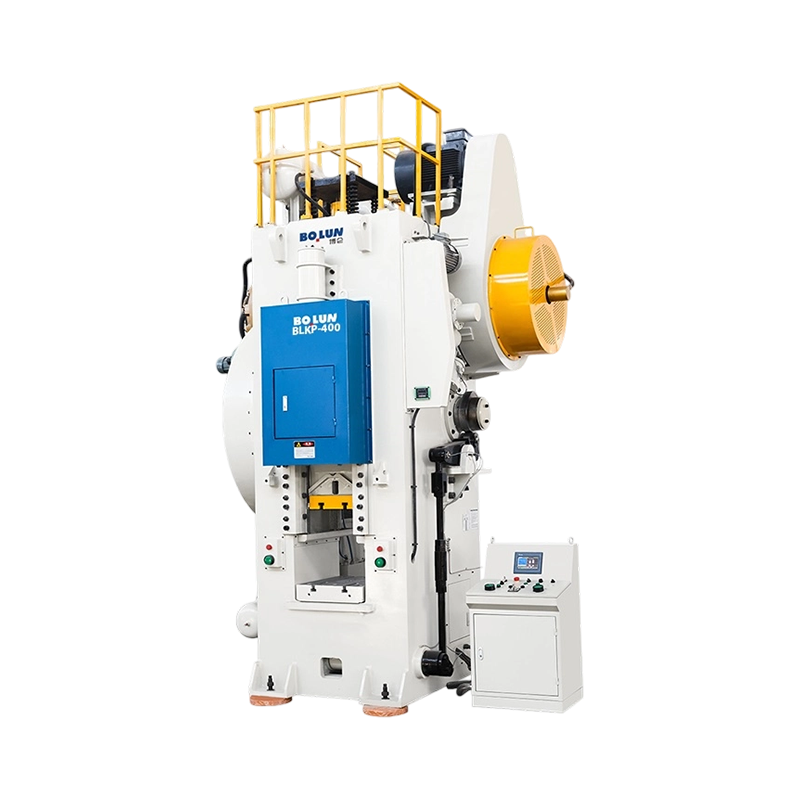
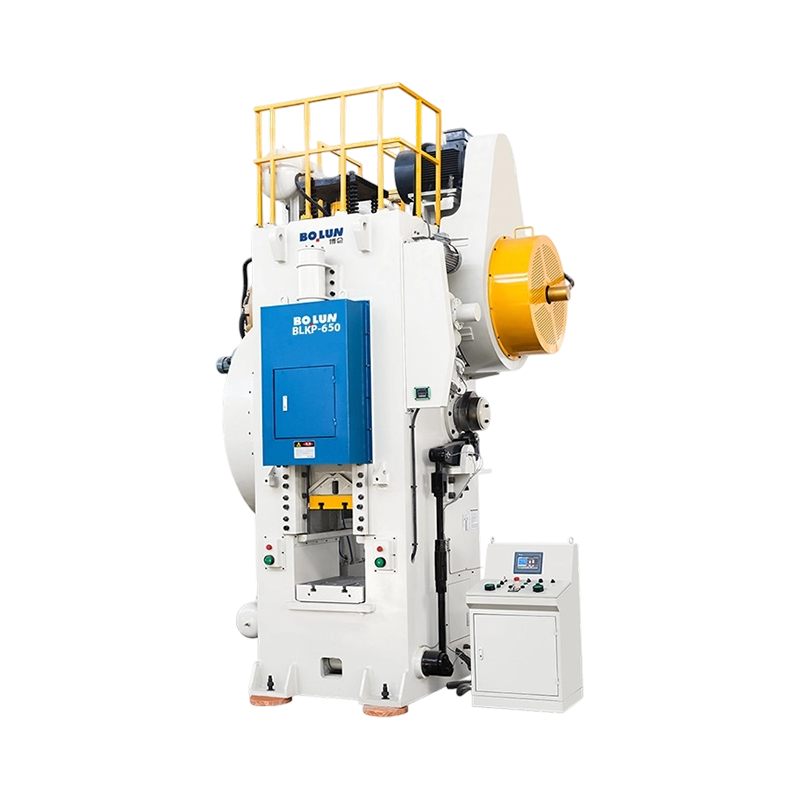
A cold forging toggle press, such as a knuckle-joint press, offers mechanical advantage at the bottom of the stroke. The toggle linkage provides high force near the bottom dead center with very low velocity, which is ideal for cold forging parts that require high pressure and little slide travel. This is exactly why a knuckle-joint press is often chosen for cold forging applications over a normal crank press.
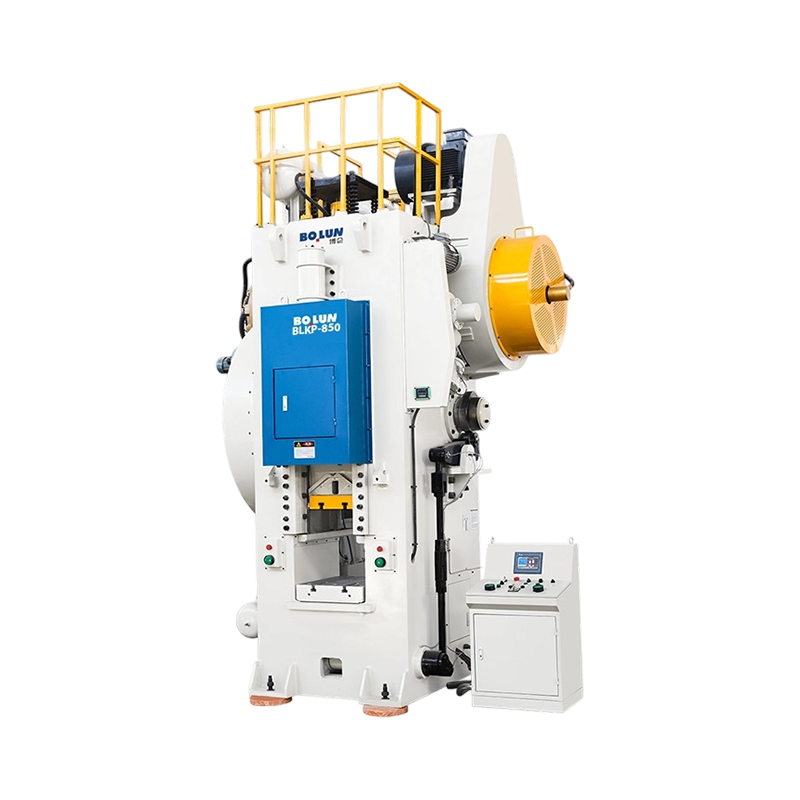 BLKP-850 Industrial Strength Heavy-Duty Cold Forging Toggle Type Power PressBLKP-850 Industrial Strength Heavy-Duty Cold Forging Toggle Type Power Press delivers a nominal capacity of 8500 kN and is suitable for high-load cold forging applicat...View Product →
For example, the BLKP850 is a heavy-duty cold forging toggle-type machine designed for industrial-scale cold forging. Its knuckle-joint drive allows high deformation forces with balanced stroke, which is the condition needed to shape high-strength materials without cracking them. When you are comparing presses for a cold forging line, look at the effective forming energy per stroke, not just the tonnage. The toggle press delivers maximal force at minimal speed, which protects the tooling and reduces the risk of part tearing.
The cold forging toggle press is a specialized machine that uses a knuckle-joint mechanism instead of a simple crank. This mechanism produces a “dwell” effect near the bottom of the stroke, meaning the slide moves slowly as the force peaks. That low-speed, high-force behavior is exactly what cold forging requires.
The toggle linkage has a mechanical advantage that multiplies the input force. A small motor torque becomes a very large vertical force at the slide, but only over a short working distance. This makes toggle presses ideal for coining, extrusion, and other cold forming operations where the deformation is small but the force is huge. The result is a stiff, accurate part with a clean surface finish.
One risk with a toggle press is that it cannot sustain a long working stroke. If the part requires a long extrusion, the press may not provide enough slide travel. In that case, a crank press or a servo press with a long stroke is more appropriate. The buyer should match the press type to the part’s specific deformation path.
Servo-driven presses are changing the economics of cold forming. A servo press uses a servo motor to move the slide through a programmable path, rather than relying on a fixed flywheel and clutch. This gives the operator a high degree of control over the slide velocity, position, and force profile. For cold forming, a servo press can:
The closed-frame double-point servo press is a common choice for cold forming. Its frame design provides high rigidity, and the double-point connection distributes the load evenly across the bed, which is important for large parts. The servo motor enables the operator to tune the slide curve to the material’s response. For instance, when forming a high-strength alloy, the press can be programmed to hold near the bottom for a few hundred milliseconds, allowing the metal to flow into the die cavity without tearing.
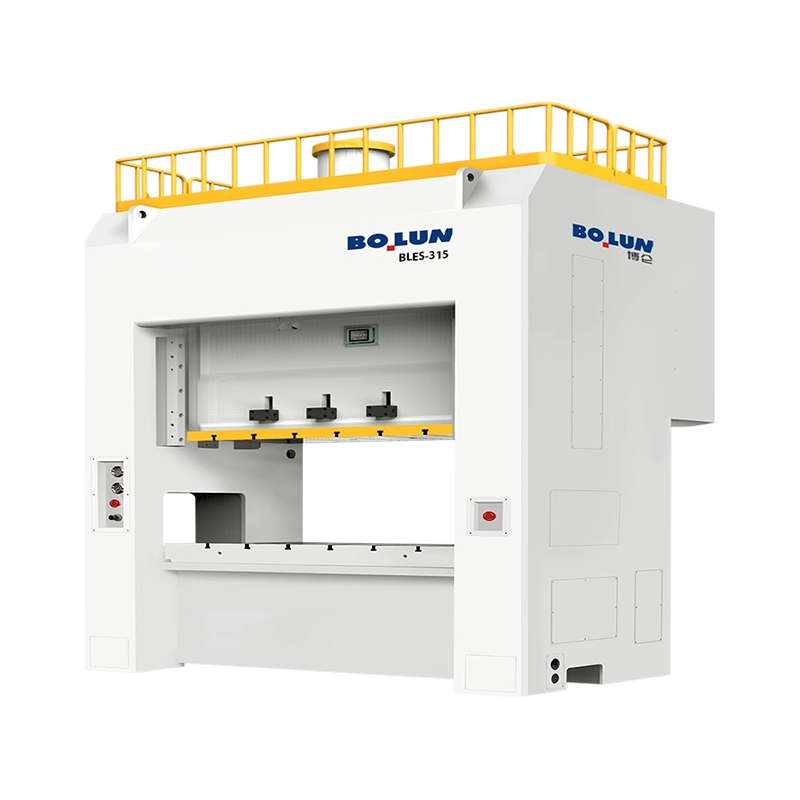 BLES-315 Industrial Powerhouse Closed-Frame Double-Point Servo Power PressBLES-315 Industrial Powerhouse Closed-Frame Double-Point Servo Power Press delivers a nominal capacity of 3000 kN with a 30,000 J working energy, designed for heavy-du...View Product →
The BLES315 closed-frame double-point servo press is designed for industrial cold forming tasks that require dynamic stroke control and a stable bed. Its high-energy capacity and programmable motion make it possible to produce parts with consistent dimensions while accommodating variations in incoming material. When a cold forming cell includes automation, the servo press can be integrated with a robot or a transfer system because the stroke timing can be adjusted in software rather than by changing mechanical components.
Deep drawing is a cold forming process where a sheet or blank is pushed into a die to create a cup or a hollow part. It is common in battery shell production, appliance components, and automotive parts. The key to deep drawing is that the material must be allowed to flow gradually and uniformly to avoid tearing. A servo press with a programmable stroke can provide the proper speed and pressure at each stage, which is why servo presses are increasingly used for deep drawing operations.
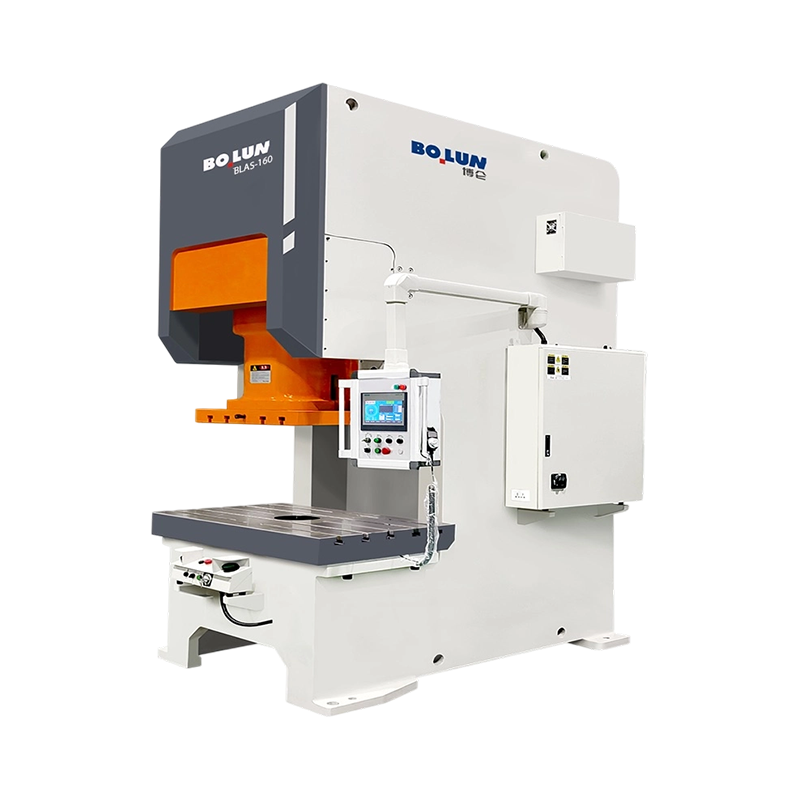
An open-type single-point servo press with a deep-drawing capability, such as the BLAS125, is a compact solution for parts that do not need a huge bed but require precise control of the drawing speed. The “deep drawing” designation means the press is designed with the right stroke length, slide velocity, and tooling space to handle the forming of deep cups. When a supplier explicitly markets a servo press for deep drawing, it is a strong signal that the company understands the need for a controlled slide motion in cold forming.
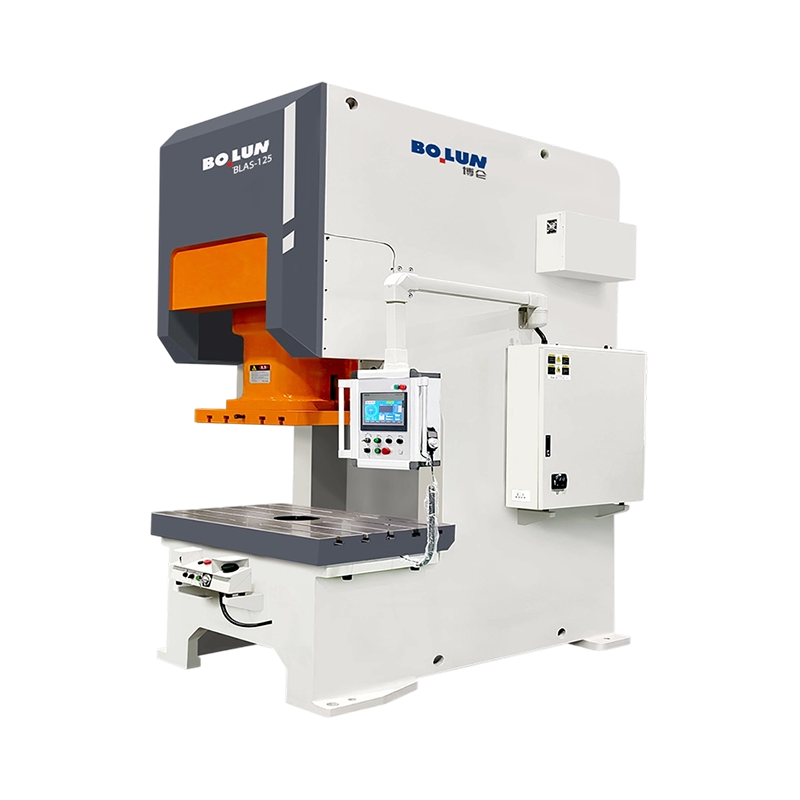 BLAS-125 Deep Drawing Open-Type Single-Point Servo Power PressBLAS-125 High-Torque Deep-Drawing Open-Type Single-Point Servo Power Press delivers a formidable 1250 kN of force with an extended 180 mm slide stroke. This model exce...View Product →
For battery shell forming, the combination of a servo drive and a double-point frame is often ideal. The servo motion can be tuned to the shell’s material grade and thickness, and the double-point slide ensures uniform pressure across the die, reducing wrinkles and cracks. As cold forming moves into battery manufacturing, this equipment is becoming a differentiator for suppliers who can deliver consistent shells at high volume.
The decision to use cold forming or hot forming is not always obvious. Each process has a specific window of feasibility based on the part shape, material, volume, and required properties. The table below summarizes the main differences.
| Criteria | Cold Forming | Hot Forming |
|---|---|---|
| Temperature | Below recrystallization, usually room temperature | Above recrystallization, typically 700 to 1200°C |
| Material strength | Increases due to strain hardening | Decreases, material remains soft |
| Surface finish | Smooth, no scale | Oxide scale, often requires cleaning |
| Dimensional tolerance | Tight, often no secondary machining | Looser, wide tolerances, may require machining |
| Equipment force | High tonnage required | Lower tonnage, since material is soft |
| Maximum shape complexity | Limited to simpler shapes without deep undercuts | Can form complex shapes and very large parts |
| Energy consumption per part | Lower heating energy, but higher forming energy | High heating cost, lower forming force |
| Typical production volume | High volume, tooling cost amortized | Low to medium volume, simpler tooling |
The practical impact of these differences is felt in the total cost per part. Cold forming shines in long production runs where the part design is compatible with the process. Hot forming is more forgiving for complex parts and smaller batches, but it adds energy, cleaning, and finishing costs. A common hybrid is warm forming, which takes place above room temperature but below recrystallization, balancing ductility and strength. Some suppliers offer warm forming presses that can be switched to cold forming mode, but the temperature control adds complexity.
When comparing a cold forming press with a hot forging press, remember that the cost of the press is only one part of the system. The tooling, feeding system, automation, and quality control all need to be aligned with the process temperature. A supplier that only sells hot forging presses may not have the expertise to recommend a true cold forming solution, so ask for specific cold forming case studies.
Cold forming is used in a wide range of industries because it delivers high strength, low scrap, and fast cycle times. Some of the most typical applications include:
When a manufacturer tells you that a specific press is suited for “battery shell” or “deep drawing,” they are not just marketing. They are specifying that the press frame, slide guidance, and stroke control have been designed around that application’s dynamic demands. For a battery shell, for instance, the press must handle high die forces while maintaining a stable bed over long production runs. A closed-frame or semi-closed structure is often preferred because it resists the side loads caused by deep drawing.
Cold forming produces parts at high speed, so quality control must be equally fast to catch defects before they become a full lot of rejects. The main quality concerns are dimensional accuracy, cracks, loose material, and surface damage.
Dimensional measurement is usually done with a micrometer, a gauge, or an optical system. For high-volume parts, optical measurement can monitor the part in real time, checking diameter, length, and ovality. The cold forming process is highly repeatable, so if the first dozen parts are within tolerance, the rest usually follow unless the tooling wears.
Cracking is the most common failure mode in cold forming. Cracks can occur at the surface or internally, and they are typically driven by exceeding the material’s ductility limit. Operators watch for a rough or fractured surface, which indicates that the material has reached its cold work limit. The response is to reduce the deformation per station, increase the number of steps, or use a softer material grade.
Another concern is surface quality. Cold formed parts should have a bright, smooth finish. If the die has scratches or is too rough, the part will inherit that texture. Tooling maintenance is therefore a critical part of quality control. A good supplier will provide a preventive maintenance schedule that includes inspecting punches and dies for wear, checking the ejector pins, and verifying the guide bushing clearances.
For a manufacturer that wants to be the “one-stop” source, quality control also includes in-process monitoring. Some modern servo presses can generate a force-displacement curve for every stroke. An abnormal curve indicates a process deviation such as a missing blank, a broken tool, or a material hardness change. This is a powerful tool for preventing defects before they reach the customer.
Selecting the right cold forming press is a decision that affects your production efficiency, tool life, and product quality for years. Use the following checklist to guide your evaluation:
A reputable manufacturer will not just sell you a machine; they will work with you to define the process. For example, if you need to form a battery shell, a supplier that offers an open-type double-point battery power press is demonstrating that they have targeted the specific challenges of that application. The same principle applies to cold forging toggle presses and servo-driven closed-frame presses.
Cold forming is a powerful manufacturing process for producing high-volume metal parts with low waste, improved strength, and tight tolerances. It is not a single method, but a family of processes including forward extrusion, backward extrusion, upsetting, cold forging, and cold heading. The equipment choice is just as important as the material and the tooling, because the press defines the force available, the stroke control, and the rigidity needed to produce consistent parts.
Before you invest in a cold forming press, identify your part geometry, material, and volume. Work with an experienced equipment vendor who can show you how their machine is designed for the specific forming modes you will run. Compare not just the tonnage, but the frame type, the drive system, the slide guidance, and the tooling support. Ask for real-world examples of similar parts and their observed cycle times, scrap rates, and tooling life.
If you are looking for a complete cold forming solution, the team at Bolun High-Precision Machinery has the experience and the product portfolio to guide you. From open-type servo presses for deep drawing to closed-frame double-point servo presses and cold forging toggle presses, the right machine is available for your application. The best next step is to send your part drawings to a supplier and ask for a process feasibility study. That conversation will save you from the two biggest mistakes in cold forming: buying a press that is too small and buying a press that is too rigid to run flexible production.
Cold forming is not magic, but when it is matched to the right part, material, and press, it delivers excellent results consistently. Use the information in this guide as a practical starting point for your equipment purchase, and then make the final decision based on tested data from your own parts.



When you are planning to produce medium or small metal parts in high volumes, t...
A cold forging die rarely announces its failure in advance. One day the press r...
What Is a Power Press? A power press — also called a stamping press or punch pr...
A production manager at a mid-size metal component plant recently faced a probl...
A mid-size fastener manufacturer recently faced a familiar problem: its CNC lat...
A fastener plant in Taizhou receives a request from an automotive tier-one supp...
Contact Us

+86-575-83362228

+86-13735238388

+86-575-83362999

+86-15158259588

Hangzhou Office Add: No. 332 Wangjiang East Road, Shangcheng District

No.1 Linjiang Road East, Xiaren, Jinting Town, Shengzhou City, Zhejiang Province, China
Ready to Begin?
Get in Touch

Now!

ZHEJIANG BOLUN
 English
 中文简体
中文简体
