
When you are planning to produce medium or small metal parts in high volumes, the forming method you choose will decide not only your cost per piece but also the dimensional consistency you can hold. Cold forming technology has become a standard route for manufacturing fasteners, bushings, gears, and automotive components because it uses raw material more efficiently and strengthens the part without heat treatment. The key point is that the technology itself is only as good as the press that carries it. In the paragraphs below, we explain what cold forming actually involves, where it makes sense, and what to look for when choosing a cold forging press.
Cold forming is a metalworking process that plastically deforms metal at room temperature or near ambient temperature using dies and punches. Unlike hot forging, there is no heating step, so the metal keeps its original grain structure while gaining strength through work hardening. The method is used to produce parts from wire, bar stock, or slugs, usually in multi-station presses that combine cutting, extrusion, and upsetting operations in one cycle.
The term "cold forming" sometimes overlaps with "cold forging" and "cold heading," depending on the application and the region. In practice, cold forming covers a broad family of processes where the workpiece is moved through a series of tools to reach a final shape. The common thread is that all deformation occurs below the recrystallization temperature of the material, which gives the finished part better dimensional accuracy and a smoother surface than hot working.
For a manufacturer, the obvious appeal is the ability to turn simple raw material into complex parts with minimal waste. The process can be automated on special forming presses, and it is particularly effective for symmetrical parts such as pins, shafts, nuts, bolts, and sockets.
Cold forming is a sequence of controlled deformation steps. The material is sheared to length, then positioned in a die where one or more tool stations shape it. The basic deformation modes are:
Each deformation mode creates a different load profile. Forward extrusion demands high axial force, while backward extrusion requires a robust frame to resist the reaction forces. Upsetting can produce sudden lateral loads that can damage a lightly built press. Therefore, the machine chosen for cold forming must be rigid, stable, and capable of delivering repeatable force throughout the entire stroke.
Not every metal can be cold formed successfully. The material must have enough ductility to deform without cracking, and the press must be sized to handle the flow stress of the chosen alloy. Common cold forming materials include:
| Material | Typical Characteristics | Cold Forming Considerations |
|---|---|---|
| Low-carbon steel | High ductility, easy to work, good surface finish | Suitable for high-volume fasteners and small parts |
| Alloy steel | Higher strength after work hardening, good toughness | Requires higher press tonnage and more careful tooling design |
| Stainless steel | Corrosion resistant, work hardens quickly | Higher force needed, tooling wear can be significant |
| Copper and brass | Excellent formability, good electrical conductivity | Low force requirements, suitable for electrical components |
| Aluminum | Lightweight, good corrosion resistance | Requires careful lubrication and surface control |
When you compare material properties, remember that the press must provide enough rigid clearance and frame stiffness to prevent deflection. A deflection in the frame can turn a minor cross-section variation into a rejected part.
Cold forming can cut production costs and improve product quality in ways that machining or hot forging cannot. The main benefits are:
In practice, the deciding factor is often total cost per part rather than the machine price. A slightly higher press investment can be justified quickly by the savings in material, labor, and finishing operations.
Cold forming is not a universal answer. It works best for parts that are roughly symmetrical and have moderate complexity. As the deformation ratio increases, so does the force required and the stress placed on the tooling. Some important risks to understand:
These risks are manageable when you start with a press that is engineered for cold forming loads, rather than a general-purpose power press that is pushed beyond its design envelope.
The press is the heart of any cold forming cell. In cold forging applications, a toggle-type mechanical press is often favored because the toggle linkage creates a slower, more controllable force near the bottom of the stroke. This allows the material to fill the die cavity completely while maintaining a balanced stroke. For example, the BLKP400 versatile cold forging toggle press offers a balanced stroke for applications that need both precision and repeatability without sacrificing output.
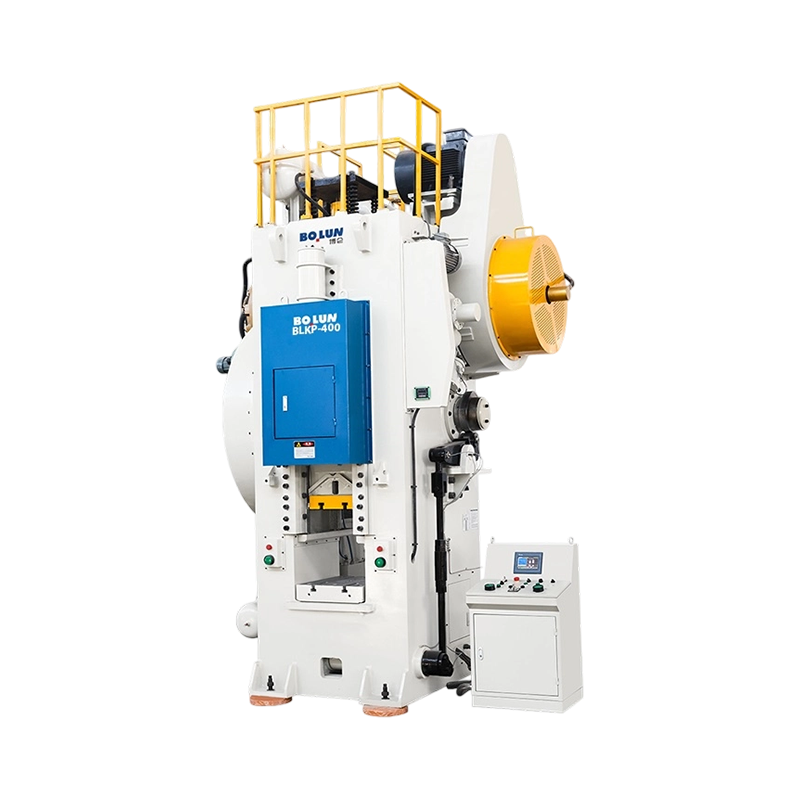 BLKP-400 Versatile Cold Forging Toggle Press with Balanced StrokeThis 4000 kN toggle press offers a balanced stroke for precision cold forging, with flexible stroke options and a 550 × 660 mm worktable, suitable for upsetting, coining, and sizing in multi-station setups.View Product →
When evaluating a machine, start with the required tonnage. Cold forging forces can be several times higher than a comparable stamping operation. A press that is only rated at the calculated load may fail at the moment of full deformation because the load peak is sudden and short. You need a cushion of reserve capacity. That is where a robust frame and a well-designed toggle mechanism make a real difference. For higher deformation work, the BLKP650 robust high-deformation cold forging press is built for heavy deformation ratios and helps maintain stable force curves even in demanding production runs.
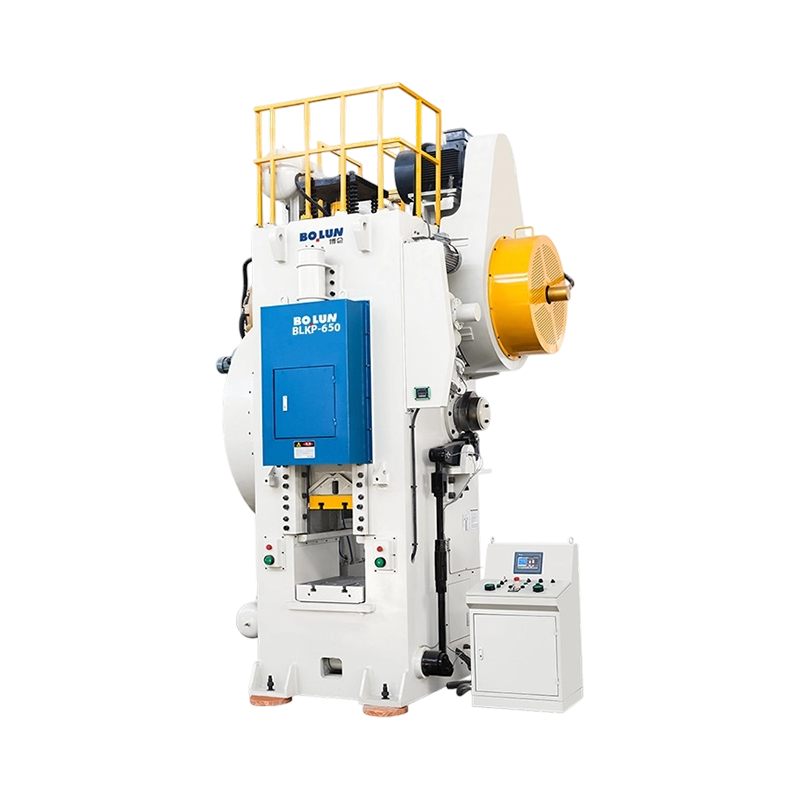 BLKP-650 Robust High-Deformation Cold Forging Toggle PressWith 6500 kN capacity and an 8 mm pressure stroke, this press is designed for heavy deformation and thick-gauge components, featuring a high-rigidity frame and integrated ejector system for reliable production.View Product →
Understanding the difference between a cold forging press and a general press can save you from a costly mistake. If you want a quick refresher on the fundamentals, you can read our article on what a cold forging press machine is. That guide explains the structural and drive differences in plain language. With that background, you can ask better questions when comparing quotes from different suppliers.
Cold forming is used across many sectors. Automotive manufacturers rely on it for fasteners, shafts, and ball pin blanks. The electrical and electronics industry uses cold forming for terminals, connectors, and sockets. Hardware and construction applications include hinges, anchors, and precision pins. In every case, the common thread is a high-volume need for consistent geometry and structural integrity.
Quality assurance starts with the press system itself. Die wear changes the force profile over time, so it is important to monitor load and stroke at each station. Many modern cold forming cells include optical measurement systems that check dimensions on a sample basis without slowing down production. The more stable the press, the longer the tooling remains within tolerance and the less likely you are to produce scrap.
For ultra-high-tonnage cold forming jobs, the pressure on the frame and the die is severe. That is why heavy-duty models like the BLKP850 industrial-strength heavy-duty cold forging press exist. This class of equipment is intended for components that require high deformation forces while keeping the bed stable enough to hold tight tolerances over a long production horizon.
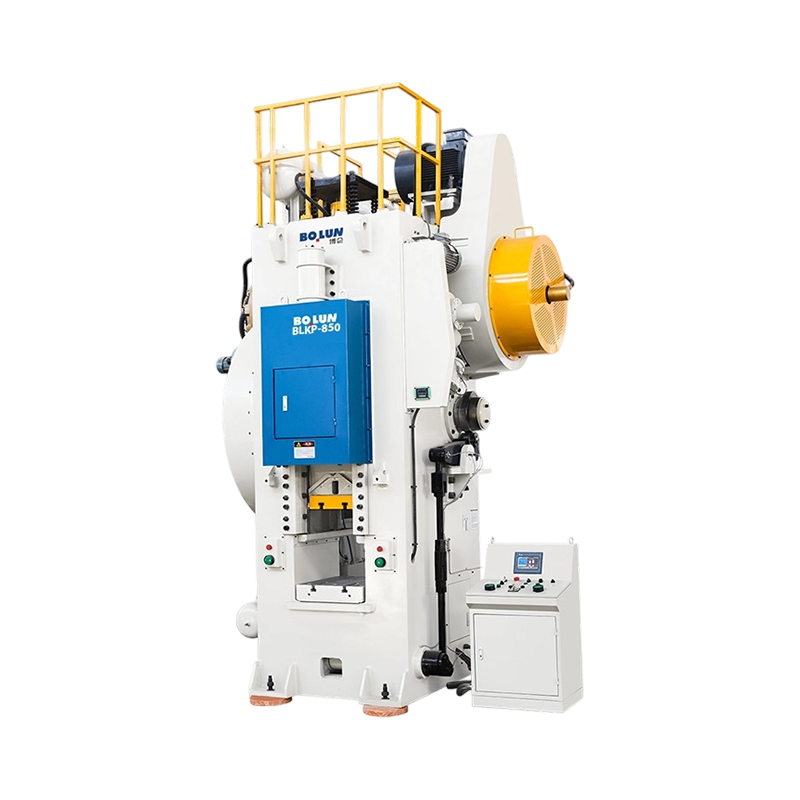 BLKP-850 Industrial Strength Heavy-Duty Cold Forging PressAn 8500 kN heavy-duty press with an ultra-rigid frame and 180 mm thickened bolster, it maintains stability under high loads, ideal for demanding automotive and machinery component forging.View Product →
Cold forming technology offers a clear path to lower costs and higher strength for the right part family. But the process depends on a machine that is purpose-built for the loads it will see. Before you settle on a spec, verify the machine's frame rigidity, the stroke adjustment range, and the available tonnage for the actual part volume. If your project involves non-standard dimensions or unique deformation sequences, a manufacturer with an in-house design team can often provide a custom solution. The most efficient next step is to send your part drawings to a reliable press supplier and request a feasibility review with force calculations and a production quote.





A production manager walks into an engineering meeting with a stack of drawings...
A production manager at a mid-size metal component plant recently faced a probl...
A fastener plant in Taizhou receives a request from an automotive tier-one supp...
A mid-size fastener manufacturer recently faced a familiar problem: its CNC lat...
A cold forging die rarely announces its failure in advance. One day the press r...
A tooling engineer quotes a new bracket program and specifies a 160-ton press. ...
Contact Us

+86-575-83362228

+86-13735238388

+86-575-83362999

+86-15158259588

Hangzhou Office Add: No. 332 Wangjiang East Road, Shangcheng District

No.1 Linjiang Road East, Xiaren, Jinting Town, Shengzhou City, Zhejiang Province, China
Ready to Begin?
Get in Touch

Now!

ZHEJIANG BOLUN
 English
 中文简体
中文简体
