
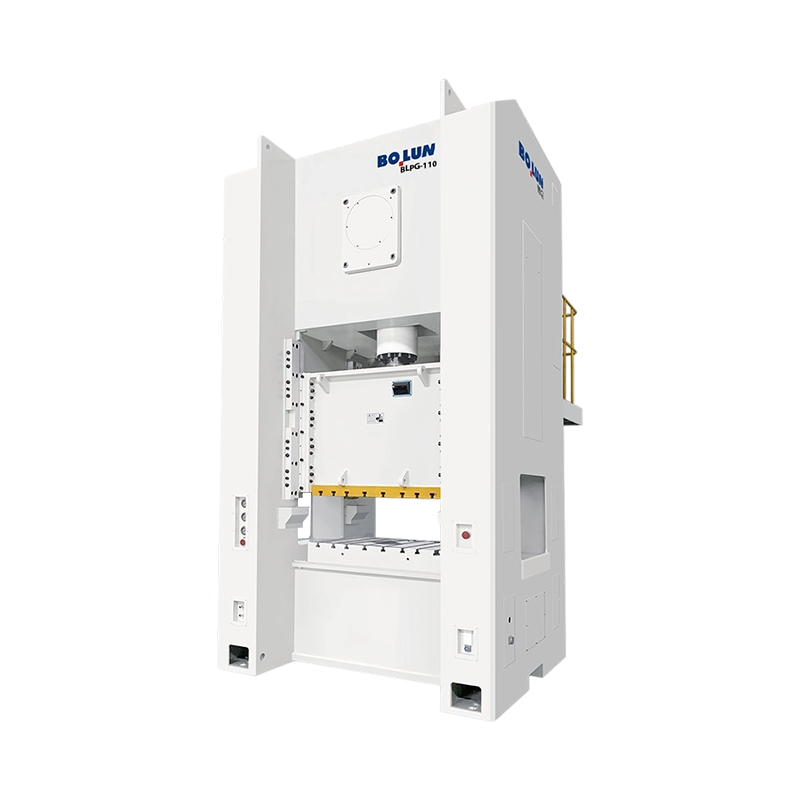


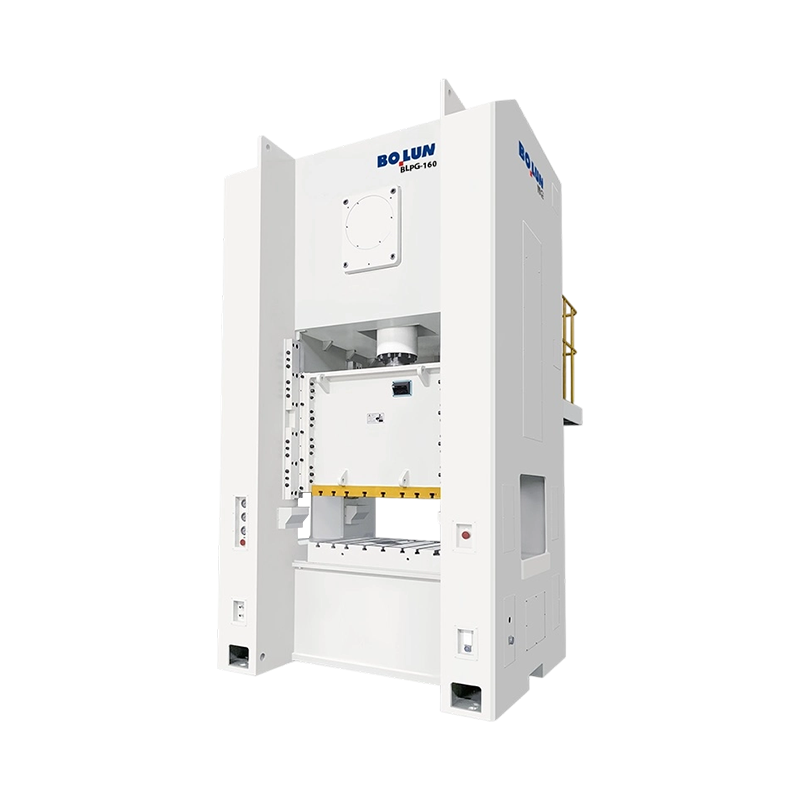
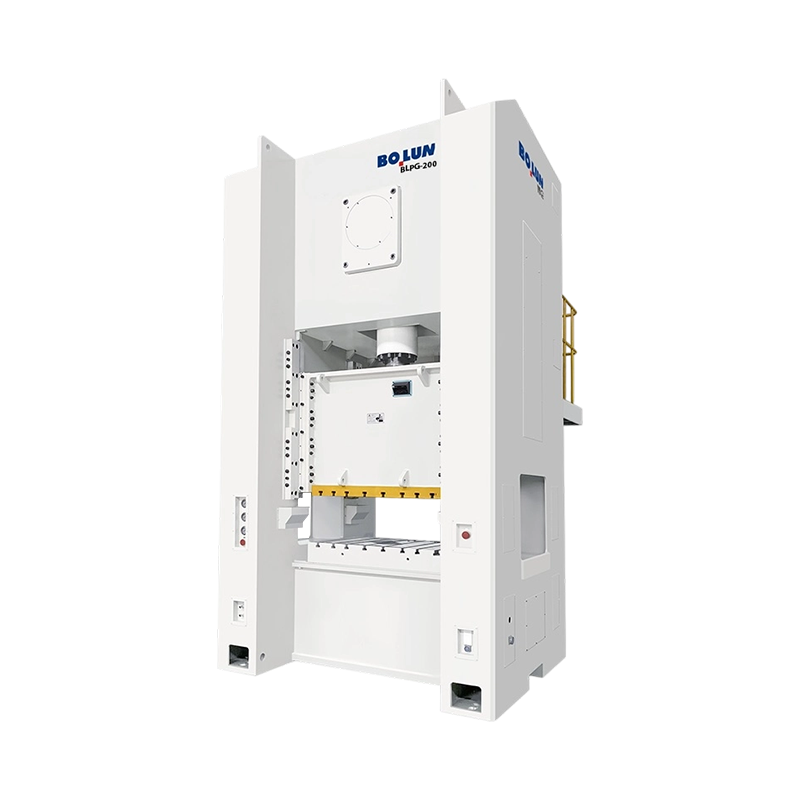
Our BLPA Series closed-Type Single-Point Power Press represents the pinnacle of precision, reliability, and efficiency in modern metal forming. Specifically designed to handle rigorous stamping tasks—such as the 3.2mm thick material processing common in automotive and appliance industries—this machine is your ultimate partner for high-output production.
High-Rigidity Structural Integrity
The machine features a high-tensile, steel-plate welded frame that undergoes a specialized heat treatment process for stress relief. This ensures maximum structural rigidity and minimal deflection under heavy loads, directly resulting in superior part accuracy and significantly extended tool life.
Superior Transmission & Core Components
At the heart of the press is a forged 42CrMo alloy steel crankshaft, offering exceptional fatigue resistance compared to traditional cast components. Coupled with high-grade CuSn12 tin bronze bushings, our transmission system ensures smooth power delivery and reduced heat generation, even during continuous three-shift operations.
Advanced Pneumatic Control & Safety
Equipped with a high-performance pneumatic friction clutch and brake unit, the machine provides rapid response and pinpoint stopping accuracy. Safety is paramount; thus, we integrate a dual solenoid safety valve and a hydraulic overload protector to prevent accidental continuous strokes and protect the machine from tonnage spikes.
Precision Guidance for Complex Tasks
The extended 6-sided (or optional 8-sided) long guide rails provide exceptional slide stability. This high-precision guidance minimizes lateral movement, ensuring consistent die clearance even during off-center loading, which is critical for complex progressive die applications.
Seamless Automation Integration
Powered by a PLC-based control system with a user-friendly HMI, our press is fully optimized for synchronization with NC servo feeders and robotic systems. Whether you are producing architectural brackets or automotive components, our equipment offers the flexibility and "Handshaking" capabilities required for a fully automated smart factory.
Choose Bolun High-Precision Machinery—where durability meets digital automation.
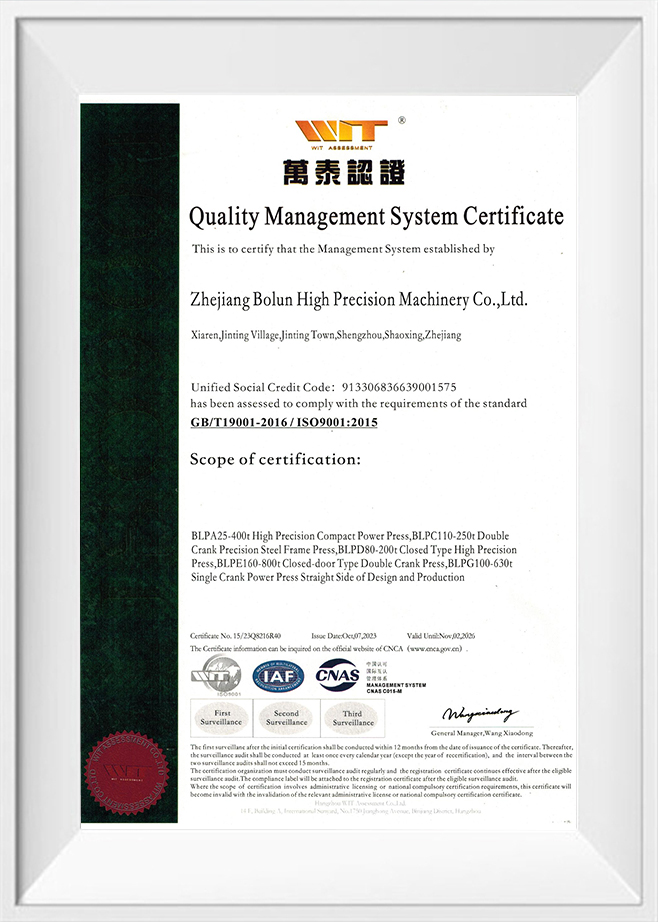
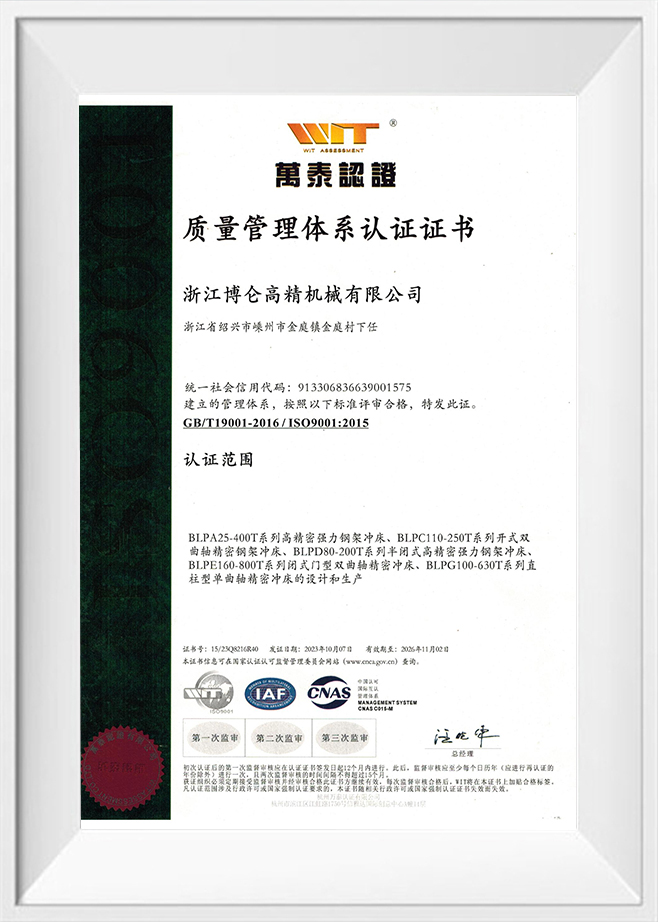
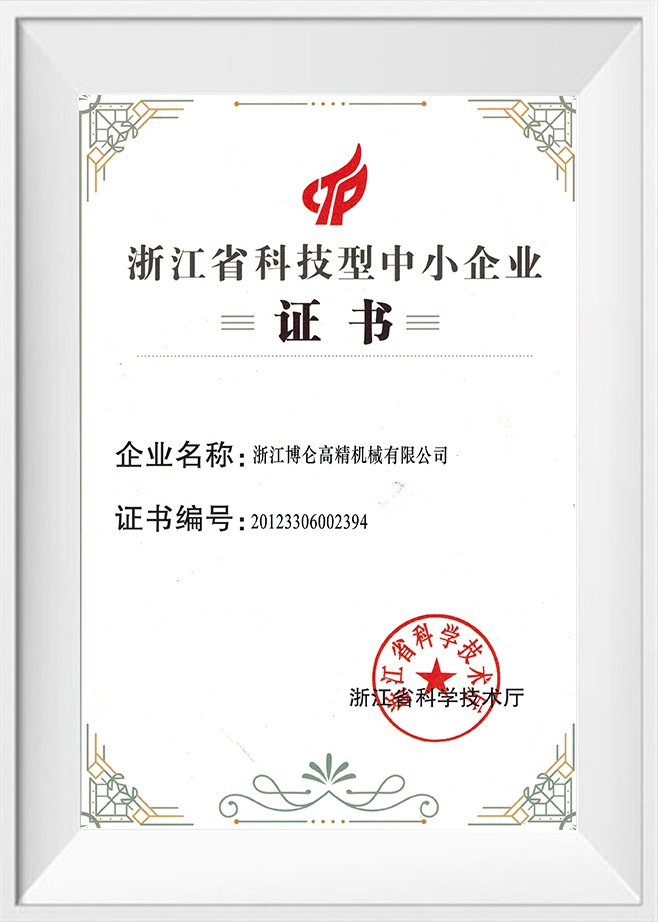
As China Closed-Type Single-Point Press Manufacturers and Closed-Type Single-Point Press Suppliers, Zhejiang Bolun High-Precision Machinery Co., Ltd. is located in Zhejiang, the heart of China’s precision manufacturing. With two decades of deep roots in the machinery manufacturing industry, the company has leveraged profound industry accumulation and technical breakthroughs to evolve into a modern, leading enterprise in high-precision forming equipment. We integrate R&D, design, production, sales, and service. From our early days of persevering through challenges to our current leadership in the fields of forging and casting machinery, Bolun Machinery has established a professional, mature, and efficient production management system. We are dedicated to providing global customers with superior industrial machine tool solutions.
 More About Us
BOLUN
More About Us
BOLUN

0+
years
Industry Experience

0+
Units Produced (Previous Year)

0+
Number of Employees

0+
$
Million Annual Output Value

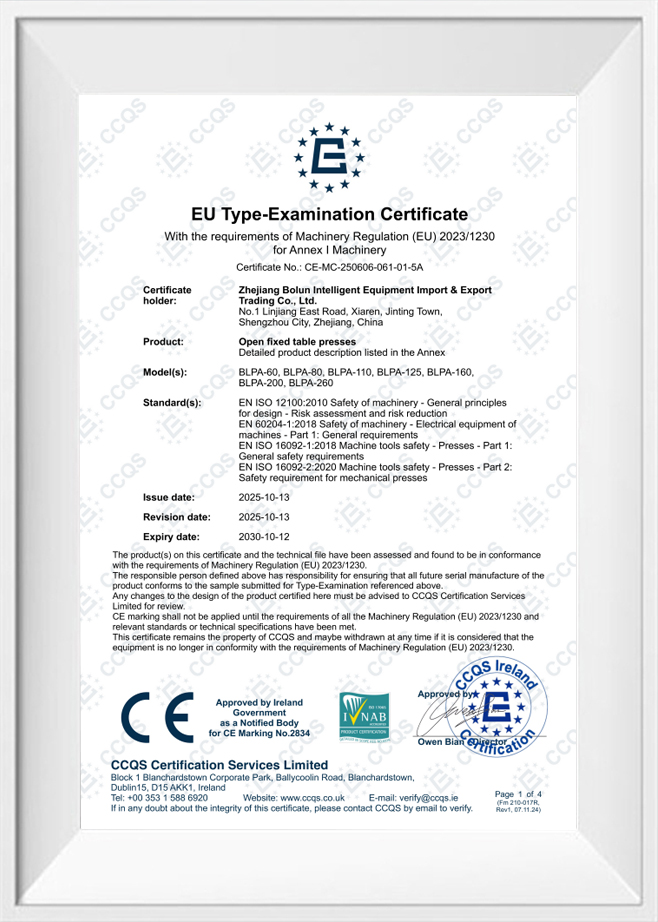
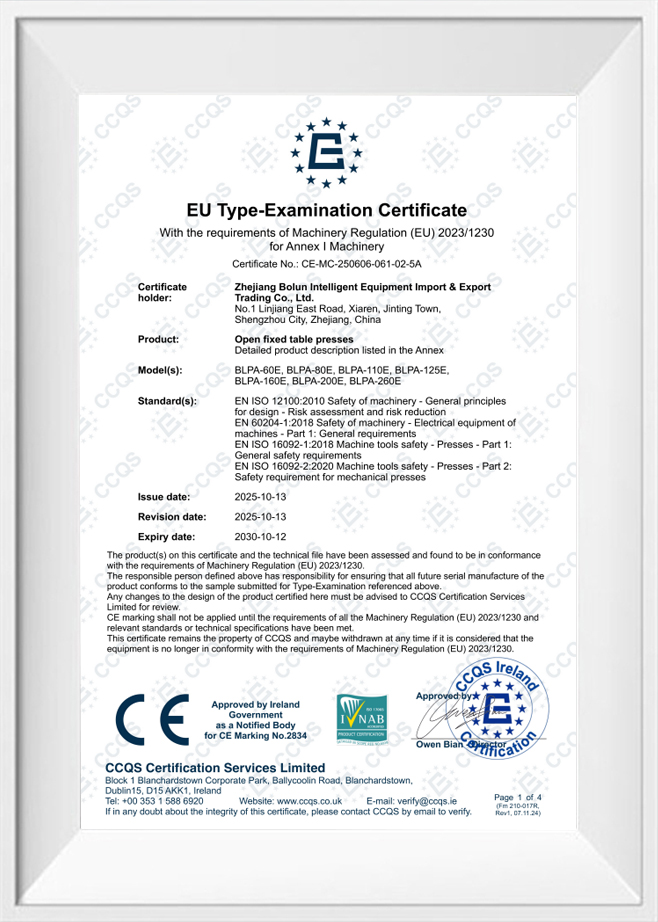
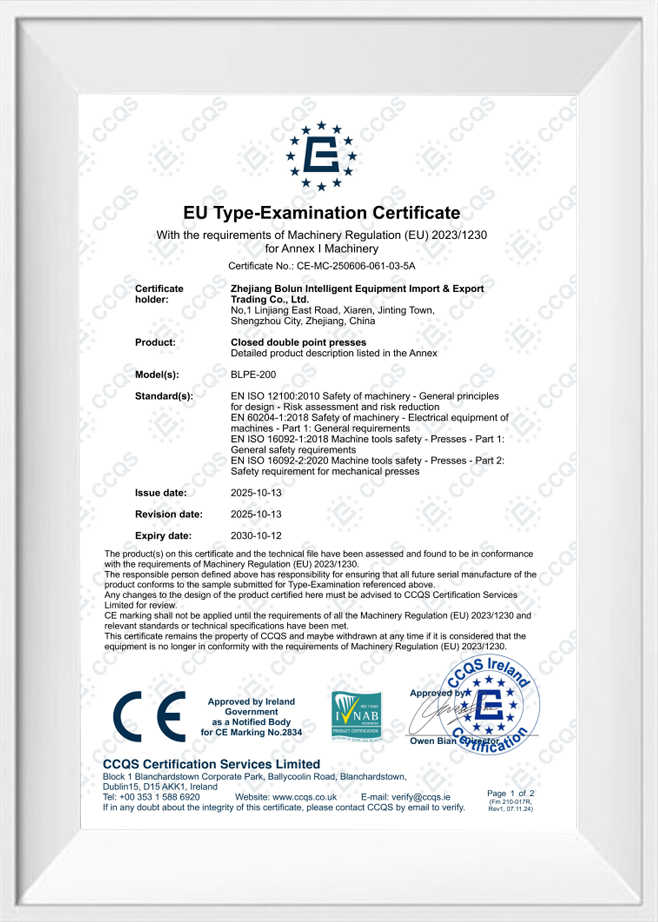
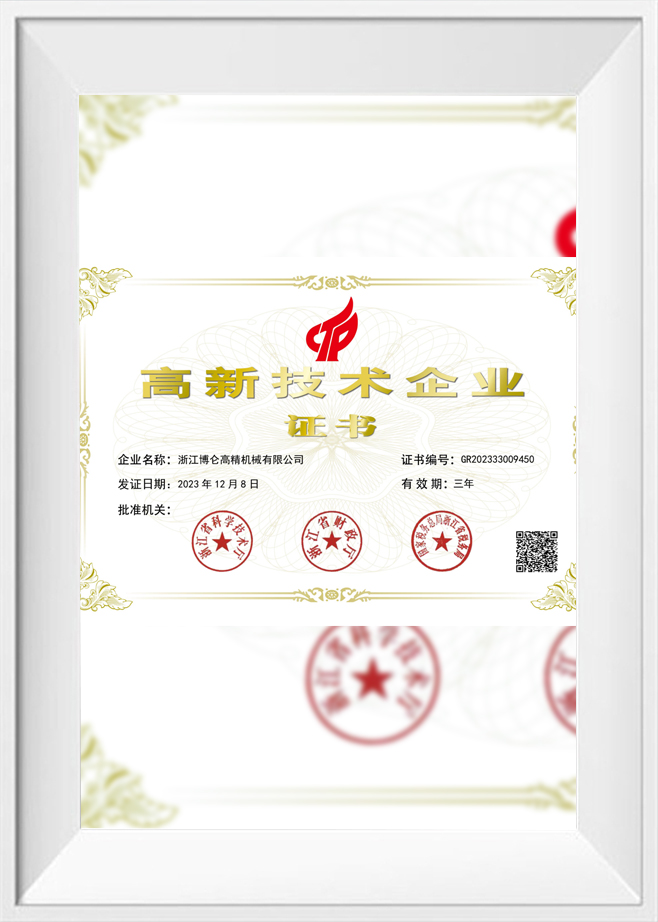
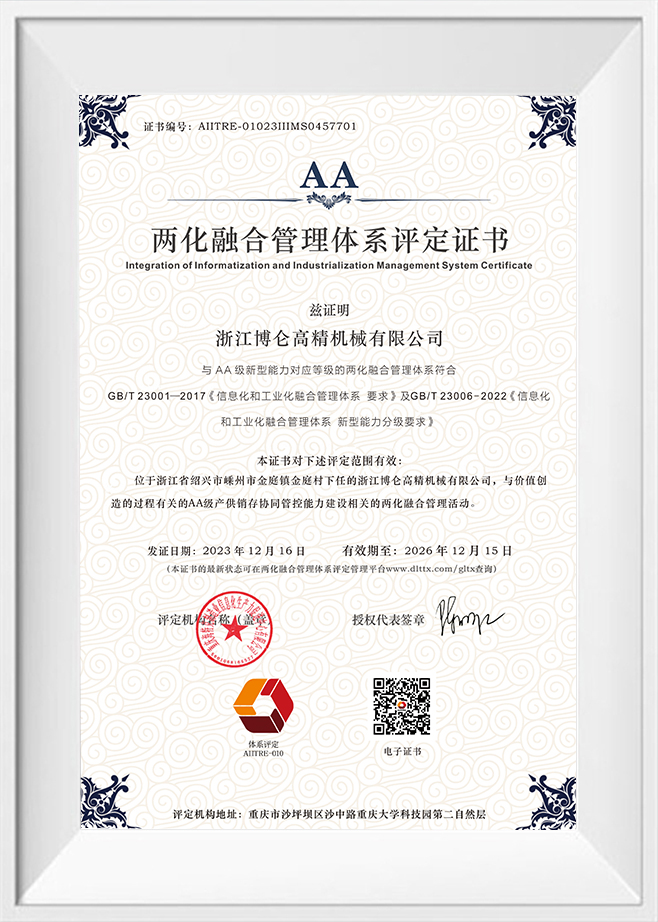
Put a 160-ton open-frame press and a 160-ton closed-frame press side by side and the difference is visible from thirty feet away. One leaves the die area open on three sides so an operator can slide a wide blank in by hand; the other wraps the same die inside a box of stress-relieved steel that barely flexes at full l...
Start With the Purchase Decision, Not the Definitions A procurement engineer comparing a 200-ton hydraulic press quote with a 200-ton mechanical power press quote often finds two different machines, two different cost structures, and two different production promises, even when the tonnage number is identical. That ha...
A tooling engineer quotes a new bracket program and specifies a 160-ton press. The die is built, the machine is installed, and on the first production run the slide stalls six millimetres above bottom dead centre. Nothing is broken. The tonnage was rated at the bottom of the stroke, and the work is being done higher u...
In high-speed, round-the-clock manufacturing environments, maintaining the precise position where the slide reaches its lowest point, known as Bottom Dead Center or BDC, is a primary challenge. During a continuous twenty-four-seven production schedule, a closed-type single-point press is subjected to repeated mechanical cycles that generate friction within the bearings, gears, and slide guides. This friction generates heat, which gradually transfers to the main crankshaft, connecting rods, and the press frame itself. Because steel and cast iron expand when heated, this thermal buildup causes the mechanical linkages to elongate, pushing the slide slightly lower than its calibrated zero-position. This slow vertical shift is the primary cause of BDC drift, which directly impacts the penetration depth of the tooling and can result in inconsistent part dimensions.
Beyond thermal expansion, dynamic factors also contribute to BDC variations. When operating at high speeds, the inertial forces of the reciprocating slide and tooling increase. This inertia creates temporary elastic stretching in the frame and connection linkages during the reversing phase of the stroke. As the machine speeds up or slows down to accommodate material feeding variations, these dynamic loads change, causing the BDC to shift dynamically. To prevent quality issues, stamping operators must address both the gradual thermal growth and the rapid dynamic variations that occur throughout long production runs.
To mitigate the gradual thermal growth of critical drive components, modern stamping systems employ advanced lubrication and thermal management strategies. The main bearings and eccentric shaft of the closed-type single-point press are continuously supplied with oil from a centralized lubrication system. Rather than simply recycling this oil, high-duty presses route the lubricant through an active heat exchanger equipped with precise temperature sensors. By cooling the oil to a standardized operational temperature before reintroducing it to the bearing surfaces, the system acts as an active heat sink, carrying away the thermal energy generated by high-speed friction and stabilizing the internal temperature of the mechanical drive train.
Stabilizing the lubricant temperature minimizes the temperature differential between the start of a shift and hours of continuous operation. Zhejiang Bolun High-Precision Machinery Co., Ltd. builds robust thermal control systems that monitor the frame and drive temperatures in real-time. By maintaining a stable thermal gradient across the entire machine structure, the rate of physical expansion in the crankshaft and slide connection is kept within tight boundaries, allowing the press to run continuously with minimal mechanical displacement and avoiding the need for frequent manual shut-downs to let the components cool.
While thermal stabilization limits the rate of growth, high-precision operations require active, real-time correction to eliminate BDC drift entirely. Modern press control networks integrate dynamic closed-loop compensation systems that utilize high-resolution sensors, such as eddy-current sensors or linear encoders, installed directly on the press bed or guide columns. These sensors measure the exact distance between the slide and the bolster plate at the bottom of every stroke, transmitting this data to the central processing unit in microseconds. If the controller detects that the slide is drifting lower due to heat or load changes, it automatically triggers a micro-adjustment of the slide height mechanism during the non-working portion of the stroke.
This on-the-fly adjustment is carried out by a high-torque motorized adjustment system integrated into the slide assembly. The system makes sub-micron corrections to the connection rod length, compensating for thermal elongation without interrupting the production flow. This integration of sensor feedback and precise motor control ensures that the closed-type single-point press maintains consistent forming depth over millions of consecutive cycles, supporting highly automated production lines where manual intervention must be avoided.
The table below provides an overview of different approach strategies utilized to manage BDC drift during continuous operations, highlighting their implementation complexity and correction capabilities.
| Control Strategy | Operational Principle | Average BDC Drift Range (mm) | Implementation Cost | Maintenance Requirement |
|---|---|---|---|---|
| Standard Air Cooling | Passive dissipation through ambient air flow | 0.080 to 0.150 | Baseline | Low (cleaning fan units only) |
| Active Oil Chilling | Closed-loop oil cooling via external heat exchanger | 0.030 to 0.060 | Moderate | Periodic filter changes and coolant checks |
| Static Compensation | Pre-calculated mathematical formulas based on running time | 0.025 to 0.045 | Low (software integrated) | Requires regular sensor recalibration |
| Real-Time Closed-Loop | Dynamic sensor monitoring with motorized slide correction | 0.005 to 0.015 | High | Regular calibration of displacement sensors |
As indicated in the comparative data, passive methods alone are generally insufficient for applications requiring micro-level tolerances. Achieving the highest level of consistency requires a combined approach where active oil temperature stabilization handles the bulk of the thermal energy, while real-time sensor feedback manages the remaining minute variations. Implementing these dual systems allows manufacturers to meet strict quality requirements during high-speed, continuous stamping operations.
The geometric layout of the press frame plays a critical role in how thermal expansion affects overall accuracy. Asymmetric frames, such as standard open-back structures, tend to expand unevenly when subjected to temperature changes, causing the frame to tilt forward and misalign the punch. A closed-type single-point press utilizes a symmetric, closed-frame configuration that distributes the thermal load evenly across both the left and right vertical uprights. This structural symmetry ensures that any thermal expansion occurs uniformly in the vertical direction, keeping the slide perfectly parallel to the bed and preventing horizontal shearing forces that can damage the tooling.
In addition to structural design, the selection of materials with appropriate thermal properties is crucial. Bolun Machinery utilizes high-density, stress-relieved steel plates and cast components that have highly predictable thermal expansion coefficients. Before machining, these structures undergo thermal stress-relieving cycles to ensure that the internal grain structure of the metal is fully stabilized. This manufacturing process prevents the frame from warping or distorting as it experiences the thermal cycling associated with transitioning between active production states and idle factory conditions, maintaining the long-term geometrical alignment of the press guides.
Managing BDC drift is not solely a function of the press design; it also requires careful coordination with the tooling and die accessories. In progressive dies, nitrogen gas cylinders are frequently used to provide consistent blank holder force. However, during continuous 24/7 runs, these cylinders can heat up due to high-frequency compression, leading to internal pressure changes that alter the overall resistance force felt by the press slide. If the tonnage requirements shift dynamically due to changing cylinder pressure, the elastic deflection of the press frame will vary, causing minor fluctuations in the physical BDC position.
To prevent these variations, manufacturing lines integrate external nitrogen manifold systems with pressure regulation valves that keep the cylinder pressure constant regardless of temperature changes. Ensuring a uniform resistance force helps stabilize the total forming tonnage, which in turn keeps the elastic deflection of the closed-type single-point press constant across all shifts. By combining stable tool forces, rigid symmetric frame construction, and responsive closed-loop compensation systems, modern factories can successfully run high-precision stamping operations around the clock with highly consistent part quality.
Q: What measures are integrated into your closed-type single-point press to stabilize the Bottom Dead Center (BDC) during intensive, around-the-clock runs?
A: Thermal expansion of mechanical linkages is managed through an active lubrication cooling system that stabilizes oil temperatures, combined with real-time closed-loop displacement sensors. Zhejiang Bolun High-Precision Machinery Co., Ltd. builds these systems to monitor slide position dynamically, executing sub-micron adjustments to the slide height mechanism to offset any gradual thermal drift without stopping the line.
Q: Why is a closed-type single-point press preferred over an open-type alternative when manufacturing high-tolerance electrical or automotive components?
A: The symmetric closed-frame design completely eliminates the angular deflection, or frame-opening effect, that is common in gap-frame machines under heavy loads. By directing all reaction forces along a perfectly vertical path, the closed frame ensures that the tool alignment remains highly accurate, preventing uneven die wear and maintaining tight part tolerances.
Q: How does the drive train of your single-point press handle the heavy mechanical shock associated with processing high-strength structural materials?
A: The single connection point is supported by high-alloy crankshafts and heavy-duty, oil-flooded bushings designed to distribute severe impact loads evenly. This design is backed by Bolun Machinery's robust frame construction, which undergoes thorough thermal stress-relieving to absorb the sudden energy release of metal fracturing or blanking without micro-shifting.
Q: How does your press protect expensive, sensitive tooling from damaging overloads during high-frequency production cycles?
A: Each press is equipped with a highly responsive hydraulic overload protection system located inside the slide assembly. In the event of a double-sheet feed or tool jam, the hydraulic pressure drops instantly, stopping the slide movement in milliseconds to prevent structural damage to both the tooling and the press frame itself.
Q: Can the slide stroke profiles and shut height adjustments be modified to accommodate specialized progressive dies with different shut heights?
A: Yes, our comprehensive design and manufacturing systems allow us to equip these presses with motorized slide adjustment mechanisms and advanced programmable control units. This configuration enables rapid, repeatable tooling setups and easy adjustments to accommodate varying die heights and complex, multi-stage stamping sequences.
Contact Us

+86-575-83362228

+86-13735238388

+86-575-83362999

+86-15158259588

Hangzhou Office Add: No. 332 Wangjiang East Road, Shangcheng District

No.1 Linjiang Road East, Xiaren, Jinting Town, Shengzhou City, Zhejiang Province, China
Ready to Begin?
Get in Touch

Now!

ZHEJIANG BOLUN
 English
 中文简体
中文简体