
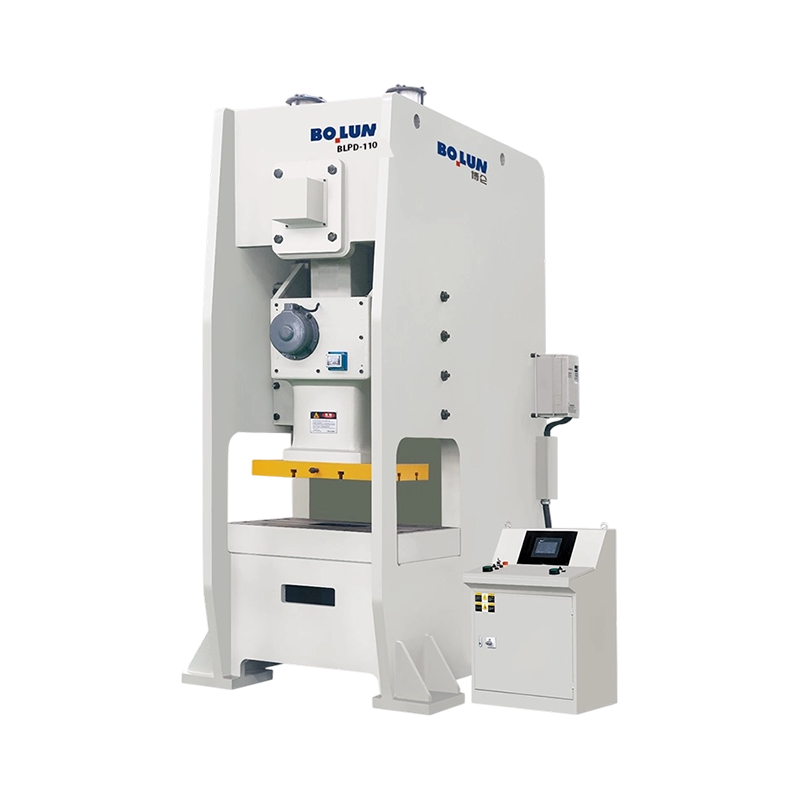


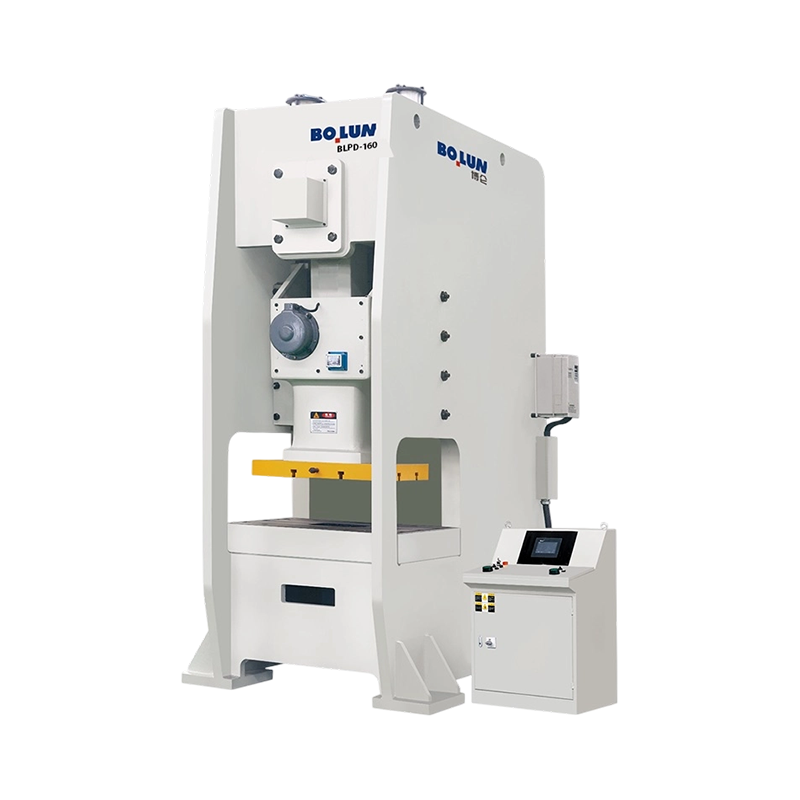
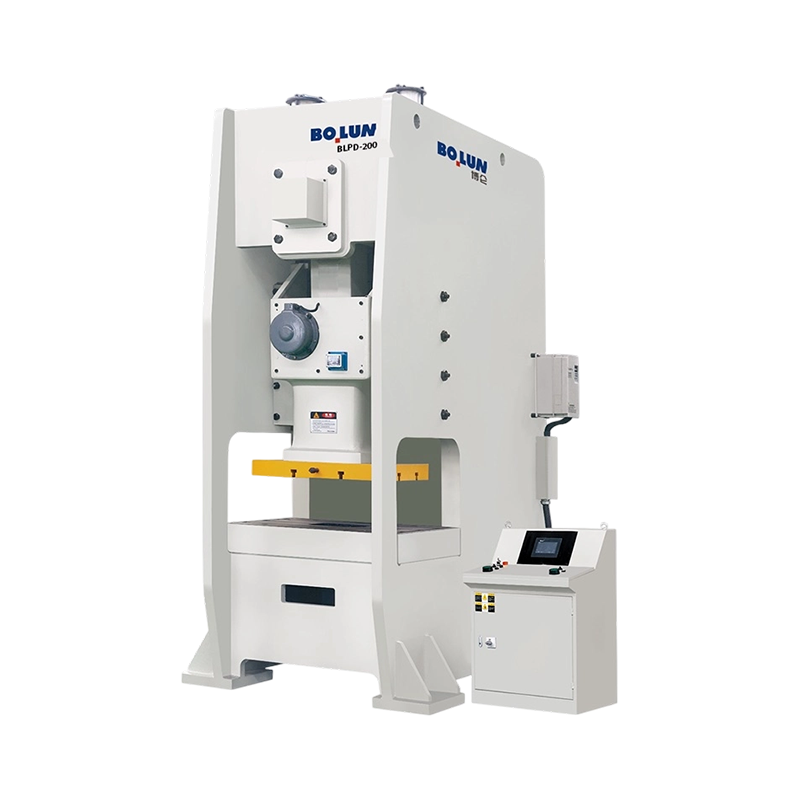
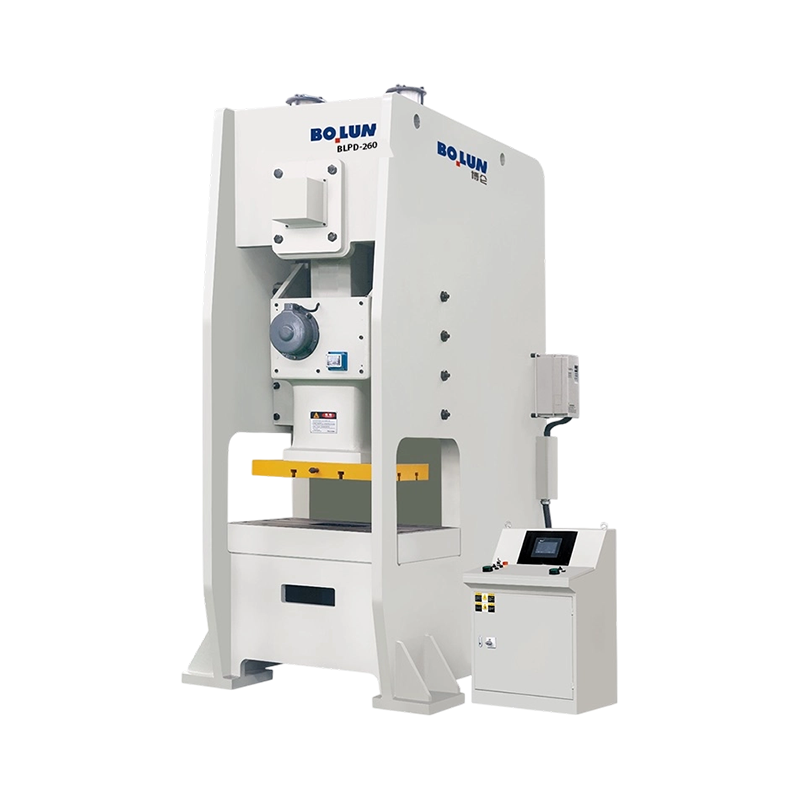
The Bolun Semi-Closed Single-Point Power Press is a hybrid engineering masterpiece designed for manufacturers who require higher precision and structural stiffness than a standard C-frame can provide, without moving to the larger footprint of a fully closed H-frame. By integrating a reinforced "Semi-Closed" frame design, this press offers an exceptional balance of heavy-duty performance and easy accessibility.
Engineered to Minimize Angular Deflection
The defining advantage of the Bolun Semi-Closed series is its ultra-rigid, steel-plate welded frame. Unlike traditional open-back presses that may experience "yawning" or angular deflection under high tonnage, our semi-closed architecture utilizes reinforced side columns to significantly limit frame opening. This ensures that the punch and die remain in precise alignment throughout the stroke, which is essential for maintaining part accuracy and extending the lifespan of expensive progressive dies, especially when processing materials exceeding 3.2mm in thickness.
Open-Access Versatility for Smart Production
While providing H-frame-like stability, the Semi-Closed design maintains the excellent front and side accessibility of a C-frame press. This makes it an ideal platform for both manual operations and high-speed automated lines. Its compact design allows for easy integration with NC servo feeders, uncoilers, and robotic transfer systems, providing maximum throughput in a space-efficient layout.
Uncompromising Build Quality
True to Bolun’s signature standards, the internal transmission system features a forged 42CrMo alloy steel crankshaft and premium CuSn12 tin bronze bushings. These high-grade materials, combined with a high-torque pneumatic friction clutch and a precision brake unit, ensure smooth power delivery and minimal thermal buildup during continuous three-shift operations.
Advanced Safety and Control
Every unit is managed by a PLC-based smart control system with a high-resolution HMI for intuitive operation. To safeguard your investment, we include a hydraulic overload protector to prevent equipment damage from tonnage spikes and a dual solenoid safety valve for failsafe operation. The Bolun Semi-Closed Single-Point Press is the definitive choice for precision stamping, offering the rigidity you need and the flexibility you want.
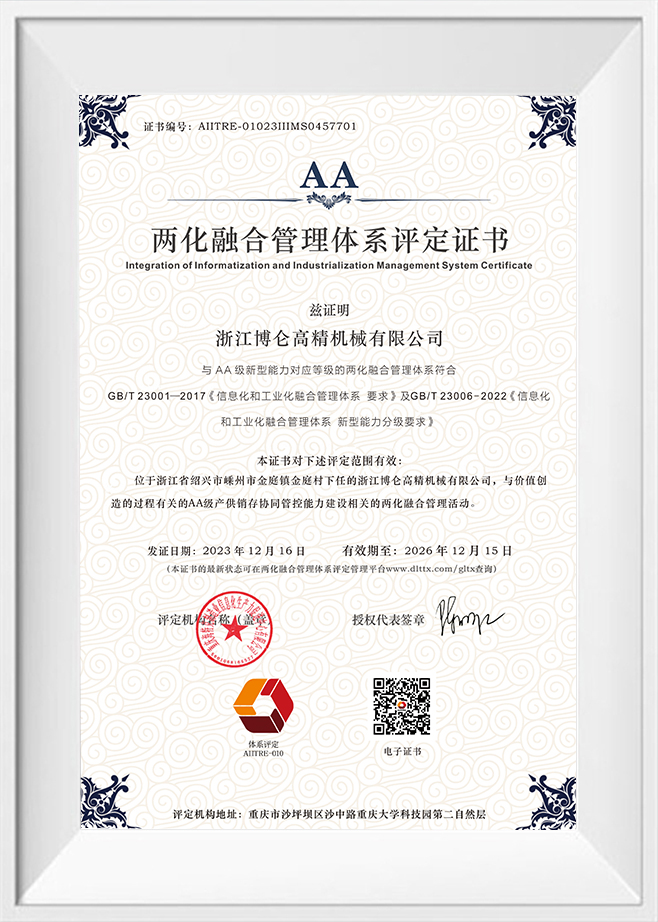
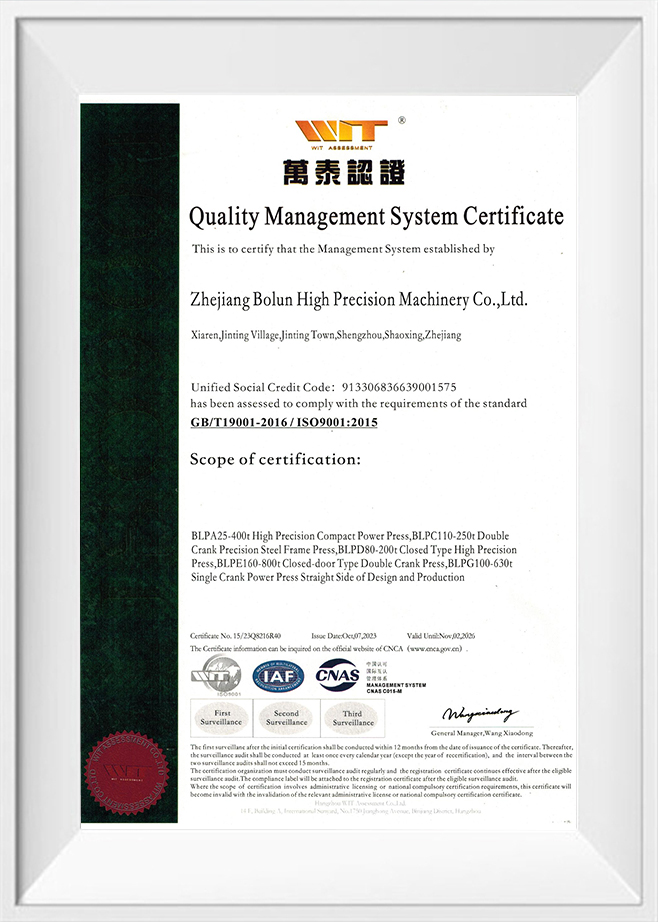
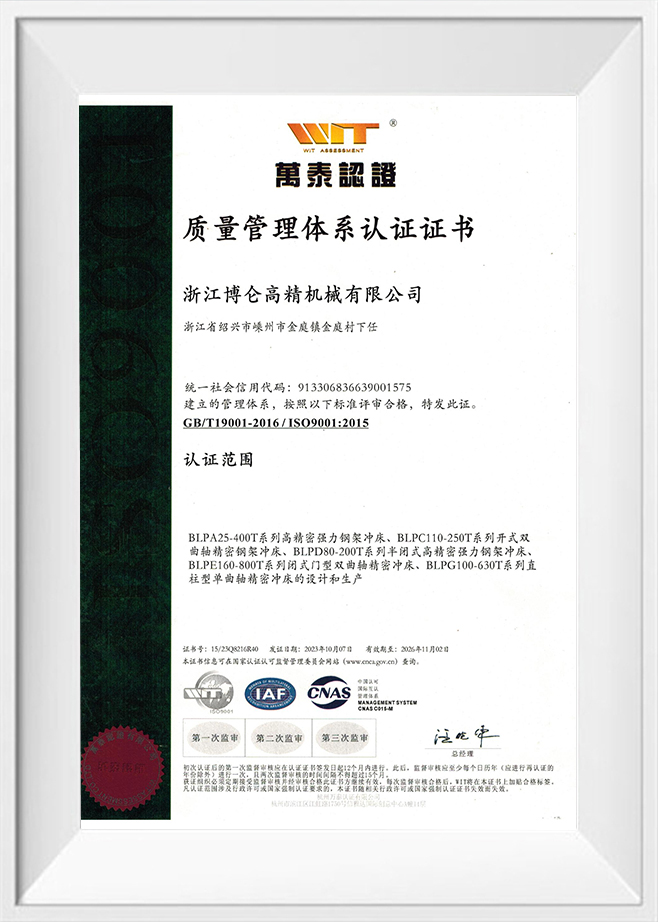
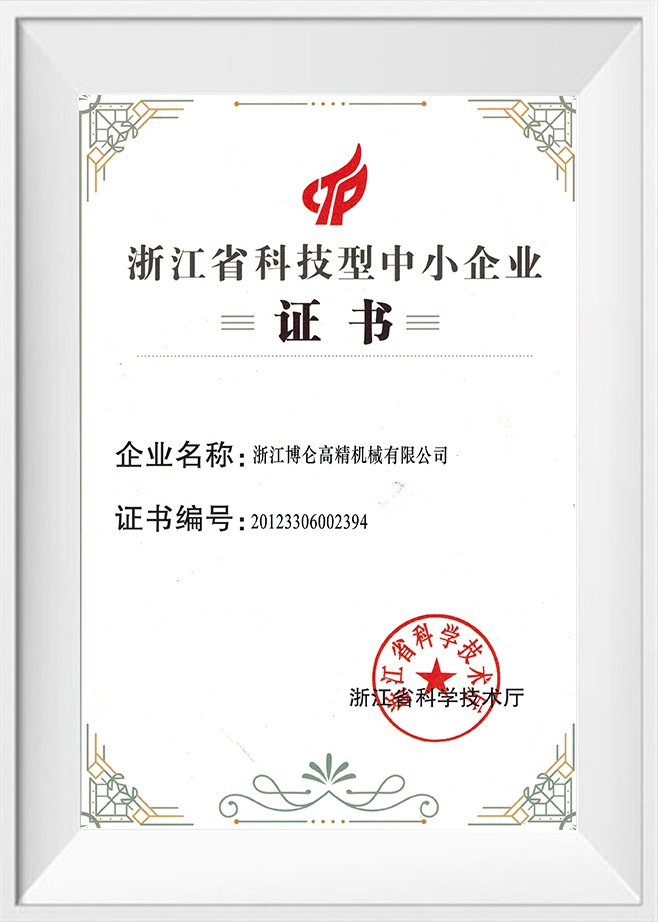
As China Semi-Closed Single-Point Power Press Manufacturers and Semi-Closed Single-Point Power Press Suppliers, Zhejiang Bolun High-Precision Machinery Co., Ltd. is located in Zhejiang, the heart of China’s precision manufacturing. With two decades of deep roots in the machinery manufacturing industry, the company has leveraged profound industry accumulation and technical breakthroughs to evolve into a modern, leading enterprise in high-precision forming equipment. We integrate R&D, design, production, sales, and service. From our early days of persevering through challenges to our current leadership in the fields of forging and casting machinery, Bolun Machinery has established a professional, mature, and efficient production management system. We are dedicated to providing global customers with superior industrial machine tool solutions.
 More About Us
BOLUN
More About Us
BOLUN

0+
years
Industry Experience

0+
Units Produced (Previous Year)

0+
Number of Employees

0+
$
Million Annual Output Value

Put a 160-ton open-frame press and a 160-ton closed-frame press side by side and the difference is visible from thirty feet away. One leaves the die area open on three sides so an operator can slide a wide blank in by hand; the other wraps the same die inside a box of stress-relieved steel that barely flexes at full l...
Start With the Purchase Decision, Not the Definitions A procurement engineer comparing a 200-ton hydraulic press quote with a 200-ton mechanical power press quote often finds two different machines, two different cost structures, and two different production promises, even when the tonnage number is identical. That ha...
A tooling engineer quotes a new bracket program and specifies a 160-ton press. The die is built, the machine is installed, and on the first production run the slide stalls six millimetres above bottom dead centre. Nothing is broken. The tonnage was rated at the bottom of the stroke, and the work is being done higher u...
In automated metal forming layouts, the integration of peripheral equipment such as coil feeders, scrap extraction units, and quick die change components determines the overall throughput rate of the line. A semi-closed single-point power press occupies a critical position in these setups, offering a compromise between the open accessibility of a traditional C-frame press and the high rigidity of a fully enclosed straight-side press. The primary design challenge is to establish wide lateral clear zones through the frame uprights to accommodate the movement of raw materials and heavy tooling while ensuring the frame does not experience angular deflection under load. When the press slide descends to deform the metal, the reaction force pushes upward on the crown and downward on the bed, creating a yawning effect in standard open-back frames. In a semi-closed configuration, the addition of structural tie rods or reinforced side columns mitigates this deflection, but these components must be carefully positioned to avoid blocking the lateral entry and exit paths required by modern production automation.
To maintain high structural stiffness without obstructing lateral material flow, engineers utilize advanced finite element analysis to modify the geometry of the side pillars. Instead of using thick, solid barriers that block the left and right sides of the bed, the semi-closed frame is designed with hollow, high-inertia box structures or optimized tie-rod layouts that leave designated window apertures. These windows are calculated to provide sufficient space for pneumatic or electronic roll feeders to deliver sheet metal directly to the die face. Zhejiang Bolun High-Precision Machinery Co., Ltd. applies this method of structural optimization by using thick steel plates and strategically positioned internal ribbing around the lateral access ports. This reinforcing layout ensures that the mechanical stresses are routed around the window openings, preventing the frame columns from bowing outward under high-frequency load cycles while keeping the passage clear for automatic feeding equipment. The welding sequences for these reinforced pillars are executed under strict temperature controls, followed by dynamic stress relieving, which prevents the steel from warping over time. Consequently, the window dimensions remain structurally stable over millions of stroke repetitions, which is a prerequisite for maintaining the precise mounting alignment required by high-speed electronic roll feeders.
When high-speed automatic roll feeders and scrap shears operate in tandem with a semi-closed single-point power press, they generate secondary harmonic vibrations. These vibrations can travel back into the press bed, affecting the micro-adjustments of the QDC clamping cylinders or the electronic sensors monitoring the slide position. To prevent this, the contact interfaces where the lateral automation mounts to the press bed are fitted with elastomeric dampening pads. These pads isolate the high-frequency vibrations, ensuring that the electronic signals traveling to the press controller remain clear and free of electrical or mechanical noise. Furthermore, the bolster extensions used to support the die during QDC operations are designed with robust mechanical support pillars that anchor to the foundation. This anchoring prevents the weight of the incoming die from tilting the press bed or throwing the feed line out of the horizontal plane, ensuring a smooth transition during changeover sequences.
Quick Die Change systems, or QDC, require unobstructed horizontal pathways along the bolster plate to slide heavy die sets in and out of the working area. In a semi-closed single-point power press, this movement is facilitated by integrating rolling rails directly into the T-slots of the bed and extending them through the lateral frame openings. To ensure these QDC rails function smoothly, the bolster height and the lower edge of the side windows must be aligned precisely, leaving no step or barrier that could catch the die sub-plate. Furthermore, the hydraulic piping and electrical wiring for the upper and lower multi-point clamps must be routed through internal frame conduits rather than dangling in the access pathways. By embedding these utilities within the structural columns, the press maintains a clear envelope for automated die changers to lock the tooling in place within minutes, reducing transition times during product changeovers.
The interaction between side opening dimensions, structural deflection, and automation compatibility requires careful balancing during the planning phase. The table below presents the quantitative relationship between different frame window widths and their corresponding structural and operational metrics in a standard production series.
| Aperture Width (mm) | Structural Deflection under Load (mm) | Feeder Compatibility (Max Width) | QDC Rail Travel Speed (m/min) | Continuous Operational Temperature (C) |
|---|---|---|---|---|
| 350 | 0.020 to 0.030 | 280 mm Coil Width | 4.5 | 38 to 44 |
| 500 | 0.025 to 0.038 | 420 mm Coil Width | 6.0 | 40 to 45 |
| 650 | 0.032 to 0.045 | 550 mm Coil Width | 8.0 | 42 to 48 |
| 800 | 0.040 to 0.055 | 700 mm Coil Width | 10.0 | 43 to 50 |
The tabulated data demonstrates that as the lateral aperture width increases to accommodate larger coils and faster QDC speeds, structural deflection rises if frame dimensions remain static. To counter this tendency, manufacturers increase the plate thickness of the crown and bed in proportion to the window width, maintaining a stable deflection rate across all model sizes and preventing premature tooling wear during heavy-duty stamping operations.
Even when physical clearances are established, the dynamic vibration generated by the high-speed feed cycle can impact the accuracy of the press stroke. If the automatic feeder is mounted directly to a vibrating section of the frame, the raw material can experience slight feed-length variations, leading to progression errors in the die. To decouple these forces, the mounting brackets for the lateral feeders are isolated from the main frame using damping materials, or they are anchored directly to the factory floor. Meanwhile, the slide of the semi-closed single-point power press is guided by high-precision, long-length gibs that maintain a strictly vertical path. Bolun Machinery coordinates the mechanical integration of these systems to ensure that the material is fed perpendicular to the slide travel. This precise relationship prevents the strip from twisting or buckling as it passes through the lateral openings, preserving the alignment of the punch and matrix under continuous, high-speed operating conditions.
Q: How does the frame of your semi-closed single-point power press resist angular deflection while still offering convenient lateral material access?
A: Zhejiang Bolun High-Precision Machinery Co., Ltd. designs these frames with heavy-duty box-type structures and strategically placed internal reinforcing ribs around the side window apertures. This layout routes the mechanical forces away from the openings, providing high structural stiffness that limits deflection under full load while keeping the side spaces completely clear for automated feeding devices.
Q: What measures prevent the installation of lateral automatic feeders from introducing progress errors during high-speed stamping?
A: The feeder mounting brackets are mechanically isolated from the vibrating sections of the main frame using specialized damping materials, or they are anchored directly to the shop floor. In addition, the press slide is constrained by extended, high-precision guide gibs that keep the stroke strictly vertical, ensuring that the raw material strip remains aligned with the progressive die at all times.
Q: How is the integration of Quick Die Change (QDC) systems facilitated through the side openings of this press?
A: The bolster plate height is aligned with the lower edge of the side windows, enabling roller rails to extend outward through the frame uprights without any step or obstacle. All auxiliary hydraulic lines and sensor cables for the die clamping systems are routed through internal conduits within the pillars, leaving a clean, unobstructed envelope for swift lateral die transitions.
Q: How does Bolun Machinery protect the press columns from structural warping caused by the localized stresses of continuous lateral feeding?
A: Our advanced production management system subjects every fabricated semi-closed frame to a thorough thermal annealing and stress-relieving process. This heat treatment eliminates residual welding stresses and stabilizes the internal grain structure of the steel, preventing the frame columns and side apertures from warping over years of high-frequency operation.
Q: Can the size of the side openings be adjusted to accommodate wider raw material coils or larger progressive dies?
A: Yes, using our design and manufacturing resources, we can customize the width and height of the side windows to meet your automation needs. Our engineers perform detailed finite element analysis on every modification to ensure that the increased aperture size is fully compensated with additional steel plate thickness, preserving the structural rigidity of the press.
Contact Us

+86-575-83362228

+86-13735238388

+86-575-83362999

+86-15158259588

Hangzhou Office Add: No. 332 Wangjiang East Road, Shangcheng District

No.1 Linjiang Road East, Xiaren, Jinting Town, Shengzhou City, Zhejiang Province, China
Ready to Begin?
Get in Touch

Now!

ZHEJIANG BOLUN
 English
 中文简体
中文简体