
A procurement engineer comparing a 200-ton hydraulic press quote with a 200-ton mechanical power press quote often finds two different machines, two different cost structures, and two different production promises, even when the tonnage number is identical. That happens because “power press” usually means a mechanical press driven by a flywheel, clutch, crankshaft, eccentric gear, or toggle linkage, while a hydraulic press uses pressurized oil in a cylinder to generate force. The practical difference is not just the power source. It changes how force builds through the stroke, how fast the slide moves, how easily the force can be adjusted, what happens during an overload, and what kind of tooling and maintenance the shop must plan for.
The short answer: choose a power press when high-volume, repetitive stamping and forming need speed, repeatability, and low cost per part. Choose a hydraulic press when the process needs full-stroke force, adjustable pressure, long dwell, deep drawing, or low-volume flexibility. If the job needs both programmable motion and mechanical speed, a servo power press is the middle path. The rest of this comparison explains where those differences come from and how they affect real buying decisions.
On a mechanical power press, the motor turns a flywheel that stores kinetic energy. A clutch connects that energy to a crankshaft, eccentric shaft, or toggle mechanism, and the slide moves up and down on a fixed mechanical cycle. The force available at the slide is not constant. It rises as the crank angle approaches bottom dead center, where the mechanical advantage is greatest. That is why a mechanical press rated at 200 tons may deliver far less than 200 tons at mid-stroke but reach its full rating near the bottom of the stroke.
This behavior is ideal for blanking, piercing, trimming, shallow forming, and many stamping operations because the work happens near bottom dead center, where the press is strongest. The fixed cycle also makes it fast and highly repeatable. Once the ram is set and the die is correct, every stroke follows nearly the same motion. The trade-off is limited flexibility: changing the force curve usually means changing the machine, the drive, or the tooling.
A hydraulic press builds force through hydraulic pressure acting on a piston or ram. The pump, valve, and cylinder system can maintain pressure through much of the stroke, so the force is closer to constant. The pressure setting can often be adjusted by a relief valve or proportional control, and the slide can dwell under load for a set time. That makes hydraulic presses useful for deep drawing, compression molding, coining, straightening, and processes where the material must be held under pressure rather than struck at a single point.
Stroke control is one of the clearest differences. A mechanical press has a stroke length fixed by the crank radius or eccentric geometry. The bottom dead center position may be adjusted on some designs, but the basic motion profile is set by the drive. A hydraulic press can be built with a much longer, adjustable stroke, and the ram speed and pressure can be changed for different part programs. That flexibility is valuable when a shop runs multiple jobs on one machine or when a deep part needs slow forming and a pressure hold.
Servo presses are not hydraulic machines, but they blur the old categories. Because the servo motor can reverse, pause, or slow the ram at chosen positions, a servo power press can create a motion curve for drawing or forming without the energy losses of a hydraulic system. For a shop that needs hydraulic-like process control at mechanical-press speed, a closed-frame double-point servo press is often the more productive choice.
Speed is where mechanical power presses usually win. A mechanical press can run at high strokes per minute, with fast approach, working, and return portions of the cycle. Hydraulic presses are generally slower because oil must be pumped and valved through the system, and the ram may need controlled acceleration and deceleration. For a high-volume stamping line making millions of small parts, that speed difference directly affects labor cost, machine count, and floor space.
Hydraulic presses can still be productive in low-volume or high-mix work because setup and force adjustment may be faster. They also handle long dwell times that would be difficult or impossible on a standard mechanical press. The table below summarizes the practical trade-offs buyers should compare before requesting a final quotation.
| Variable | Hydraulic press | Power press |
|---|---|---|
| Force source | Hydraulic fluid under pressure | Mechanical flywheel, clutch, crank, eccentric gear, or toggle |
| Force over stroke | Near constant; adjustable | Varies with crank angle; peak near bottom dead center |
| Stroke control | Adjustable, often programmable | Fixed by crank or eccentric; servo allows programmable curve |
| Speed | Slower, especially approach and return | Fast, repeatable, high strokes per minute |
| Overload protection | Relief valve and pressure limit | Hydraulic overload, shear pin, or clutch slip |
| Typical fit | Deep draw, low volume, full-stroke force, trials | Blanking, stamping, forming, high-volume production |
Overload behavior matters when a die is misaligned or a blank is double-stacked. A hydraulic press can limit force through a relief valve, so the system stalls or bypasses before the frame and tooling see a destructive spike. A mechanical press needs a different protection strategy, such as a hydraulic overload cylinder, shear pin, or clutch slip. These systems work, but they may require inspection and reset after an event.
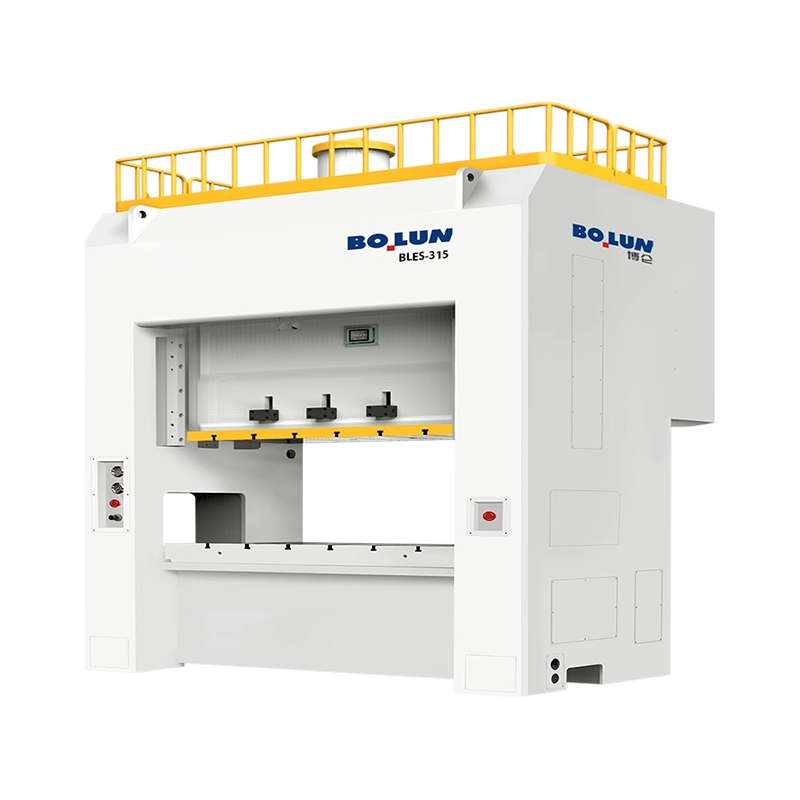
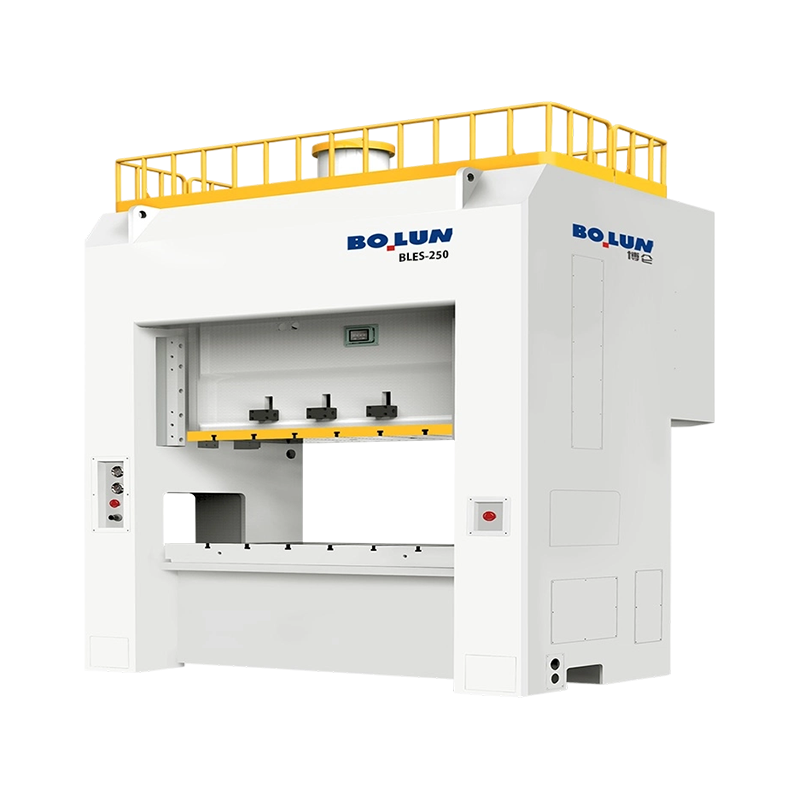 BLES-250 Closed-Frame Double-Point Servo Press for Deep DrawingClosed-frame double-point servo press with 2500 kN capacity, 25,200 J energy, and stable load distribution for large precision stamping and deep-drawing work.View Product →
Tooling and accuracy also differ. Mechanical presses are known for excellent bottom dead center repeatability, which supports consistent part thickness in blanking and coining. Hydraulic presses can be very accurate with closed-loop control, but oil temperature, valve response, and pressure stability must be managed. For deep drawing, the hydraulic press often has an advantage because it can hold pressure while the material flows. For high-speed stamping, the mechanical press usually has the advantage because the cycle is fast and the force curve is predictable.
Most buying mistakes happen when a shop compares tonnage alone. A 300-ton hydraulic press and a 300-ton mechanical press are not interchangeable just because the numbers match. The correct match depends on the process energy, the stroke position where work is done, the required dwell, and the production rate. In general, the application map looks like this:
Initial price is only one number on the quotation. A mechanical power press usually has a simpler drive train and lower cost per stroke at high volume, but it needs a robust foundation, careful clutch and brake maintenance, and proper die protection. A hydraulic press may cost more to run because the pump and cooling system consume energy even between strokes, and oil cleanliness, filtration, and seal condition become routine concerns. The mechanical press often wins on energy per part in continuous production; the hydraulic press often wins on flexibility per part in high-mix work.
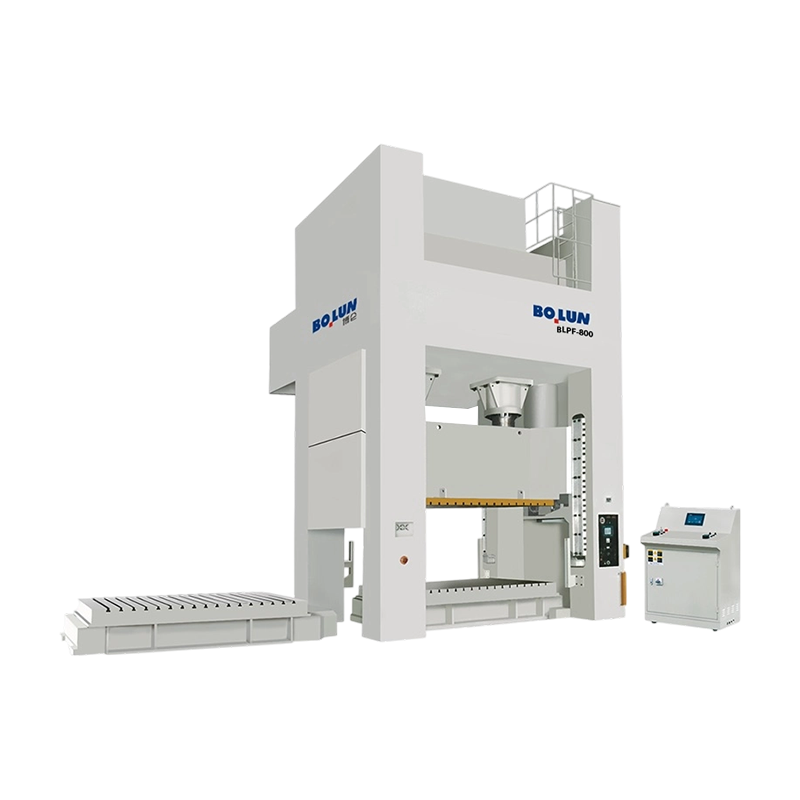
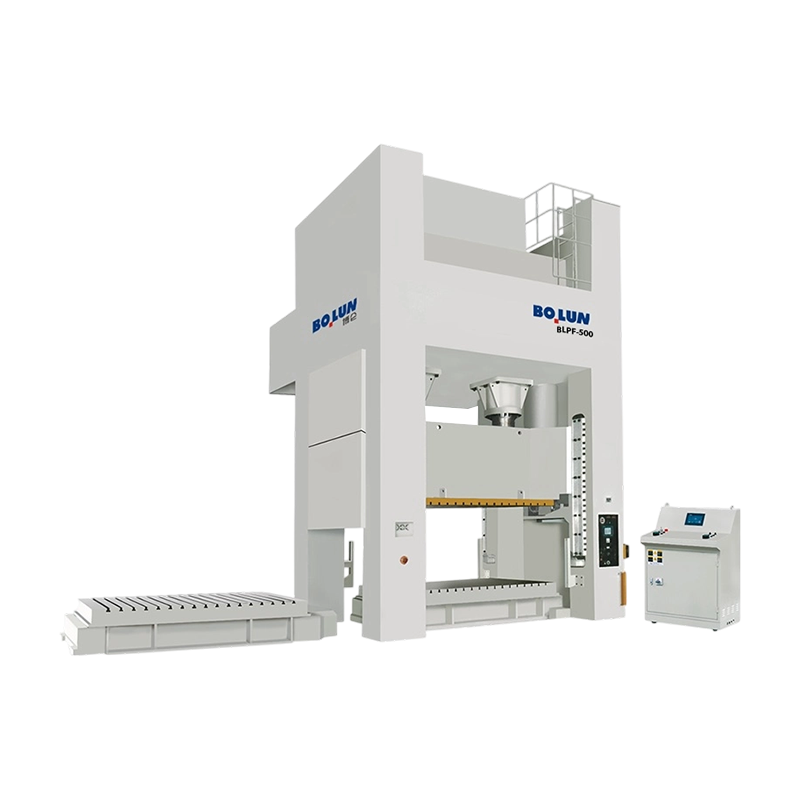 BLPF-500 Wide-Bed Closed-Type Double-Point Eccentric Gear PressWide-bed closed-type double-point eccentric gear press with 5000 kN capacity and 3300 x 1300 mm table for large progressive dies and sheet metal production.View Product →
Floor-to-floor time is another practical factor. A mechanical press with automatic feeding, a coil line, and quick die change can produce very high output with few operators. A hydraulic press may need longer cycle times, but it can run jobs that would require multiple mechanical presses or special cushion systems. The decision should be based on the part family, annual volume, changeover frequency, and the skill level of the maintenance team.
Start with the process, not the machine category. Write down the material, thickness, part size, required force at each stage of the stroke, stroke length, strokes per minute, dwell time, and die weight. Then ask whether the force must be constant through the stroke or concentrated near bottom dead center. If the answer is constant force, a hydraulic press is usually the natural fit. If the answer is peak force near the bottom with high speed, a mechanical power press is usually the better investment. If the answer changes by job, a servo press may offer the widest process window.
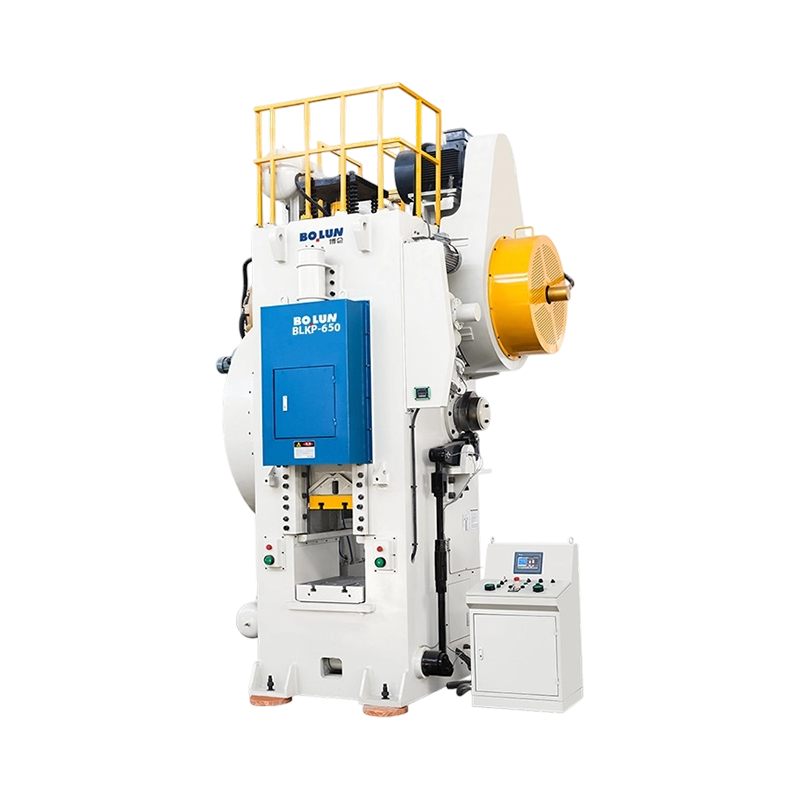 BLKP-650 Toggle-Type Cold Forging Power PressToggle-type cold forging press with 6500 kN capacity, integrated ejector, and high-rigidity frame for thick-gauge components needing stable deformation and controlled forming.View Product →
Also check the structure that carries the force. Open-type presses give good access for large or awkward parts, while closed-frame presses resist deflection and keep the die area more stable under heavy loads. For cold forging, toggle-type mechanical presses are often selected because the linkage multiplies force near the bottom of the stroke and provides a mechanical advantage that hydraulic systems may struggle to match at the same cycle rate. For a broader framework on frame styles and their production implications, see this open-type vs closed-type power press guide.
The key differences between a hydraulic press and a power press come down to force generation, stroke control, speed, overload behavior, and process fit. A power press uses stored mechanical energy and a fixed or programmable mechanical cycle to deliver high speed and repeatability, with maximum force near bottom dead center. A hydraulic press uses fluid pressure to deliver adjustable, near-constant force through the stroke, with more flexibility but generally lower cycle rates. Neither is universally better. The right choice is the one that matches the force curve, dwell, volume, and tooling requirements of the parts you actually run.



A tooling engineer quotes a new bracket program and specifies a 160-ton press. ...
What Is a Power Press? A power press — also called a stamping press or punch pr...
Power press machines are classified in two main ways: by frame construction, w...
Understanding Mechanical Power Presses and Their Essential Functions A mechani...
A fastener plant in Taizhou receives a request from an automotive tier-one supp...
In the fields of metal forming, sheet metal fabrication, blanking, and punching,...
Contact Us

+86-575-83362228

+86-13735238388

+86-575-83362999

+86-15158259588

Hangzhou Office Add: No. 332 Wangjiang East Road, Shangcheng District

No.1 Linjiang Road East, Xiaren, Jinting Town, Shengzhou City, Zhejiang Province, China
Ready to Begin?
Get in Touch

Now!

ZHEJIANG BOLUN
 English
 中文简体
中文简体
