
A power press — also called a stamping press or punch press — is a machine tool that shapes, cuts, or forms sheet metal and other materials by forcing a punch into a die under high, controlled pressure. Most power presses are mechanically driven by a motor-and-flywheel system, though hydraulically powered versions also exist; both replace manual hammering or hand-operated presses, letting manufacturers produce identical parts quickly, repeatedly, and to tight dimensional tolerances.
Power presses perform operations such as blanking, piercing, bending, drawing, coining, and embossing. A single press can generate anywhere from a few tons to more than 3,000 tons of force depending on its size and frame design, which is why manufacturers group them into two fundamental structural categories: the open-type (C-frame) power press and the closed-type (straight-side) power press. Both are covered in full detail later in this article.
Regardless of frame style, nearly every power press converts a motor's rotary motion into a straight up-and-down stroke through the same basic sequence:
Cycle speed varies enormously by application: large closed-type presses forming automotive panels may run at only a few strokes per minute, while small open-type presses producing electrical terminals or washers can exceed several hundred strokes per minute.
Whether open-type or closed-type, every power press relies on the same functional building blocks. Understanding them helps explain why frame design affects performance so significantly.
| Component | Function |
|---|---|
| Frame | Supports all moving parts and resists forming forces; its shape defines open-type versus closed-type presses |
| Bed / Bolster Plate | Stationary base plate that holds the lower die |
| Ram (Slide) | Moving part that carries the upper die and delivers the forming force |
| Flywheel | Stores rotational energy from the motor for release during each stroke |
| Clutch and Brake | Engage and stop the ram's motion precisely at the top of each cycle |
| Crankshaft / Eccentric | Converts rotary motion into the linear stroke of the ram |
| Dies (Punch and Die) | Tooling that shapes, cuts, or forms the workpiece |
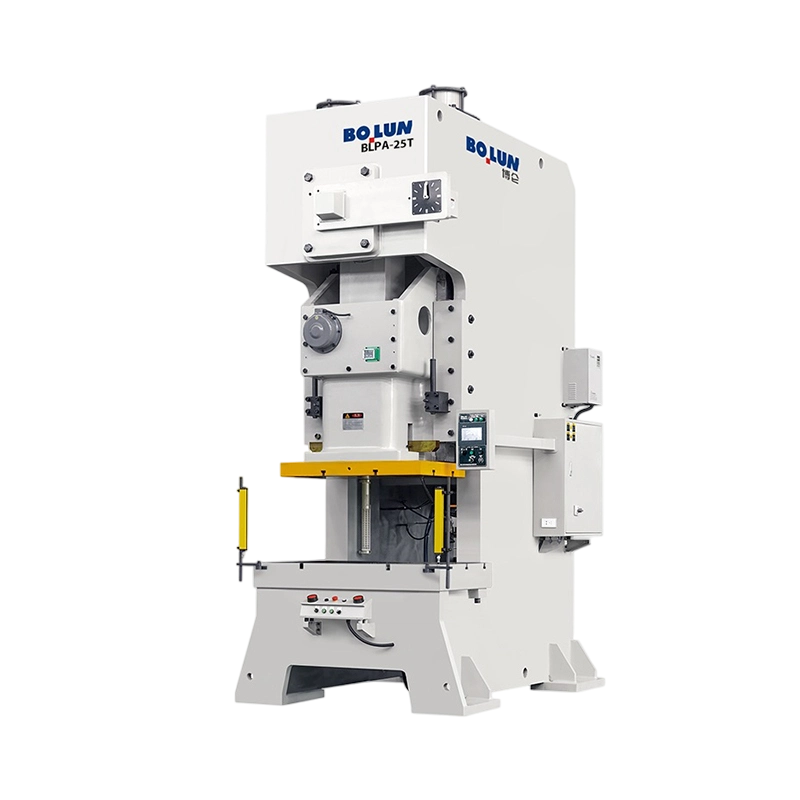
An open-type power press, also called a C-frame or gap-frame press, has a frame shaped like the letter "C" when viewed from the side. This leaves the front and often the sides of the working area open, giving operators direct access to load material, position parts, and remove finished pieces. Open-type presses are the most common press style found in small and mid-sized metal stamping shops.
Most open-type presses fall in the 5 to 250-ton range, which suits lighter stamping work such as small brackets, washers, electrical terminals, and appliance hardware.
The open throat that gives this press its name is also its main trade-off. Under load, a C-frame can deflect, or spring open slightly at the gap, which shifts alignment between punch and die. Manufacturers manage this by limiting tonnage, using guided dies, and keeping the load centered on the ram.
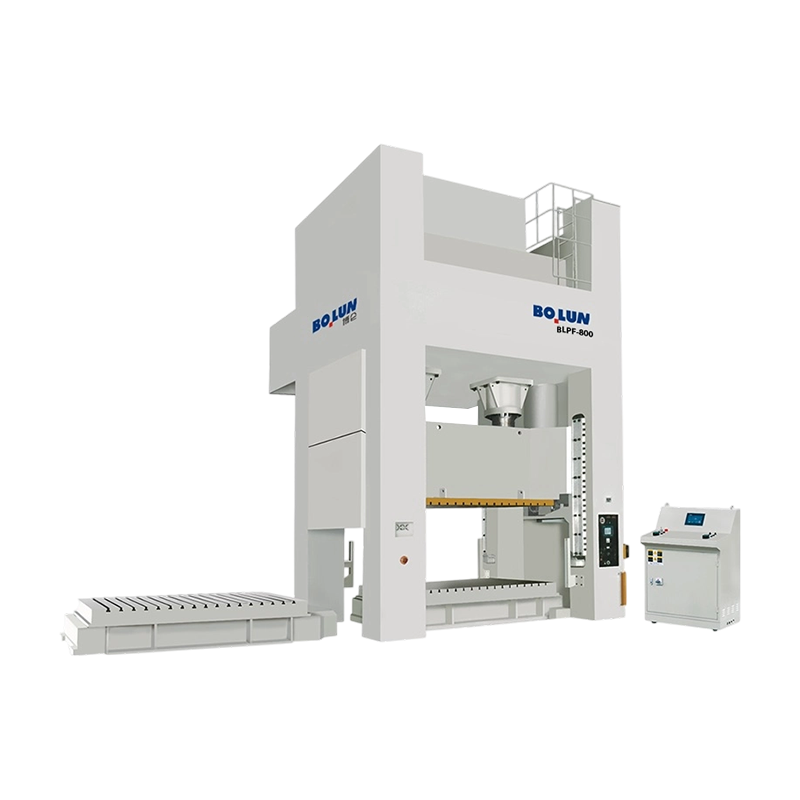
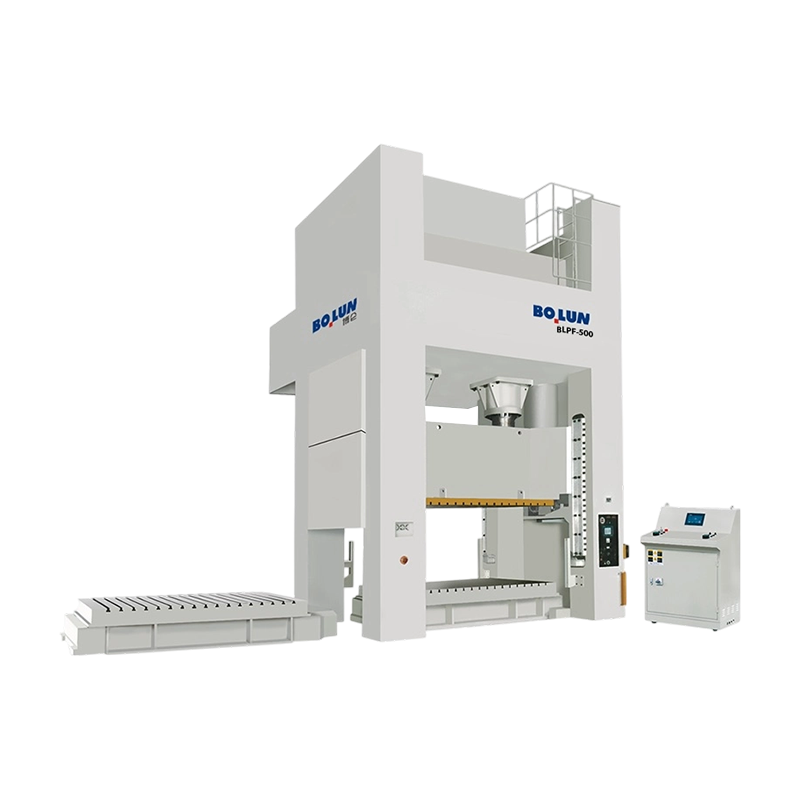
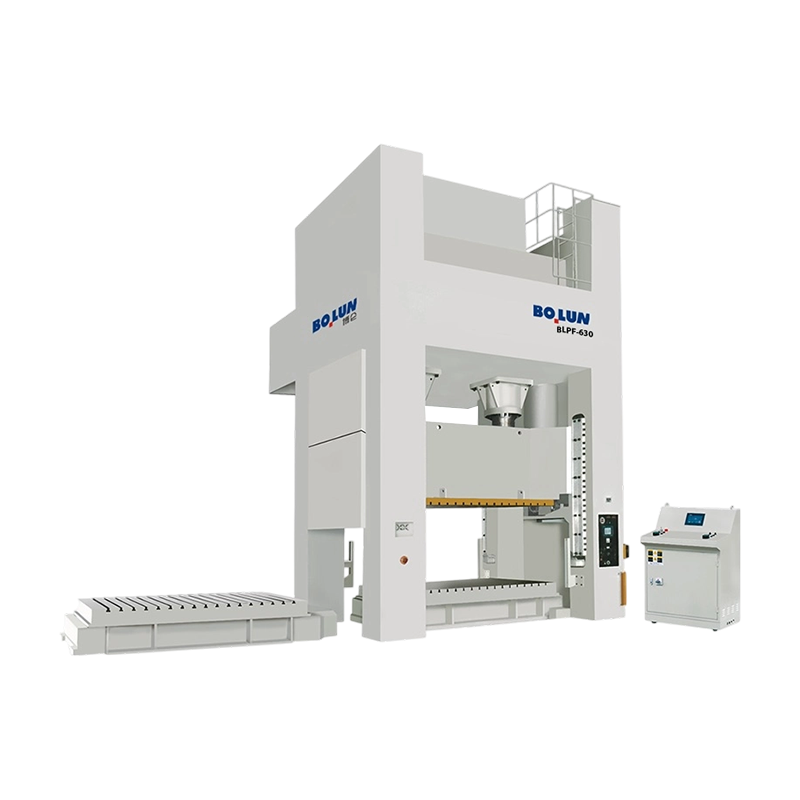
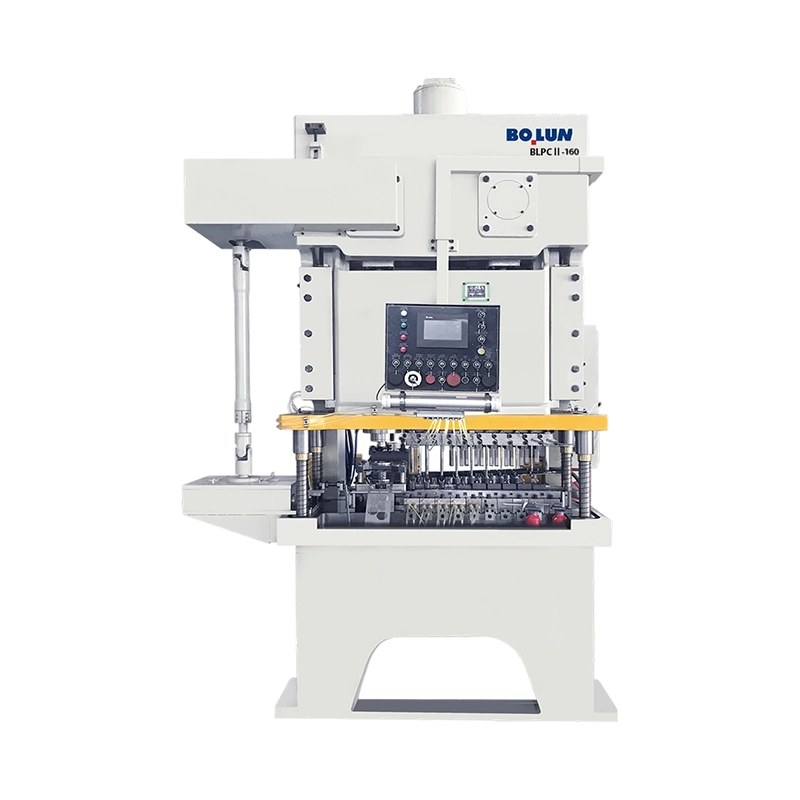
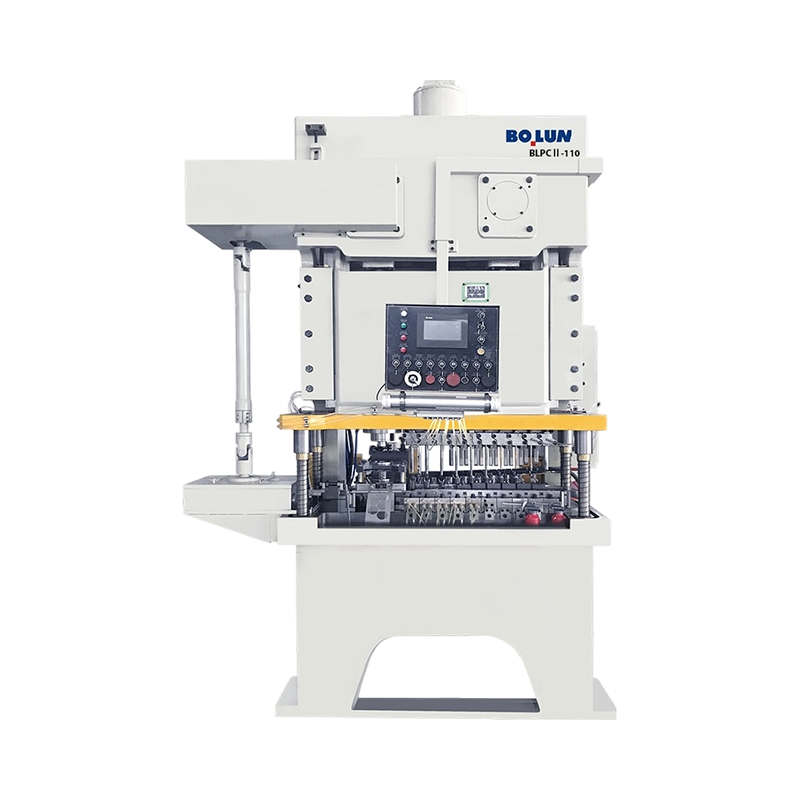
A closed-type power press, also known as a straight-side press, uses a fully closed frame built from two or four solid uprights connecting the crown at the top to the bed at the bottom into one rigid structure. Because the frame forms a complete loop rather than an open throat, it resists bending far more effectively than a C-frame under the same load.
Closed-type presses commonly range from 100 tons to more than 3,000 tons, with the largest automotive body-panel presses exceeding this range. That capacity, combined with minimal frame deflection, makes them the standard choice for large, high-precision, high-volume parts.
The table below summarizes how the two frame designs compare across the factors that matter most when specifying a press.
| Factor | Open-Type Press | Closed-Type Press |
|---|---|---|
| Frame shape | C-shaped, open at the front and sides | Fully closed loop |
| Rigidity | Moderate; can deflect under load | High; minimal deflection |
| Typical tonnage | 5 to 250 tons | 100 to 3,000+ tons |
| Operator access | Front and side access | Front-to-back access only |
| Footprint and cost | Compact and lower cost | Larger and higher cost |
| Best-suited volume | Prototype to medium runs | High-volume mass production |
The right press depends less on brand or price alone and more on four practical factors:
Many stamping facilities use both types side by side: open-type presses handle short-run and secondary operations, while closed-type presses run the high-volume primary production line.
Power press selection tracks closely with the part being produced. In electronics and electrical hardware manufacturing, open-type presses stamp connectors, terminals, and contact springs at high cycle speeds. Consumer appliance makers use open-type presses for small brackets and housings, while larger components such as washing machine drums and refrigerator doors typically require closed-type presses.
The automotive industry is the largest user of large-tonnage closed-type transfer presses, which form structural body panels including doors, hoods, roofs, and fenders, where dimensional accuracy directly affects how well parts fit together on the assembly line. General hardware and fastener production, by contrast, relies heavily on fast-cycling open-type presses for blanking and piercing washers, brackets, and clips.
Power presses rank among the highest-risk machines on a shop floor because the point of operation, where the punch meets the die, can cause severe crush or amputation injuries in a fraction of a second. Effective point-of-operation guarding is not optional; it is the foundation of safe press operation and is required under occupational safety regulations in most manufacturing regions.
Routine maintenance should also include lubrication of the flywheel bearings and crankshaft, inspection of die alignment, and verification that the ram stops precisely at top dead center. A well-maintained press protects operators and holds tolerances more consistently over its service life.


Understanding Mechanical Power Presses and Their Essential Functions A mechani...
Power press machines are classified in two main ways: by frame construction, w...
A tooling engineer quotes a new bracket program and specifies a 160-ton press. ...
In the fields of metal forming, sheet metal fabrication, blanking, and punching,...
A production manager walks into an engineering meeting with a stack of drawings...
Put a 160-ton open-frame press and a 160-ton closed-frame press side by side an...
Contact Us

+86-575-83362228

+86-13735238388

+86-575-83362999

+86-15158259588

Hangzhou Office Add: No. 332 Wangjiang East Road, Shangcheng District

No.1 Linjiang Road East, Xiaren, Jinting Town, Shengzhou City, Zhejiang Province, China
Ready to Begin?
Get in Touch

Now!

ZHEJIANG BOLUN
 English
 中文简体
中文简体
