
In the field of modern precision mechanical manufacturing, a power press is the core power source for high-precision assembly, forming, and calibration of components. Whether it is for the assembly of core engine crankshafts or the precision pressing of large mechanical structures, selecting the appropriate type of press directly determines the assembly quality and service life of the workpiece.
A power press is a device that generates immense force through energy transfer (mechanical or hydraulic) to accomplish material deformation or component press-fitting. In crankshaft processing, it is not merely a simple "pushing tool," but a precision system that requires strict control over stroke, speed, and pressure. Its core operational objective is to ensure that mating parts reach the designed interference fit without generating internal stress concentrations or damage to the mating surfaces.
To better understand the applicable scenarios for different equipment, we can analyze them through the following performance comparison:
| Performance Characteristic | Crank Press (Crank/Double Crank Press) | Hydraulic Press |
| Power Source | Flywheel energy storage, mechanical linkage | Hydraulic cylinder, fluid power |
| Stroke Characteristics | Maximum pressure at bottom dead center, speed drops sharply near the bottom | Constant pressure throughout the entire stroke |
| Control Precision | Fixed stroke, difficult to stop mid-process | Precise pressure monitoring and stroke suspension |
| Primary Application | High-volume metal stamping, forging | Precision press-fitting, shaft straightening, complex assembly |
| Operational Flexibility | Low (Suitable for standardized repetitive tasks) | High (Suitable for various custom press-fitting tasks) |
Crankshaft Press Machine: This equipment is custom-designed for crankshaft production lines and is typically equipped with specialized positioning tooling to ensure that the center lines of the various crankshaft journals are perfectly aligned, preventing tilting during the press-fit process.
Shaft Straightening Press: Crankshafts often exhibit minor bending deviations after use or processing. Such presses are equipped with high-sensitivity measurement systems (usually used with V-blocks and dial indicators) to perform multiple small-scale hydraulic corrections, adjusting the crankshaft run-out to the micron level.
When facing the task of press-fitting a 2-stroke engine crankshaft, many users wonder: Is a common 20-ton press sufficient? The answer is not absolute and depends on the physical parameters and precision requirements of the specific part.
To determine if 20 tons of pressure is suitable, one must evaluate it based on the physical logic of interference fits. The required press-in force is mainly influenced by contact area, interference amount, and the friction coefficient of the materials.
Load Calculation Basis: In engineering practice, the rough formula for estimating press-in force is F = mu * pi * d * L * P_radial, where mu is the friction coefficient, d is the shaft diameter, L is the mating length, and P_radial is the radial pressure generated. For a 2-stroke crankshaft, if the journal diameter is large and the interference is designed to be high, the required force may approach or exceed the 20-ton limit.
Structural Constraints: 2-stroke crankshafts are typically composed of left and right half-shafts and a central crank pin. Their structural characteristic is high crank arm rigidity, but the wall thickness around the connecting hole is limited. If the equipment tonnage is selected incorrectly, pressure exceeding the material yield strength will trigger micro-cracks in the crank arm or expansion of the shaft hole.
| Engine Type | Journal Diameter Range | 20-Ton Press Suitability | Core Factors to Consider |
| Light-duty (e.g., garden tools) | 15 - 25 mm | Very suitable | Sufficient pressure reserve, requires pressure regulation |
| Medium-duty (e.g., motorcycle/outboard) | 30 - 50 mm | Industry standard configuration | Requires dedicated tooling, focus on coaxiality |
| Heavy-duty (e.g., large displacement/industrial) | > 50 mm | Limited, thermal assembly assistance recommended | Cold pressing easily damages surfaces, requires temperature differential |
Even if the press meets the tonnage requirements, pressure monitoring is far more important than simple tonnage selection when pressing 2-stroke crankshafts.
Curve Monitoring: In an ideal press-fit process, the curve of pressure increasing with displacement should be smooth and linear. If a significant sudden increase in pressure (peak jitter) occurs mid-process, it often indicates metal shavings, insufficient lubrication, or axial misalignment on the mating surface.
Preventive Measures: It is highly recommended to install a pressure sensor on a hydraulic press. For 2-stroke crankshafts, if the pressure reaches the limit quickly at the beginning, one must stop immediately, as forcing it at this stage can easily cause galling on the journal surface. Once such damage occurs, the fastening force of the mating surface fails completely, leading to shaft slippage or abnormal noise during subsequent use.
In the maintenance and production process of crankshafts, disassembly of old parts and press-fitting of new ones are frequent actions. To achieve efficient, low-damage switching, one cannot rely solely on the simple push-pull action of the press; it requires a standardized process logic.
Achieving rapid switching between press-fitting and disassembly relies on tooling setup and flexible response of the hydraulic system.
Difference in Tooling Design: Disassembly mode requires a supporting base die. Its role is to let the crank arm sit firmly on the base while leaving a central hole for the journal to pass through. Press-fit mode requires a positioning guide ram. The ram must be precisely aligned with the center of the journal, and it should have fine-adjustment capabilities during the pressing process to ensure the entry angle is absolutely vertical.
Limitation Adjustment of Hydraulic System: To prevent damage to parts due to excessive force, relief valves or electronic limits must be set. During disassembly, because the initial breakaway force is often high, the equipment may be allowed to run at rated pressure; during press-fitting, a safety upper limit should be preset to avoid overload.
Many beginners tend to think that the tighter, the better, but from an engineering perspective, interference fits should be maintained within a specific interference fit tolerance.
| Mating Method | Friction Coefficient | Press-in Force Behavior | Reliability |
| Excessive Interference | 0.12 - 0.15 | Pressure gauge fluctuates violently | Easily damages surfaces, internal stress fatigue |
| Reasonable Interference | 0.08 - 0.10 | Pressure rises smoothly, stable track | Stable torque transmission, no metal damage |
| Temperature Assisted | 0.05 - 0.07 | Pressure significantly lower | Tight fit, material properties preserved |
Value of Lubrication: The use of extreme pressure lubricant is mandatory; it forms an oil film between the journal and the connecting hole, preventing dry friction during pressing, thus making assembly smoother.
In large-scale production, by utilizing a collaborative layout of mechanical and hydraulic equipment, production efficiency and yield can be greatly improved.
During the rough machining or forging stage, a double crank press is an indispensable core force. It effectively resists the overturning moment generated during the pressing process, ensuring that the crankshaft blank is stressed evenly during forging.
| Process Step | Recommended Equipment | Goal |
| Forging/Rough Forming | Double Crank Press | Ensure material density |
| Precision Press-fit | Hydraulic Press | Ensure interference, prevent surface damage |
| Axial Straightening | Shaft Straightening Press | Control geometric error |
Coaxiality Deviation: If the guidance precision of the press-fit tooling is insufficient, the crankshaft half-shaft will wobble, leading to radial run-out in the finished product.
Eccentric Loading: If the pressure center does not fall on the geometric center of the crankshaft axis, it will lead to micro-twisting of the crank arm.
Crankshaft press-fitting is high-risk, high-precision work. Establishing a scientific daily management and safety system is the foundation of factory operation.
Force Sensor Testing: It is recommended to calibrate the pressure sensing system once every quarter. Ensure the sensor reading error is controlled within 1 percent relative to standard calibration weights.
| Protective Measure | Function |
| Two-Hand Control Buttons | Prevents operators from reaching into the station |
| Light Curtain Sensing | Emergency stop if foreign object enters |
| Pressure Overload Protection | Auto-unloads if limit exceeded |
Listen for Abnormal Sounds: During press-in, a continuous squeaking sound indicates lubrication failure; a crisp clicking sound likely means local damage to the metal mating surface.
The core of quality monitoring lies in the interpretation of the pressure-displacement curve. If metal shavings are found piled up at the exit, or if obvious drawing marks appear on the surface, the operation must be stopped.
Generally, repeated press-fitting is not recommended. Every press-in causes microscopic plastic deformation of the mating surface, which reduces the fatigue life of the material and increases the risk of shaft slippage.
Dedicated spacers not only provide support but also embed into the crank pin position, ensuring that the left and right half-shafts maintain the set phase angle during the press-in process, preventing phase misalignment.
The conclusion is yes. Hydraulic presses can precisely control the maximum press-fit force by adjusting relief valves. Once the press-in force exceeds the set value, the hydraulic system will automatically relieve pressure.
It is recommended to maintain 60 percent of the interference fit by reserving clearance through thermal expansion and contraction, with the remaining 40 percent of the fit relying on the press. This method ensures assembly quality while minimizing internal stress damage.


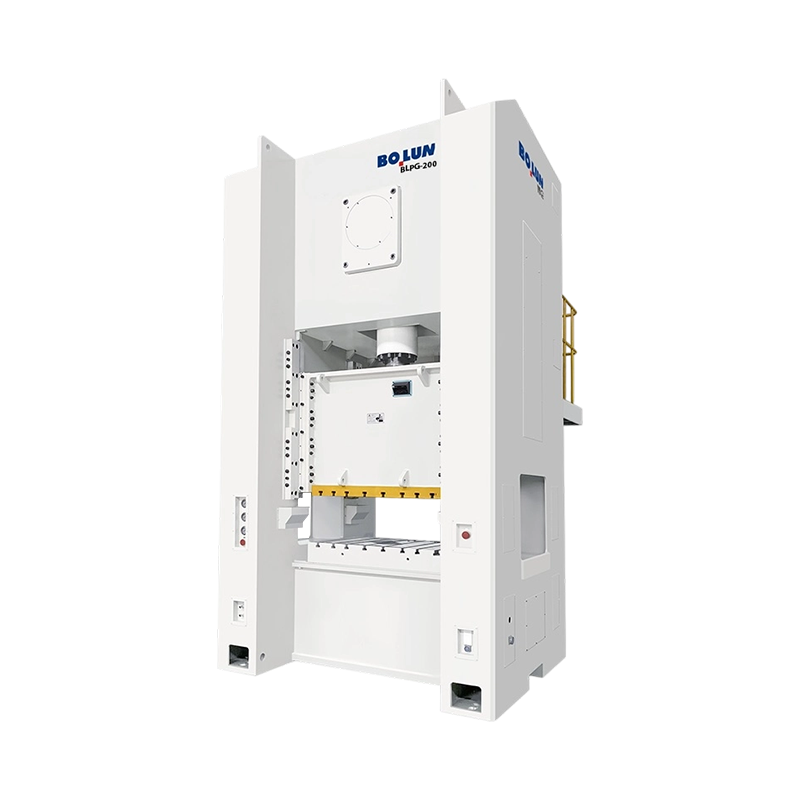
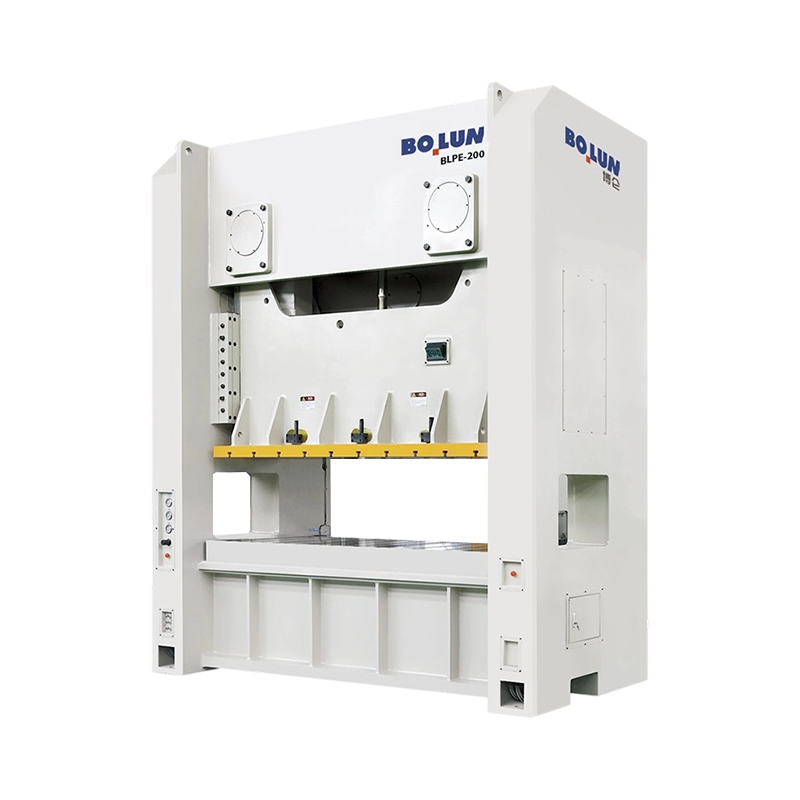
A fastener plant in Taizhou receives a request from an automotive tier-one supp...
Put a 160-ton open-frame press and a 160-ton closed-frame press side by side an...
ZHEJIANG BOLUN INTELLIGENT EQUIPMENT IMPORT & EXPORT TRADING proudly showcas...
A tooling engineer quotes a new bracket program and specifies a 160-ton press. ...
When you are planning to produce medium or small metal parts in high volumes, t...
Start With the Purchase Decision, Not the Definitions A procurement engineer co...
Contact Us

+86-575-83362228

+86-13735238388

+86-575-83362999

+86-15158259588

Hangzhou Office Add: No. 332 Wangjiang East Road, Shangcheng District

No.1 Linjiang Road East, Xiaren, Jinting Town, Shengzhou City, Zhejiang Province, China
Ready to Begin?
Get in Touch

Now!

ZHEJIANG BOLUN
 English
 中文简体
中文简体
