
An open type power press machine uses a C shaped or gap frame that leaves three sides of the working area accessible, making it easy to load dies and feed parts, while a closed type power press machine uses a straight side or housing frame that encloses the die area for maximum rigidity and accuracy under heavy loads. Open presses generally suit light to medium blanking, punching, and forming work up to roughly 300 tons, while closed presses are chosen for heavy stamping, deep drawing, and high precision parts often rated well above 500 tons.
For plant managers and buyers comparing machines, the practical conclusion is that frame type should follow part size, forming force, required parallelism, and how often dies change. Choosing the wrong frame wastes money either through premature wear and inaccurate parts on an undersized open press, or through unnecessary capital cost and floor space on an oversized closed press.
Three sides accessible for loading and feeding
Enclosed frame for rigidity and high tonnage
Flywheel energy stored and released each stroke
Frame deflection and parallelism under load
A mechanical power press converts the rotation of an electric motor into the linear motion of a slide that drives a die into sheet metal, using a flywheel to store energy between strokes and a clutch and brake to start and stop each cycle. This energy storage approach allows high stroke rates and consistent part production, which is why mechanical presses remain the workhorse of high volume stamping plants.
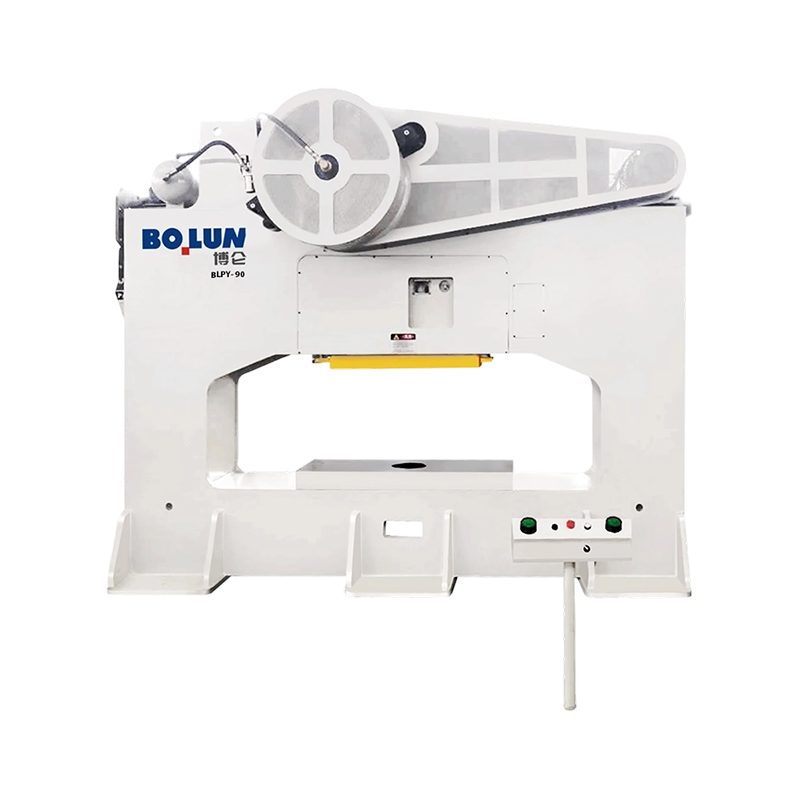
The motor drives a belt connected to the flywheel, which spins freely on the crankshaft until the clutch engages. When engaged, the clutch transfers stored energy to the crankshaft or eccentric, which moves the connecting rod and slide up and down. The brake stops the crankshaft at a defined point in the cycle, typically at top dead center, so the press is ready for the next stroke.
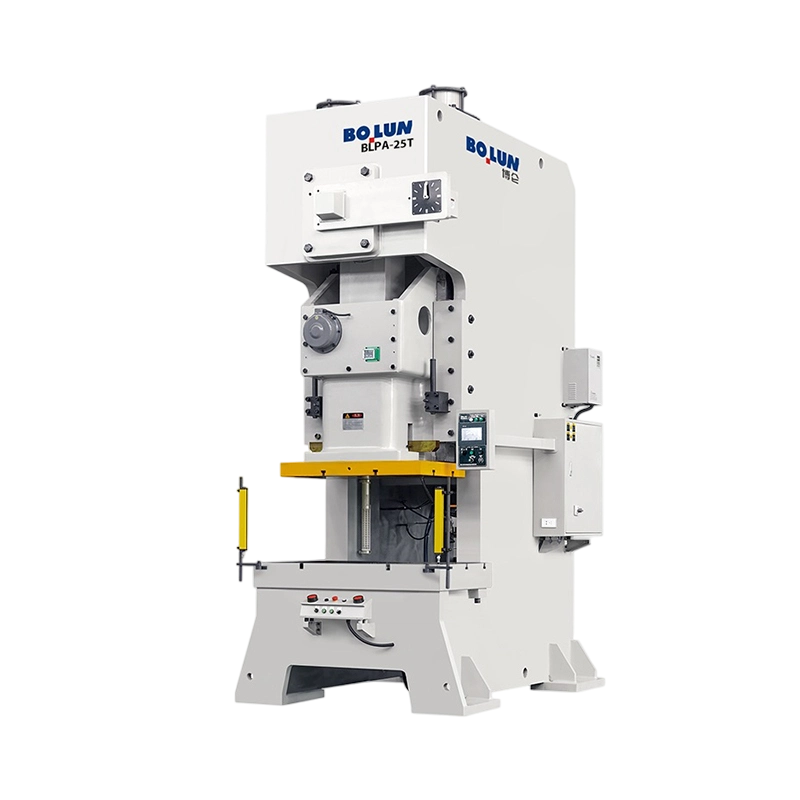
The open type power press machine, often called a gap frame or C frame press, has a frame shaped like the letter C, with the throat open at the front and at both sides so operators and automation equipment can reach the die from several directions.
The open throat makes it straightforward to place blanks, remove finished parts, and install or change dies. Setup crews can work from the front and sides, and conveyors or feed equipment can approach from more than one angle. This accessibility is one reason open presses are popular in job shops and mid sized plants where die changes happen frequently.
Open presses handle blanking, piercing, light forming, coining, bending, and assembly operations on parts such as brackets, electrical contacts, appliance components, and small structural pieces. Their capacity usually ranges from about 25 tons to around 300 tons, with stroke rates that vary with size and drive design.
Because the frame is open on the sides, it deflects more under heavy forming loads, which can reduce parallelism between the slide and bed and cause uneven wear or part variation. Operators should not run an open press near its rated tonnage for prolonged periods, and they should use tonnage monitoring where available to avoid overloading.
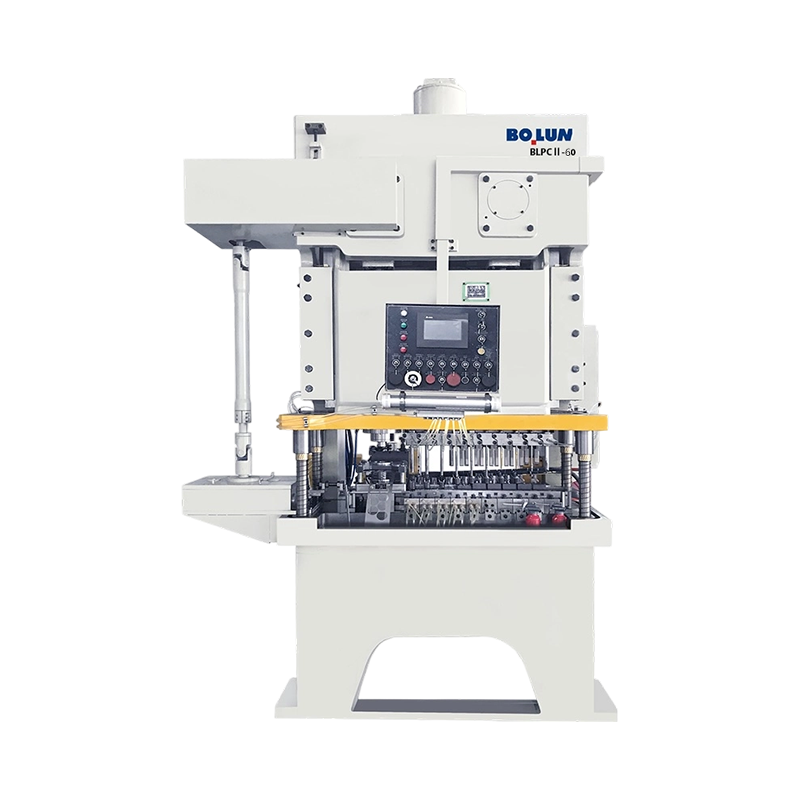
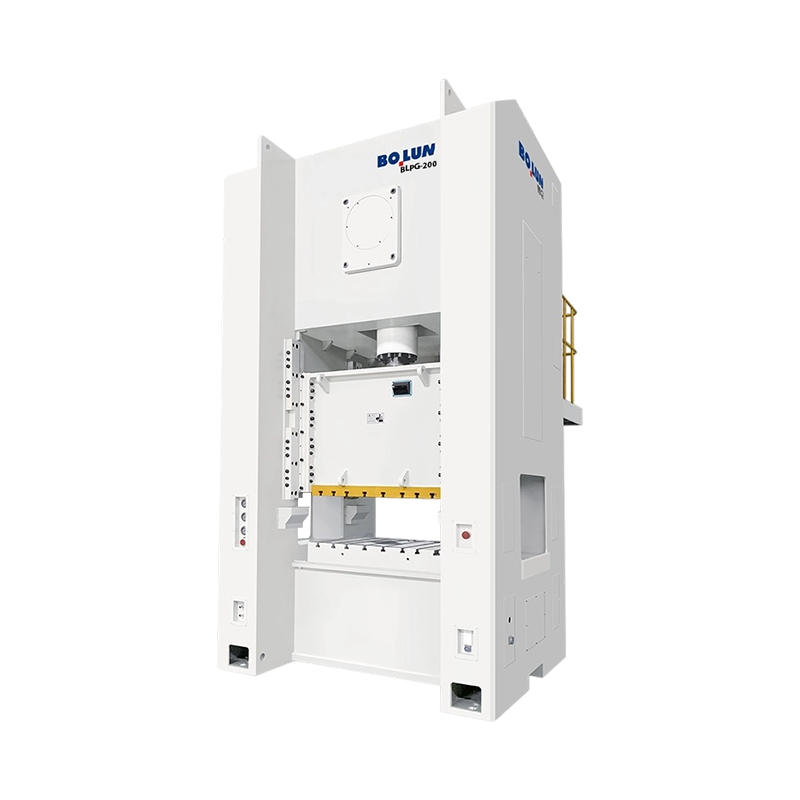
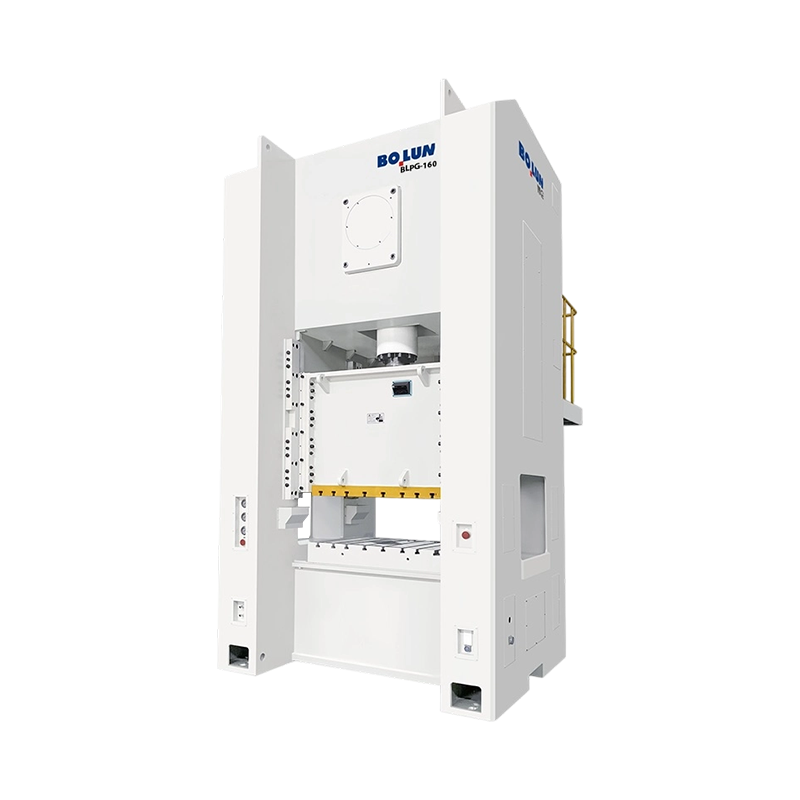
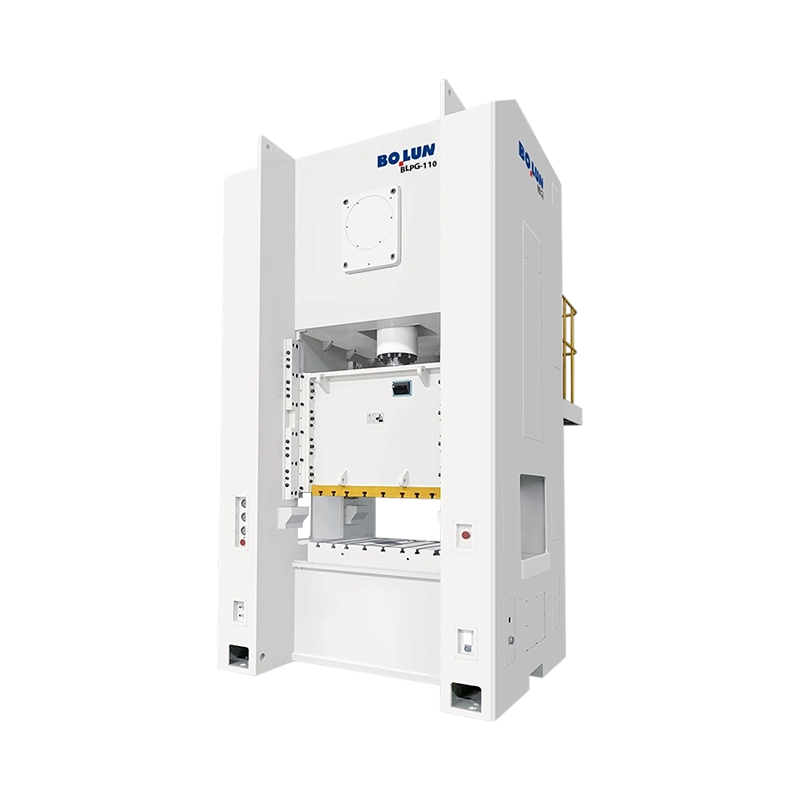
The closed type power press machine uses a straight side or housing frame with two uprights connected at the top and bottom, creating a rigid enclosure around the working area that resists deflection under extreme loads.
The enclosed frame keeps the slide and bed parallel under load, which is critical when forming deep parts or holding tight tolerances. Consistent parallelism reduces die wear, extends tool life, and keeps dimensional variation low across long production runs. Closed presses are therefore the standard choice when precision and repeatability matter more than access.
Closed presses are widely used in automotive body panels, appliance housings, large structural components, and deep drawn parts. Capacities commonly start in the hundreds of tons and extend into the thousands for very large transfer and tandem lines. Their rigid design also supports larger bolsters and bigger die areas.
The enclosed frame limits access, so loading and die changes can take longer and often need overhead cranes, automated feeders, or robot loading. The higher structural mass and larger footprint also raise capital cost, foundation requirements, and floor space needs.
A direct comparison makes the frame choice clearer, because each design offers a different balance between access, rigidity, capacity, and cost.
| Feature | Open Type Power Press | Closed Type Power Press |
|---|---|---|
| Frame shape | C shaped or gap frame | Straight side or housing frame |
| Typical capacity range | About 25 to 300 tons | Commonly 200 tons up to several thousand tons |
| Access to die area | Front and both sides open | Limited, usually front and back only |
| Frame rigidity | Lower, more deflection under load | High, excellent parallelism |
| Die change time | Generally faster | Generally slower, often crane assisted |
| Typical applications | Blanking, piercing, light forming, assembly | Deep drawing, heavy stamping, large panels |
| Relative capital cost | Lower for comparable light duty use | Higher, with larger foundation and footprint |
Tonnage alone does not describe a press, because stroke length, shut height, bed size, and energy capacity all limit which parts can be made safely and accurately.
Rated tonnage is the maximum force the press can deliver, but manufacturers specify it at a particular distance before bottom dead center, commonly a few millimeters. Forming operations that need force at a different point in the stroke may exceed what the press can safely deliver, so the rating point must be checked against the process.
Stroke length determines how far the slide travels, which governs how deep a part can be drawn and whether feeding equipment can clear the die. Shut height is the distance from the bed to the slide at bottom dead center with the stroke adjusted, and it must accommodate the combined height of the die sets and parts being run.
The bed and bolster must be large enough to support the die set with clear margins for mounting bolts and feeding equipment. Oversized dies on undersized beds cause deflection and uneven loading, which damages both tools and the press.
| Specification | What It Controls | Typical Consideration |
|---|---|---|
| Rated tonnage | Maximum forming force | Confirm the rating point in the stroke |
| Stroke length | Depth of draw and feed clearance | Match to longest part and die height |
| Shut height | Space for die sets | Include die set and parts height |
| Strokes per minute | Production output | Balance speed against feed and safety limits |
| Flywheel energy | Energy available per stroke | Critical for heavy blanking and drawing |
| Parallelism | Even load across die face | Check against tolerance of the part |
Selection should start from the parts, not from the press catalog, because the forming force, part size, tolerance, and production volume determine which frame will perform reliably.
Use the process data for blanking perimeter, material thickness, shear strength, and forming requirements to estimate the required force. Add a safety margin, usually at least around 20 percent, to account for material variation and die wear. If the estimate approaches the rated capacity of an open press, a closed press is often the safer choice.
Parts with tight tolerances, especially those requiring consistent flatness or depth, benefit from the rigidity of a closed frame. For looser tolerance blanking and punching, an open press may deliver adequate accuracy at lower cost, provided parallelism is verified and maintained.
High mix plants with frequent die changes benefit from the open access of a gap frame press. Lines dedicated to a few large parts can justify a closed press with automated transfer or robotic loading, where access limits matter less.
Closed presses usually require heavier foundations, larger clearance zones, and sometimes overhead handling equipment. Plants with limited floor space or weak floors may find open presses easier to install and relocate.
Consistent setup procedures keep parts within tolerance, reduce scrap, and prevent damage to dies and the press itself.
Clean the bolster and die shoe before installation, and clamp the die evenly to avoid uneven loading. Set shut height to the die specification and verify it with a feeler or height gauge. Trial strokes at slow speed should confirm that the die closes fully and that parts are formed correctly before production speed is applied.
Check parallelism between the slide and bed periodically using dial indicators or shim gauges. Open presses in particular should be checked regularly, since deflection and wear can change alignment over time. Record readings so trends become visible before parts drift out of tolerance.
Gibs guide the slide, and their clearance affects both accuracy and wear. Excess clearance allows the slide to wobble, while too little causes binding and heat. Follow the lubrication schedule for bearings, gibs, and the crankshaft, and use the lubricant grades specified by the manufacturer.
Clutch friction linings and brake pads wear with each cycle, and their condition determines how reliably the slide stops at the correct point. Measure stopping distance and inspect linings according to the maintenance plan. Worn brakes increase the risk of overrun and injury.
Mechanical presses can cause severe injuries within a fraction of a second, so safeguarding must be designed, installed, and verified as a complete system rather than treated as an optional accessory.
Fixed guards, interlocked guards, light curtains, and presence sensing devices protect the point of operation. Choice depends on the job, feeding method, and access needs. Guards must prevent hand entry while the slide is moving and must stop the press if interrupted.
Two hand controls require both hands to be on actuators before the slide moves, keeping them away from the die. Emergency stop devices should be within easy reach and tested regularly. Stop time and stopping distance should be measured and documented for each press.
Plants should follow the machine guarding standards that apply in their country, such as OSHA rules in the United States or relevant European machinery directives and standards. Operators need training on safe setup, die handling, lockout tagout, and emergency response. Regular inspections confirm that guards and controls still function as intended.
A planned maintenance program reduces unplanned downtime and keeps press accuracy within specification over many years of operation.
Daily checks should cover safety devices, oil levels, unusual noises, and die condition. Weekly checks can include gib clearance measurement, belt tension, and inspection of fasteners and mounting bolts on the bed and frame.
Major overhauls typically address clutch and brake replacement, bearing inspection, crankshaft alignment, and frame checks. Intervals depend on duty cycle and operating conditions, but many plants plan overhauls every few years for heavily loaded presses.
Initial price is only one element of cost. Energy use, maintenance labor, spare parts availability, die life, and scrap rates all contribute to total cost. A well selected and well maintained press often delivers lower cost per part than a cheaper machine that runs poorly.
Most press problems show early warning signs such as dimensional drift, unusual noise, or uneven wear, and a systematic check usually identifies the cause before serious damage occurs.
When part dimensions drift gradually, check die wear, shut height settings, and parallelism. On open presses, deflection under load may shift results as tonnage rises, so monitor the trend across production runs.
If the slide stops off position or overruns, inspect the brake, check air or hydraulic supply where applicable, and verify the control logic. Stopping problems should be fixed before running production, because overrun creates both safety and tooling risks.
Knocking or rattling often points to worn gibs, loose bolts, or bearing wear. Vibration that increases with speed may indicate flywheel or drive belt problems. Early investigation avoids more expensive crankshaft or frame damage later.
Question: What is the main difference between an open type and a closed type power press?
An open type press has a C frame that is accessible from three sides for easy loading and die changes, while a closed type press has an enclosed frame that offers greater rigidity and higher tonnage.
Question: What capacity range do open presses typically cover?
Open presses commonly range from about 25 tons to around 300 tons, depending on frame size, drive design, and intended application.
Question: When should a closed press be selected instead of an open press?
Closed presses suit deep drawing, heavy stamping, large panels, and tight tolerance work where frame deflection would compromise part accuracy.
Question: How does a flywheel help a mechanical power press?
The flywheel stores rotational energy between strokes, smoothing the load on the motor and providing the energy needed for each forming operation.
Question: Why does the rated tonnage point in the stroke matter?
Manufacturers rate tonnage at a specific distance before bottom dead center, so forming operations that need full force at other stroke positions may exceed safe capacity.
Question: How often should parallelism be checked?
Parallelism should be checked on a schedule defined by the plant, with more frequent checks on open presses and on presses running near rated load or producing tight tolerance parts.
Question: What safety devices are commonly used on mechanical presses?
Common devices include fixed and interlocked guards, light curtains, presence sensing systems, two hand controls, and emergency stop buttons.
Question: Which components wear fastest on a mechanical press?
Clutch friction linings, brake pads, gibs, and drive belts typically wear fastest, so they should be inspected regularly and kept in stock as spares.
Question: Can an open press be used for heavy forming work?
Open presses can handle moderate forming if the force stays well inside rated capacity and parallelism is maintained, but heavy or deep forming usually calls for a closed frame.
Question: How do I estimate the force needed for a stamping operation?
Estimate force from the cut perimeter, material thickness, and shear strength for blanking, then add forming requirements and a safety margin of about 20 percent.


Two presses can both carry a 200-tonne nameplate and still produce very differe...
A buyer comparing a 45-ton open-gap press for a bracket line often receives two...
Understanding Mechanical Power Presses and Their Essential Functions A mechani...
A tooling engineer quotes a new bracket program and specifies a 160-ton press. ...
Single Point Design One drive connection at the slide center Double Point...
What Is a Power Press? A power press — also called a stamping press or punch pr...
Contact Us

+86-575-83362228

+86-13735238388
+86-18667502750

+86-575-83362999

+8618667502750

No.1 Linjiang Road East, Xiaren, Jinting Town, Shengzhou City, Zhejiang Province, China
Ready to Begin?
Get in Touch

Now!

ZHEJIANG BOLUN
 English
 中文简体

