
A mechanical power press is a machine tool that applies force to workpieces through mechanical systems, primarily using flywheel and eccentric mechanisms to deliver consistent, repeatable pressure for shaping, stamping, and forming operations. These industrial machines form the backbone of modern manufacturing, enabling mass production of metal components, automotive parts, and industrial assemblies. Mechanical power presses convert electrical or motor powered rotational motion into controlled linear motion, applying tremendous force to shape raw materials into finished products with precision and consistency.
The classification of mechanical presses into open type and closed type designs represents a fundamental distinction based on frame construction and operational safety features. Mechanical power presses are available in various configurations ranging from small benchtop models producing tens of kilonewtons of force to large industrial installations exceeding several thousand kilonewtons of applied pressure. Understanding the differences between press types enables manufacturing engineers and facility managers to select equipment optimally suited to specific production requirements, safety environments, and quality objectives.
The evolution of mechanical press technology spans over a century, with designs continuously refined to enhance productivity, precision, and operator safety. Modern mechanical presses integrate advanced control systems, automated feeding mechanisms, and comprehensive safety features that were unavailable in earlier generations. Despite the emergence of hydraulic and pneumatic alternatives, mechanical power presses remain dominant in many manufacturing sectors due to their reliability, speed, cost effectiveness, and ability to deliver consistent quality across production runs spanning thousands of identical components.
An Open Type Power Press Machine features an accessible frame design with open sides and minimal guarding, allowing easy access to the work area for positioning workpieces and extracting finished parts. This configuration makes open type presses particularly suitable for single strike or short run production operations where frequent material loading and unloading occurs. The absence of extensive frame structure surrounding the work area provides operators with clear visibility and convenient access, reducing production cycle times for applications requiring manual component placement between press cycles.
Open type power press machines typically employ a C frame or gap frame design, with the open side providing access to the work area. The structure consists of a robust base, vertical columns supporting the press head, and typically a single fixed ram moving downward. The open configuration allows workpieces to be easily positioned from the side, making these machines ideal for press operations involving large or irregularly shaped materials. The simpler frame design translates to lower manufacturing costs compared to closed frame designs, making open type presses economically attractive for small to medium scale manufacturing operations.
The primary advantage of open type power press machines lies in their accessibility for manual operations. Operators can position large workpieces or assemblies into the work area without requiring complex fixturing or positioning equipment. Material handling becomes more straightforward, as components can be inserted from multiple angles through the open frame sides. This accessibility proves particularly valuable in custom manufacturing environments where workpiece configurations vary significantly between production runs, requiring flexible machine configurations rather than specialized tooling.
Open type power press machines excel in applications including metal stamping for decorative or relatively simple components, straightening operations on curved metal parts, embossing and coining operations, riveting and assembly operations, and forming operations on sheet metal or plate materials. These machines work well for prototype development and short batch manufacturing where tooling setup time justifies dedicated machine time. Examples include automotive body panel stamping, electrical component assembly, and furniture component fabrication.
A Closed Type Power Press Machine employs a completely enclosed frame structure surrounding the work area, providing maximum protection to operators and enabling integration of advanced safety systems including interlock guards and automated feeding mechanisms. This design prioritizes operator safety and production efficiency over work area accessibility, making closed type presses suitable for high volume continuous production operations. The enclosed design creates a confined work environment where potential hazards are physically isolated from operator contact, reducing risk of serious injury from moving press components or flying debris.
Closed type power press machines feature complete frame enclosures with only designated access points for material loading and removal. The robust structure encloses the press mechanism, flywheel, and drive components, preventing operator contact with moving machinery during operation. Safety interlocks at access points automatically halt press operation if guards are opened, ensuring operators cannot inadvertently reach into the work area during active press cycles. The enclosed design also contains operational noise and provides structural rigidity enabling precise control of press motion and force delivery.
Closed type power press machines integrate multiple layers of safety protection including mechanical interlocks preventing guard opening during operation, emergency stop buttons accessible from multiple locations, and sensing systems detecting unauthorized access attempts. Modern designs incorporate electronic monitoring systems that track press cycle status and enable automatic shutdown if anomalies are detected. Presence sensing devices can detect if hands or other objects enter the danger zone during operation, triggering immediate press stoppage. These comprehensive safety features make closed type presses suitable for large facilities where multiple operators interact with the equipment throughout production shifts.
Closed type power press machines deliver substantial advantages in high volume production environments. Automated feeding systems can position materials precisely between cycles, reducing manual handling and human error. Die sets designed specifically for closed frame machines achieve faster cycle times through optimized ram travel and dwell characteristics. The consistency and repeatability of closed type machine operation produces uniform component quality across production runs spanning thousands of identical parts. Production throughput increases dramatically compared to open type machines, with some industrial closed type presses producing over 100 parts per minute in high speed applications.
Understanding the mechanical systems that drive power presses proves essential for optimizing their performance and maintaining equipment reliability. Mechanical power presses employ flywheel and eccentric or crank mechanisms to convert rotational motor power into controlled linear pressing motion, delivering maximum force at the bottom of the stroke regardless of load resistance. This characteristic distinguishes mechanical presses from hydraulic alternatives, which maintain constant force throughout the stroke. The mechanical drive system provides inherent safety benefits through self regulating behavior, automatically reducing force delivery if the press encounters unexpected resistance.
The flywheel serves as the energy storage component in mechanical press systems, accumulating rotational energy during periods between press cycles when electrical motor power exceeds current load demands. When the press engages and begins the forming stroke, the flywheel releases stored energy to maintain stroke velocity despite increasing load resistance as the die contacts the workpiece. This energy storage capability enables mechanical presses to deliver enormous force over relatively short stroke distances without requiring proportionally large electric motors. A mechanical press with a 1000 kilowatt motor can deliver pressing forces equivalent to a hydraulic press requiring 3000 kilowatts or larger power input.
Eccentric mechanisms or crankshafts convert the flywheel's rotational motion into linear ram motion. An eccentric cam or crankpin creates the reciprocating motion as the cam rotates, pushing the connecting rod and ram assembly downward during the pressing stroke, then retracting upward as the eccentric completes its rotation. The mechanical advantage varies throughout the stroke, providing maximum mechanical advantage at the point where pressing force peaks. Modern eccentric designs achieve extremely smooth motion with minimal vibration through precision machining and balanced rotating components, enabling press speeds reaching 100 to 200 strokes per minute or higher in specialized applications.
Clutch mechanisms couple the motor to the flywheel and drive system, enabling the press to engage and disengage on demand. Pneumatic clutches provide rapid engagement and disengagement, enabling single stroke or continuous operation modes. Modern control systems incorporate load sensing capabilities that automatically adjust clutch engagement to optimize cycle times based on actual working loads. Brake systems arrest the press motion and bring the ram to a complete stop after the forming stroke completes, controlling ram return velocity and preventing momentum induced damage to tooling or workpieces.
| Performance Parameter | Open Type Press | Closed Type Press | Hydraulic Press |
|---|---|---|---|
| Cycle Speed | 20 to 60 cycles per minute | 60 to 200 cycles per minute | 5 to 30 cycles per minute |
| Operator Accessibility | Excellent | Limited by guards | Moderate with automation |
| Force Delivery Profile | Maximum at bottom of stroke | Maximum at bottom of stroke | Constant throughout stroke |
| Maintenance Requirements | Moderate | Moderate to High | Significant fluid maintenance |
| Initial Capital Cost | Low to Moderate | Moderate to High | High |
| Energy Efficiency | High (Flywheel energy storage) | High (Flywheel energy storage) | Moderate (Continuous pump operation) |
| Precision and Repeatability | Good | Excellent | Excellent with CNC controls |
| Noise Generation | Moderate to High | Moderate (enclosed) | Low |
Closed type mechanical power presses typically operate at speeds 2 to 3 times faster than open type designs, capable of producing 100 to 200 completed components per minute in high speed applications. This speed advantage reflects the streamlined design, optimized tooling integration, and automated feeding systems incorporated into closed type machines. Open type presses operate at 20 to 60 cycles per minute, reflecting the manual positioning time required for each component and simplified tooling arrangements. The higher speeds of closed type presses translate to substantially greater daily production volumes, offsetting higher equipment costs through increased throughput.
Closed type mechanical power presses achieve superior dimensional consistency through rigid frame construction and precisely controlled ram motion, producing component variation within plus or minus 0.1 millimeters over production runs spanning thousands of parts. The rigid frame minimizes deflection under full working load, while precision eccentric mechanisms deliver repeatable stroke length and velocity. Open type presses achieve good dimensional consistency but typically produce variation within plus or minus 0.2 to 0.3 millimeters due to frame deflection and less precise control systems.
Closed type mechanical power presses provide superior operator protection through comprehensive enclosure and integrated safety systems. Modern closed type machines meet international safety standards including ISO 12100 and OSHA regulations, with multiple redundant safety systems preventing operator access during active press cycles. Open type presses rely more heavily on operator awareness and discipline to maintain safe practices, requiring constant vigilance to prevent contact with moving ram components or press tooling. Enclosed press design contains noise within 80 to 90 decibels compared to 90 to 100 decibels for open type machines, reducing hearing protection requirements and improving work environment quality.
Mechanical power press specifications vary significantly based on intended applications and production volume requirements. Understanding key specifications enables proper press selection for manufacturing requirements.
Mechanical power presses are classified by their maximum pressing force, measured in kilonewtons or metric tons. Available force ratings range from 5 to 10 kilonewtons for small specialty machines to 5000 kilonewtons or more for large industrial installations. Common sizes include 25, 50, 100, 250, 500, 1000, and 2000 kilonewton capacity machines, with each size suited to different application requirements. Selecting appropriate force capacity proves essential, as undersized machines produce inadequate forming pressure resulting in incomplete parts, while oversized machines waste energy and increase cycle times unnecessarily. Typical manufacturing operations require force selection based on workpiece material hardness, forming complexity, and die design requirements.
Press stroke length defines the maximum distance the ram travels downward during the forming cycle, measured in millimeters. Typical stroke lengths range from 50 millimeters in precision stamping machines to 500 millimeters or greater in heavy forming applications. Stroke length selection depends on workpiece thickness, die height, and part configuration requirements. Multiple strokes within a single press can achieve different forming stages, with intermediate positioning enabling complex multi step part formation in closed type presses equipped with automated feeding systems.
Shut height refers to the distance between the die surface and the press bed when the ram reaches its lowest position with no load applied. This dimension determines the maximum thickness of components that can be processed, including die height and workpiece thickness combined. Working surface dimensions define the horizontal space available for die mounting and workpiece positioning. Modern mechanical power presses offer working surface areas ranging from 200 by 300 millimeters in compact machines to 2000 by 3000 millimeters or larger in industrial installations, accommodating workpieces spanning from small precision components to large sheet metal assemblies.
Mechanical press functionality depends critically on die design and tooling integration, as dies determine the specific forming operations the press performs. Die selection and configuration significantly influence production quality, cycle speed, and manufacturing cost effectiveness.
Progressive dies incorporate multiple forming stations within a single die assembly, enabling complex multi step operations to occur during single press cycles. Strip material advances through progressive stations as the press cycles, with each station adding features or modifying part geometry. Progressive dies produce finished components in minimal cycle time, often performing shearing, bending, forming, and embossing operations within a 2 to 5 second cycle. Progressive die applications require closed type mechanical power presses equipped with automated strip feeding systems, producing component costs as low as a few cents per part in high volume applications. Common progressive die applications include automotive fasteners, electrical connectors, and appliance components.
Compound dies perform multiple operations simultaneously within a single press stroke, shearing the perimeter while forming internal features in the same cycle. These dies reduce component processing time compared to progressive dies by eliminating intermediate repositioning steps. Compound dies suit applications producing moderate volumes where tooling costs remain reasonable but production speed exceeds simple single operation dies. Example applications include bearing races, electrical component housings, and structural components requiring precision formed features.
Modern closed type mechanical power presses integrate automated transfer systems that move partially completed workpieces between multiple press stations without manual intervention. Transfer systems dramatically reduce labor requirements and increase overall production throughput by eliminating manual positioning time. Mechanical transfer systems use cam mechanisms actuated by press motion to move and position components, while hydraulic and pneumatic systems provide alternative automation approaches. Advanced transfer systems with sensing and feedback controls enable complex manufacturing sequences involving up to 10 or more separate pressing operations within a continuous automated production line.
Mechanical power presses serve critical roles in manufacturing industries ranging from automotive to appliance production, enabling cost effective mass production of precision metal components. The diverse applications reflect the flexibility and reliability of mechanical press technology across varied manufacturing environments.
The automotive industry represents the largest consumer of mechanical press capacity globally, with thousands of presses producing body panels, structural components, fasteners, and electrical connectors. Progressive and transfer presses produce fasteners at rates exceeding 10,000 parts per hour, keeping costs minimal for bulk applications. Body panels require large closed type presses applying forces up to 3000 kilonewtons or more, with integrated automation controlling press sequences and material handling. Closed type presses dominate automotive applications due to safety requirements and high production volumes justifying equipment investment.
Electrical connector shells, contact carrier components, and transformer laminations are produced in enormous quantities using mechanical presses. These applications typically require moderate force levels of 50 to 500 kilonewtons and high cycle speeds to meet production targets measuring millions of components annually. Precision requirements prove stringent, with tolerances often specified within plus or minus 0.05 millimeters to ensure proper electrical contact and connector mating. Closed type presses with precision control systems meet these demanding specifications consistently.
Refrigerator liners, washing machine cabinets, and cookware components are shaped through deep drawing and forming operations using mechanical presses. These applications typically employ closed type presses with moderate force ratings of 250 to 1000 kilonewtons and integrated draw bead controls for consistent material flow. Automation systems position blanks and retrieve finished components, enabling production rates of 20 to 60 completed appliances per hour depending on complexity.
Jewelry manufacturers utilize smaller open and closed type mechanical presses for coining, embossing, and forming operations on precious metals. The precision and repeatable force delivery enable consistent quality reproduction of decorative patterns and designs. Manual operation suits small batch production of custom jewelry designs, with open type presses preferred for flexibility in handling varied component sizes.
Modern mechanical power press design incorporates comprehensive safety systems and regulatory compliance features protecting operators and ensuring predictable equipment behavior in emergency situations. Safety represents a critical differentiator between modern and older equipment, with contemporary designs meeting stringent international standards.
Modern closed type mechanical power presses integrate mechanical and electronic interlock systems preventing ram operation if guards are open, ensuring operators cannot reach into danger zones during active press cycles. Light curtains and pressure sensitive mats detect operator presence and trigger immediate press shutdown if someone enters protected areas. These systems operate independently of control electronics, providing fail safe protection even if electrical systems malfunction. Interlock systems must not be bypassed during operation, with safety interlocks monitored continuously and any failure automatically stopping press operation.
Emergency stop buttons positioned at multiple locations enable operators to halt press operation immediately if hazardous situations develop. Electronic monitoring systems track press position and cycle status, preventing erratic behavior if mechanical components fail. Redundant brake systems ensure the ram stops completely regardless of equipment conditions. Control systems prevent restart until all safety conditions are verified, protecting operators from unexpected press engagement.
Modern mechanical power presses must comply with ISO 12100 industrial machine safety standards and OSHA regulations in the United States. International standards specify guard design, safety device performance, control system reliability, and operator training requirements. Manufacturing facilities must maintain compliance through regular safety inspections, maintenance schedules, and operator training programs. Compliance verification ensures equipment operates safely and meets insurance requirements.
Proper maintenance proves essential for extending mechanical press operational life and maintaining safety and precision capabilities. Well maintained equipment operates reliably for decades, while neglected presses deteriorate rapidly.
Mechanical power presses require daily inspection of guarding condition, control system function, and visible components for damage or misalignment. Weekly maintenance includes lubrication of eccentric mechanisms, clutch and brake components, and transfer systems according to manufacturer specifications. Proper lubrication reduces wear, extends component life, and improves precision through reduced friction and backlash in mechanical systems. Sealed bearing designs have reduced lubrication requirements compared to older equipment, though periodic inspection remains essential.
Scheduled preventive maintenance involves systematic inspection and replacement of components approaching end of service life before failure occurs. Flywheel balance should be verified annually to prevent excessive vibration and premature bearing wear. Clutch and brake components typically require replacement every 2 to 5 years depending on usage intensity. Seal replacement in hydraulic systems components extends leak free operation. Scheduled maintenance intervals vary based on press model, intensity of use, and specific operating conditions.
Mechanical presses operated for 20 to 40 years often receive comprehensive refurbishment including drive system replacement, electronic control system modernization, and safety system upgrades. Refurbished vintage equipment provides substantial cost savings compared to new presses while meeting current safety standards and productivity requirements. Modern control systems with programmable logic controllers enable flexible production scheduling and integrated quality monitoring unimaginable in original equipment designs.
Proper press selection requires careful analysis of production requirements, manufacturing environment, and quality objectives. Selecting equipment with appropriate capabilities ensures efficient operation and optimal cost effectiveness.
Begin by determining the actual pressing force required for specific forming operations through material testing or die supplier calculations. Select press capacity 10 to 20 percent above calculated requirements to ensure adequate margin and prevent chronic overloading. Analyze required production volumes to determine necessary cycle speed, recognizing that cycle speed depends on press type, die configuration, and automated system complexity. A single open type press producing 30 parts per hour may be inadequate for manufacturing requirements demanding 300 parts daily, necessitating closed type press selection or multiple smaller machines operating in parallel.
Production volume dramatically influences optimal equipment selection. Small batch production of 1000 to 5000 parts annually often justifies open type press use or portable equipment rental rather than capital investment in closed type machinery. Medium volume production of 10,000 to 100,000 parts annually typically supports single closed type press investment. High volume production exceeding 500,000 parts annually often justifies multiple specialized presses, progressive dies, and integrated automation systems offsetting equipment costs through lower per unit manufacturing expense.
Verify that selected press accommodates die sets designed for specific manufacturing applications. Press working surface dimensions must provide adequate space for die setup and tool changes. Shut height must accommodate combined die and workpiece heights. Verify that press force rating exceeds die requirements to ensure complete forming without equipment strain. Legacy die sets may be compatible only with specific press models, influencing equipment selection for operations requiring die compatibility with existing tooling investments.
Mechanical press technology continues evolving through integration of advanced controls, improved material science, and automation innovations. Future developments promise enhanced capabilities while maintaining the fundamental efficiency and reliability advantages of mechanical systems.
Modern mechanical presses increasingly incorporate programmable logic controllers and real time monitoring systems enabling integration with factory automation networks. Internet of Things connectivity enables remote monitoring of press status, predictive maintenance scheduling, and production optimization. Advanced control systems adjust press operating parameters in real time based on feedback from position sensors and force measurement devices, compensating for material variation and tool wear to maintain consistent component quality.
Development of variable displacement pumps and improved clutch designs reduces energy consumption by eliminating unnecessary motor operation between productive press cycles. Regenerative braking systems recover kinetic energy from the ram during return strokes, converting this energy to useful work rather than dissipating it as heat. Modern flywheel designs incorporating composite materials provide equivalent energy storage with reduced weight and improved safety characteristics.
Development of tool steels and ceramic materials enabling higher operating temperatures and faster cycle speeds extends tool life and improves productivity. Computational analysis during die design optimization reduces development time and enables design of complex geometries previously considered impractical. Additive manufacturing techniques enable custom tooling components and accelerate prototyping for specialized applications.
As a manufacturer of mechanical power presses and a factory for industrial machine tools, Zhejiang Bolun High-Precision Machinery Co., Ltd. is located in Zhejiang—the heart of China's precision manufacturing industry. With two decades of diligent accumulation and technical breakthroughs, Bolun Machinery has evolved into a modern, leading enterprise specializing in high precision forming equipment and industrial machine tool solutions.
Our company integrates research and development, design, production, sales, and comprehensive after-sale service into a unified professional operation. From our early foundation through persevering industry challenges to our current leadership position in forging, casting, and mechanical forming machinery, Bolun Machinery has established a mature, efficient, and industry-proven production management system. We are committed to providing global customers with superior mechanical power press solutions, whether you require open type presses for flexible custom manufacturing or closed type machines for high-volume production operations.
Our expertise spans the complete range of mechanical press technology, from traditional designs to modern systems incorporating advanced electronic controls and automation integration. We understand the diverse needs of manufacturers across industries including automotive, appliance production, electrical component manufacturing, and specialized industrial applications. Whether you seek new equipment solutions, equipment refurbishment, or technical consultation for optimizing your forming operations, Bolun Machinery brings deep industry knowledge and proven manufacturing excellence to every project.
Contact Zhejiang Bolun High-Precision Machinery Co., Ltd. today to discover how our mechanical power press solutions and industrial machine tool expertise can enhance your manufacturing capabilities and improve your production efficiency and quality outcomes.
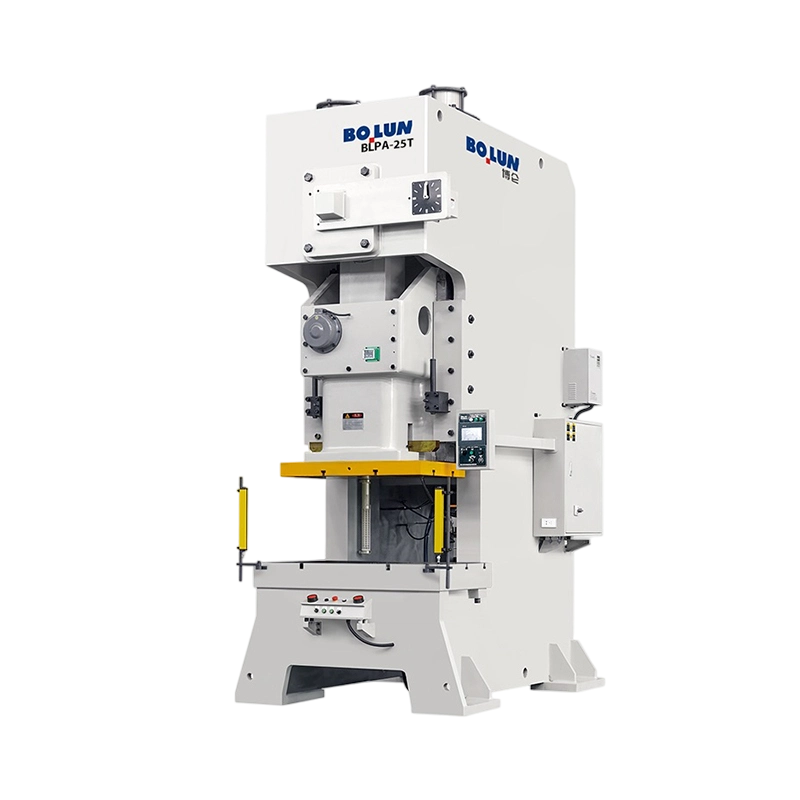


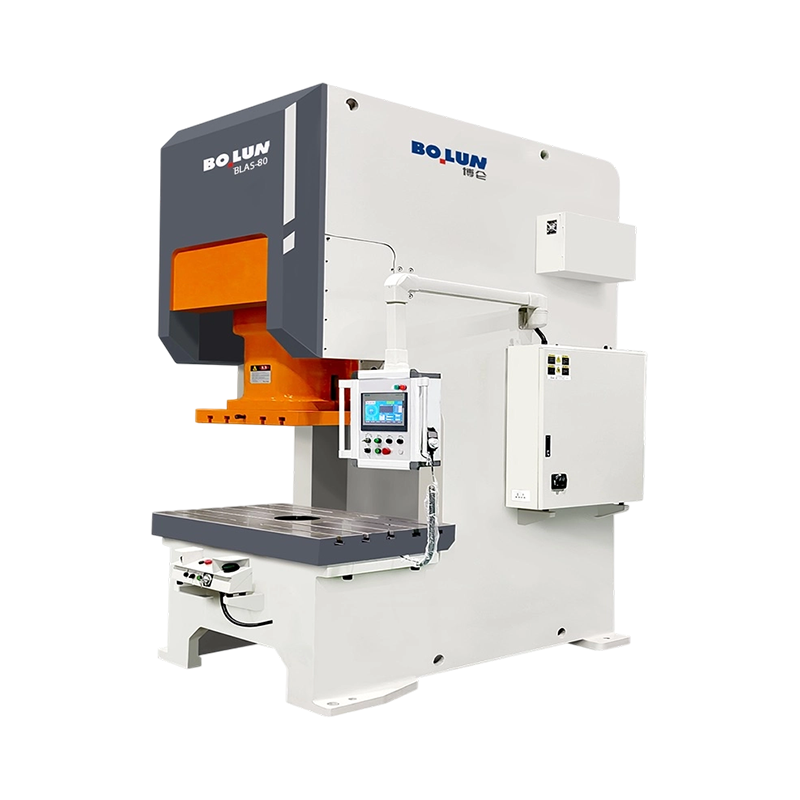
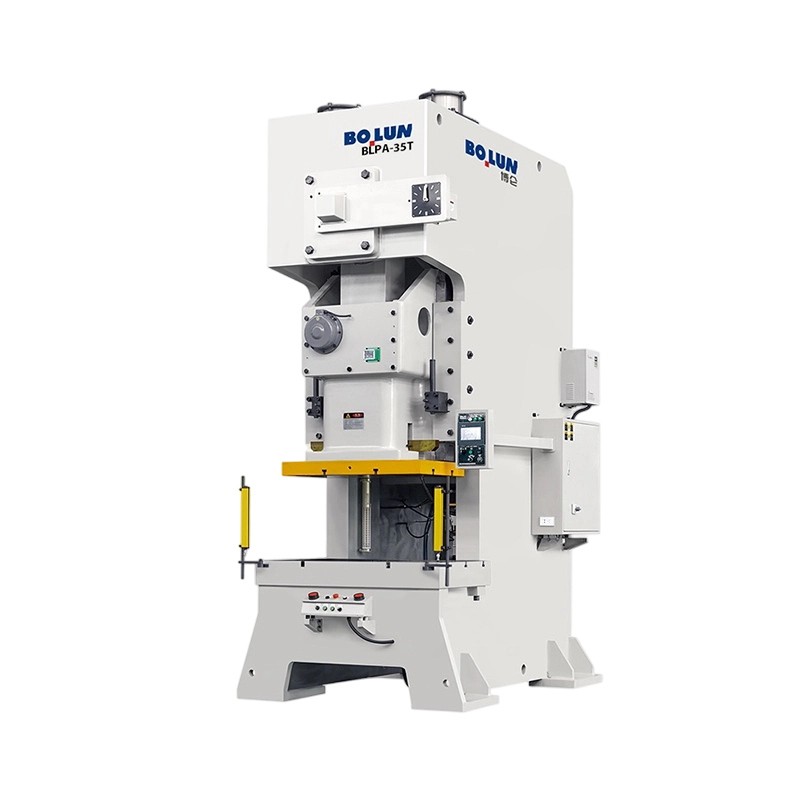
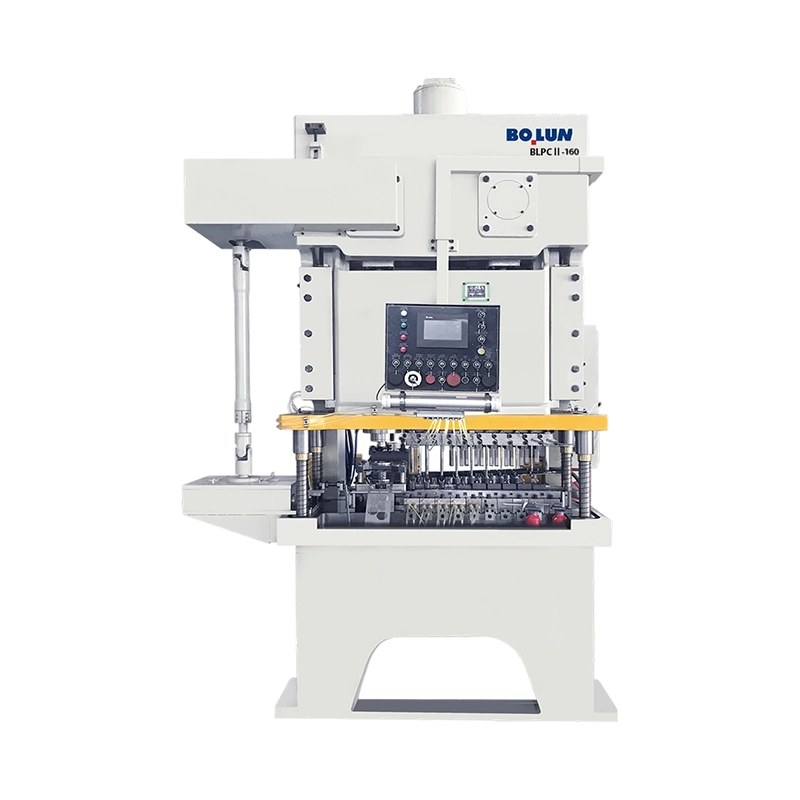
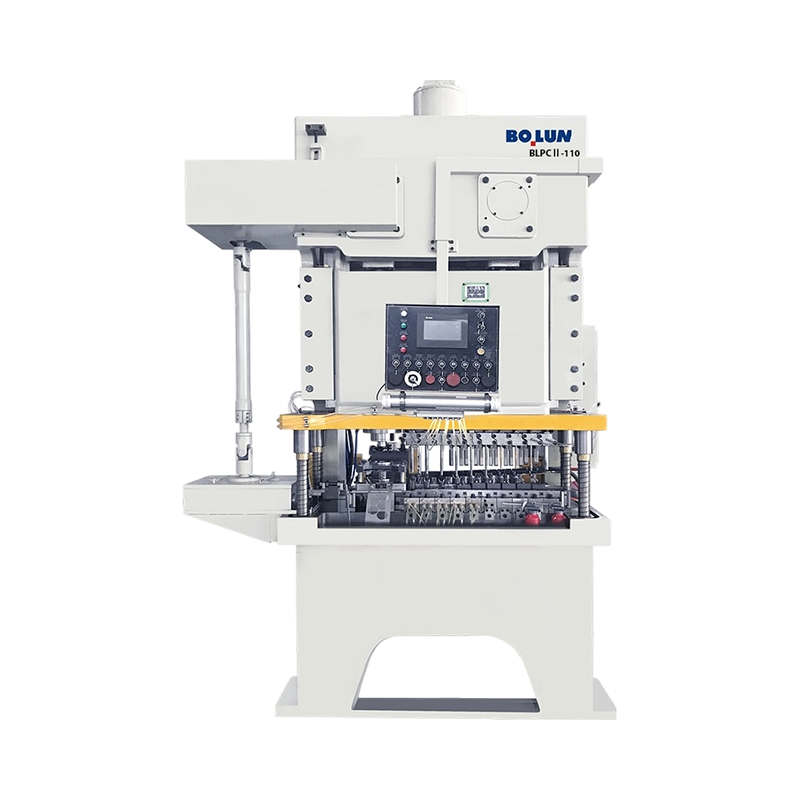
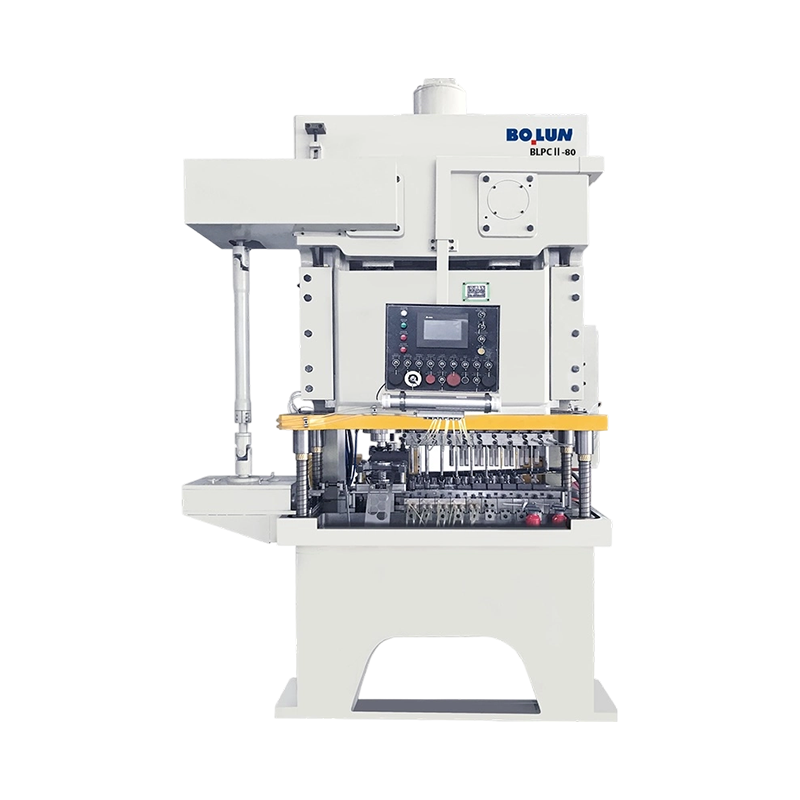
Power press machines are classified in two main ways: by frame construction, w...
What Is a Power Press? A power press — also called a stamping press or punch pr...
In the fields of metal forming, sheet metal fabrication, blanking, and punching,...
A production manager at a mid-size metal component plant recently faced a probl...
A mid-size fastener manufacturer recently faced a familiar problem: its CNC lat...
A fastener plant in Taizhou receives a request from an automotive tier-one supp...
Contact Us

+86-575-83362228

+86-13735238388

+86-575-83362999

+86-15158259588

Hangzhou Office Add: No. 332 Wangjiang East Road, Shangcheng District

No.1 Linjiang Road East, Xiaren, Jinting Town, Shengzhou City, Zhejiang Province, China
Ready to Begin?
Get in Touch

Now!

ZHEJIANG BOLUN
 English
 中文简体
中文简体
