
A production manager at a mid-size metal component plant recently faced a problem that many shop floors encounter when they move from machining to cold forming. The company had won a contract for a small, high-strength flange measuring roughly 22 mm outer diameter, and the target production rate was 180 pieces per minute. The existing hydraulic press could not keep up. Cycle time was too long, scrap was climbing, and part hardness varied from batch to batch. The plant clearly needed a cold forming machine, not another general-purpose stamping press.
This situation is not unusual. Cold forming reshapes metal at ambient temperature, which means the material work-hardens instead of being heated. The result is a near-net-shape part with excellent strength and a smooth surface, but the machine that does this work must be chosen with care. Tonnage, stroke, frame rigidity, and the shape of the force curve all decide whether the operation runs smoothly for years or fails within months. This article walks through what a cold forming machine actually does, which specifications matter most, where the hidden risks sit, and how to evaluate a supplier before you place an order.
A cold forming machine is a high-force mechanical press that reshapes metal at ambient temperature. The workpiece sits between a die and a punch, and the press drives the punch into the material. The metal yields and flows into the die cavity, taking the shape of the tooling. Unlike hot forging, cold forming does not heat the workpiece, so deformation occurs through work hardening rather than recrystallization.
In practical terms, this creates several measurable outcomes. Material utilization is high. A cold formed part often requires only 5 percent or less scrap, compared with 20 to 30 percent for machining from bar stock. The surface finish is bright, free of scale, and usually ready for plating or painting without extra preparation. Mechanical properties improve because strain hardening raises yield strength and hardness, which is why many safety-critical fasteners and structural parts are cold formed. Production speed is also high, with a cold forming machine capable of running 150 to 300 pieces per minute depending on part geometry and press design.
The terminology in the market can be confusing. Some suppliers call these machines cold forging presses, cold heading machines, or cold formers. The phrase cold forging press machine is often used interchangeably with cold forming machine, but there are subtle differences. Cold heading focuses on upsetting or heading operations to form the head of fasteners. Cold forming covers a broader range of deformation, including extrusion and coining. Before the purchase decision, it is worth understanding what defines a cold forging press machine and how it differs from a standard stamping press.
The most relevant machine category for a high-tonnage, high-precision cold forming operation is the toggle-type cold forging press. The toggle linkage produces a force curve that increases sharply near the bottom of the stroke, giving the operator a short dwell period where the material has time to fill the die under maximum pressure. This is exactly what cold forming demands, and it is why most serious cold forming lines are built around toggle presses rather than ordinary crank presses.
A cold forming machine converts rotational energy from a motor into a single, controlled stroke of high force. The crankshaft drives a connecting rod and toggle linkage. As the crank rotates, the toggle links begin to straighten. Near the bottom of the stroke, the links are nearly aligned, and the mechanical advantage becomes very high. This allows the press to deliver a burst of force that can reach hundreds of tons while the slide travels only a short distance.
The main components of a cold forming machine are the frame, which provides the structural rigidity that keeps the slide aligned; the slide, which carries the punch; the toggle linkage or knuckle joint, which amplifies the input force; the flywheel, which stores energy and keeps the machine moving smoothly through the cycle; the clutch and brake, which start and stop the slide safely; the ejector system, which removes the finished part from the die after each stroke; and the counterbalance cylinders, which reduce shock and help maintain accurate slide motion.
The forming process itself has several stages, often handled in a single machine with multiple stations. The sequence starts with feeding, where coil or bar stock is straightened, cut to length, and transferred to the first die station. Upsetting then occurs when the punch compresses the blank and the material flows outward to form a head or flange. In extrusion, the blank is forced through a die, reducing the cross-section or forming a shaft. Coining applies a final high-pressure deformation that brings the part to its final shape and dimensions. Finally, ejection pushes the finished part out of the die and carries it to the next step in the line.
The key difference between a toggle press and a simple crank press is the force curve. On a crank press, the force drops as the slide approaches bottom dead center. On a toggle press, the force rises steeply near the bottom. This means a toggle press produces a higher actual pressure at the point where the die is closed, which is exactly where cold forming needs it.
For example, consider a cold forming operation producing a 22 mm blank. A 400-ton toggle press might yield 380 tons of actual force at a position 3 mm above bottom dead center, while a 400-ton crank press might only deliver 280 tons at that same position. This gap matters when you are forming harder materials or trying to achieve complete die fill without developing internal cracks.
Several classification systems help buyers understand the machines available on the market. The most useful distinctions are by drive mechanism, frame construction, and slide connection.
The toggle-type press is the standard for high-tonnage cold forming. Its linkage gives a high force at the bottom of the stroke and a short working stroke, which makes it ideal for extrusion, coining, and finishing operations. It is also compact, so a 260-ton toggle press often has a smaller footprint than a 315-ton crank press with the same forming capacity.
Mechanical crank presses are simpler and faster, which makes them useful for shallow upsetting or heading when part geometry is not highly complex. However, their force curve is less suited to deep extrusion or high-deformation operations. If you choose a crank press for cold forming, you must verify that the available force near bottom dead center is sufficient for the entire forming sequence.
Open frame presses, sometimes called C-frame presses, allow easy access to the die area and are well suited to small parts and quick die changes. Closed frame presses, also called straight-side presses, provide higher rigidity and better slide alignment. This distinction becomes critical when the forming load is off-center or the part requires very tight tolerances. For cold forming, a closed-frame press is usually the safer choice because the frame does not stretch as much under load, and the slide stays parallel across the die face.
The number of slide connection points affects how the press distributes load. Single-point presses are adequate for symmetrical parts that are centered on the table. Double-point presses spread the load across two connection points, reducing the risk of slide tilt. For cold forming, where off-center loads are common, a double-point press improves parallelism and extends die life.
| Configuration | Force Near BDC | Typical Speed | Best Use | Trade-off |
|---|---|---|---|---|
| Toggle type | High | 30 to 60 SPM | Cold forging, extrusion, coining | Shorter stroke, more complex linkage |
| Crank type | Moderate | 60 to 150 SPM | Shallow heading, upsetting | Less force near bottom of stroke |
| Open frame | Moderate | Wide range | Small parts, fast die changes | Lower rigidity, more deflection |
| Closed frame | Stable | Wide range | High-precision, high-tonnage work | Higher cost, less die area access |
| Single-point | Centered load | Varies | Symmetrical parts | Slide tilt under off-center load |
| Double-point | Balanced load | Varies | Off-center or multi-station parts | More complex, higher cost |
The list of technical parameters on a machine datasheet can be overwhelming. The following specifications matter most in cold forming, and each one affects whether the machine can handle your parts, your dies, and your production targets.
Rated tonnage is the maximum force the press delivers at a specified distance above bottom dead center. On a toggle press, the working window is narrow, so you need to check that the required force for your part falls inside that window. If the part needs 200 tons of force at 5 mm above BDC, a 315-ton press with a force rating only at 2 mm may not deliver enough pressure at the right moment.
Stroke length determines how far the slide travels. Cold forming can be done with a short working stroke because the material only flows a limited distance, but the tooling also needs room for loading, forming, and ejection. Measure the total stroke and compare it with your die height and part removal requirements.
Slide adjustment gives you vertical flexibility to run different dies. Shut height is the distance from the bed to the slide at bottom of stroke. If the shut height is too small, the die will not fit. If it is too large, the press will not apply the full force shown on its nameplate. Both numbers should be checked against your die dimensions before you sign the purchase order.
Speed is often listed as strokes per minute, but actual production speed depends on part size, material, and die design. A toggle press rated at 45 SPM might still produce a small part more efficiently than a crank press rated at 90 SPM, because the toggle press has a higher success rate in the forming die and produces fewer rejects.
The bed and slide area determine the maximum die footprint. Cold forming dies can be large when they include multiple stations. Confirm that the press has enough table area to accept your die, the part transfer system, and any safety guards that are required.
Many cold forming operations require a strong ejector to push the finished part out of the die. If the ejector force is too low or the stroke too short, the part can remain stuck in the die, causing a stall and potentially damaging the tooling. Ask the manufacturer for the rated ejector force and confirm it matches your part geometry.
Frame deflection under full load directly affects part accuracy and tooling life. Ask the manufacturer for the deflection value at the rated tonnage. A closed frame press typically deflects less than an open frame press, which is why high-precision cold forming usually requires the closed-frame design.
For small-to-medium cold forged parts, a 260-ton toggle press offers a sensible balance between compact footprint and useful forming force. A machine in this class can support a wide range of standard parts without wasting energy on an oversized frame.
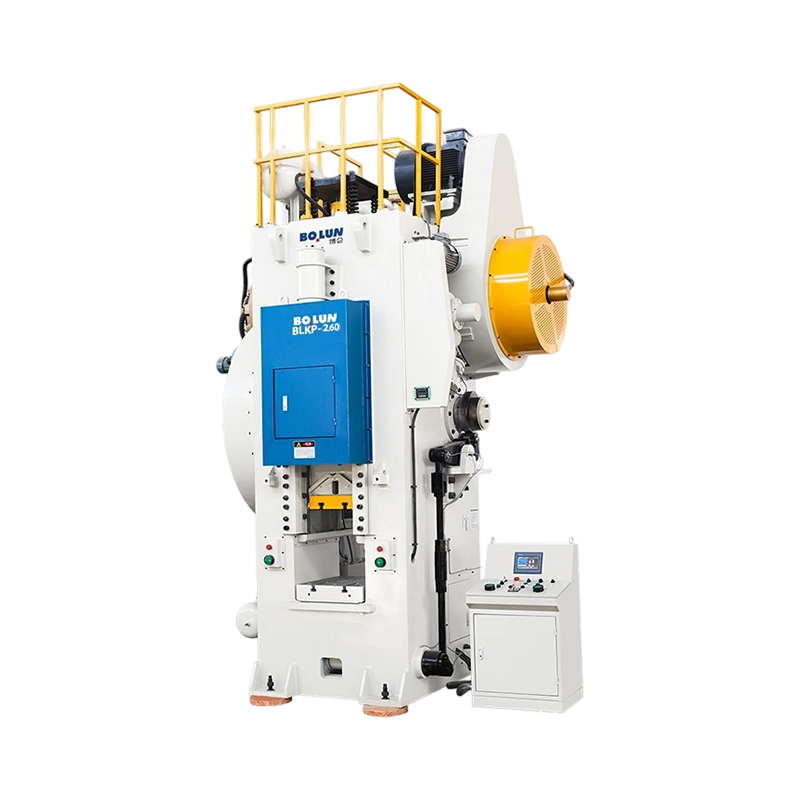 260-ton Toggle Cold Forging Press for Precision Small PartsThis compact 260-ton toggle press offers a nominal capacity of 2600 kN, variable speed up to 50 spm, and a 500x600 mm worktable, making it suitable for high-speed precision cold forging of small electronics and hardware components.View Product →
The material to be cold formed determines the tonnage requirement, the tooling design, and the number of forming stages. Cold forming works best on ductile metals that can deform without cracking. The most common materials are low-carbon steels such as AISI 1010 and 1018, medium-carbon steels such as AISI 1035 and 1045, alloy steels such as AISI 8620 and 4140, stainless steels such as 304 and 316, aluminum alloys such as 6061 and 6063, copper alloys including brass and phosphor bronze, and some titanium alloys.
The key material property is ductility, usually measured by elongation or area reduction. If a material has low ductility, the part can crack during the forming stroke. Harder materials require more force, which pushes the machine closer to its rated tonnage. The work hardening rate also matters because a material that hardens quickly may need an annealing step between forming stages.
| Material | Typical Application | Elongation | Forming Difficulty | Notes |
|---|---|---|---|---|
| Low-carbon steel | Fasteners, brackets | 25-45% | Easy | Low strength, high ductility |
| Medium-carbon steel | Structural parts | 15-25% | Moderate | Higher force, careful die design |
| Stainless 304 | Corrosion-resistant parts | 40-50% | Moderate | Work hardens quickly, higher tonnage |
| Aluminum 6061 | Lightweight components | 12-20% | Moderate | Lubrication critical, lower tonnage |
| Brass CuZn37 | Electrical terminals | 15-30% | Easy | Excellent formability, reduces tool wear |
| Titanium Grade 2 | Aerospace parts | 20-25% | Hard | High tonnage, tooling life risk |
Before finalizing a material choice, ask your die designer to confirm that the part can be produced within the selected machine's tonnage and stroke. It is also worth checking that the material's yield strength does not exceed the practical limit for the press you are considering.
Cold forming machines bring a specific set of benefits that make them attractive for high-volume production. Understanding these benefits helps you justify the investment to your operations team and your finance department.
Cold forming is not the right solution for every part, and overlooking its limits can lead to costly failures. The following risks should be part of your evaluation before you commit to a machine.
These risks are manageable when you choose a machine with enough capacity and rigidity. One of the best ways to protect your investment is to calculate the forming force precisely and then buy a press with a capacity margin built in.
The decision process should start with the part, not with the machine. Once you know the part geometry, material, and required production rate, you can work through a logical sequence of choices.
Calculate the force needed to cold form your specific part before you compare machines. Use a forming force calculation based on material, cross-section, and friction. Ask your die supplier for an estimate as well. Then choose a press that gives you at least 15 to 20 percent more tonnage than the calculated requirement.
For extrusion, coining, and high-deformation cold forming, a toggle-type press is the better match. If you are doing only shallow upsetting, a crank press may work, but you still need to confirm that the available force near bottom dead center is adequate.
A common mistake is to buy the largest tonnage press you can afford. Larger presses have larger beds, higher energy consumption, and slower cycles. A 260-ton machine may be more productive than an 850-ton machine for small parts, simply because it is easier to automate and faster to cycle.
Do not rely on the maximum tonnage rating alone. Ask the manufacturer for a force curve showing how much force is available at various distances above bottom dead center. This will tell you whether the press can handle your specific die fill requirements.
The punch and die must be built to handle the material and the required deformation. If you are forming a high-strength steel, ask for a machine with adjustable slide speed and a rigid frame. Check whether the slide guides are hardened and replaceable, and whether the lubrication system covers all deep-forming wear points.
Cold forming parts often need custom tooling interfaces, ejection systems, and feeding mechanisms. The manufacturer should be able to accommodate non-standard dimensions and process requirements. A supplier that only offers standard models may not fit your production line layout or your automation plans.
For multi-stage forming and versatile production, a 400-ton toggle press offers a balanced stroke and higher deformation capability. This is a useful middle ground for plants that produce a mix of sizes and need a machine that can handle both shallow and deep forming operations.
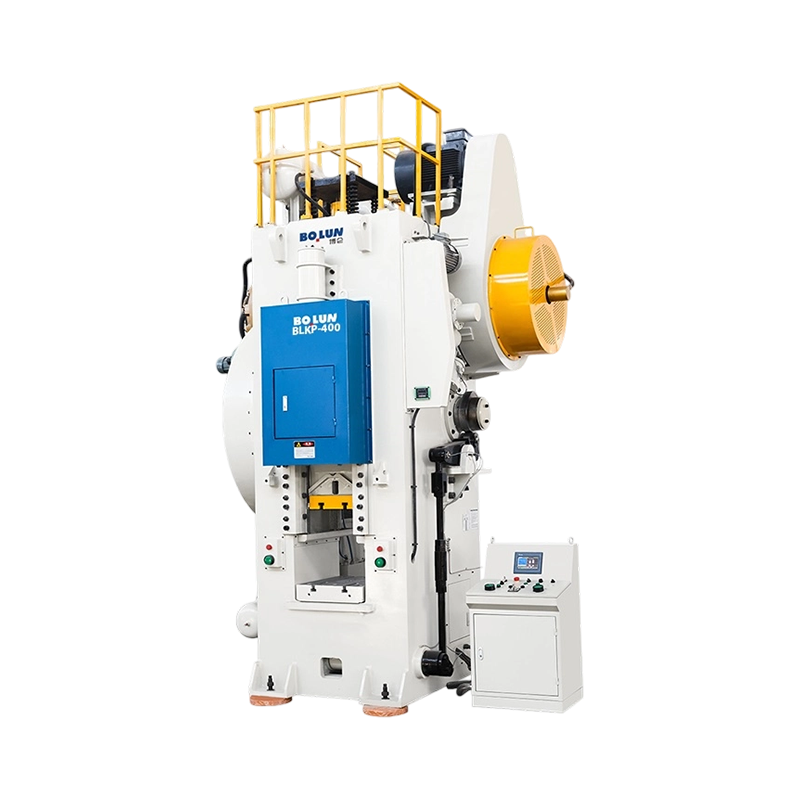 400-ton Toggle Cold Forging Press with Balanced StrokeThe 400-ton toggle press provides a 4000 kN capacity and adjustable strokes of 160 or 180 mm, ideal for multi-stage processes like upsetting and coining on a 550x660 mm worktable, with electric slide adjustment for setup.View Product →
For industrial-strength heavy-duty work, an 850-ton toggle press delivers the highest tonnage in the class and suits parts that require substantial deformation over a large cross-section. Machines in this range are typically chosen for high-volume structural components and large fasteners.
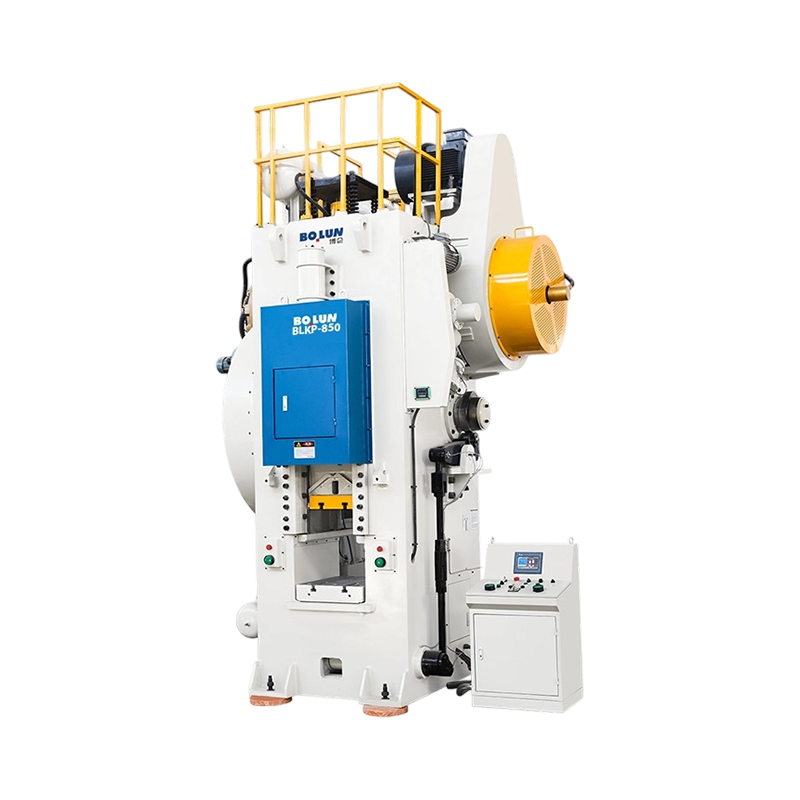 850-ton Heavy-Duty Toggle Press for High-Load FormingThis heavy-duty 850-ton press features a rigid frame, 600x700 mm worktable, and 8 mm pressure stroke, suited for demanding automotive and machinery parts, with integrated lubrication and photoelectric safety.View Product →
A cold forming machine is a capital investment that should serve your factory for fifteen to twenty years. The technical specifications matter, but the supplier's ability to support the machine over its lifetime matters just as much.
Ask about frame deflection, slide parallelism, and clearance specifications. Request load test certificates and material certifications for the frame, crankshaft, and toggle linkages. Check the manufacturer's machining and assembly capability. A supplier with an in-house production system can control quality better than a trading company that simply assembles outsourced components. The technical advice you receive before purchase and the response you get after a breakdown both depend on the same engineering team at the press manufacturer.
Confirm spare parts stock and lead times. If a critical part fails and you have to wait six weeks for a replacement, your production line stops. Ask about warranty terms, installation support, operator training, and preventive maintenance schedules. Verify that the manufacturer can handle non-standard tooling, motor options, or automation feeding systems. A supplier that offers one-stop service from design through installation will save you time and money when the machine is already on your floor.
Once the machine is installed and running, quality assurance keeps your production stable. Cold forming produces highly repeatable parts, but that repeatability depends on the tooling, the material feed, and the machine condition.
A well-maintained cold forming machine with controlled tooling and material feed can deliver tens of millions of parts per decade with minimal downtime.
The cold forming machine you buy today will run for decades if you choose the right specifications. Start with the part. Calculate the force, confirm the stroke, verify the die height, and check the table area. Then look beyond the datasheet at the machine's rigidity, toggle linkage design, and the supplier's service capability. A 400-ton toggle press that is well-built and well-supported is worth more than a larger machine that is difficult to maintain. If you evaluate cold forming machines systematically, you will avoid the most common purchase mistakes: buying too little tonnage, ignoring frame deflection, and overlooking the importance of ejector force and die access. The right equipment will keep your production floor running smoothly, with lower scrap rates and more consistent part quality than you can achieve with any other forming method.



A mid-size fastener manufacturer recently faced a familiar problem: its CNC lat...
When you are planning to produce medium or small metal parts in high volumes, t...
A cold forging die rarely announces its failure in advance. One day the press r...
A fastener plant in Taizhou receives a request from an automotive tier-one supp...
Understanding Mechanical Power Presses and Their Essential Functions A mechani...
A production manager walks into an engineering meeting with a stack of drawings...
Contact Us

+86-575-83362228

+86-13735238388

+86-575-83362999

+86-15158259588

Hangzhou Office Add: No. 332 Wangjiang East Road, Shangcheng District

No.1 Linjiang Road East, Xiaren, Jinting Town, Shengzhou City, Zhejiang Province, China
Ready to Begin?
Get in Touch

Now!

ZHEJIANG BOLUN
 English
 中文简体
中文简体
