A mid-size fastener manufacturer recently faced a familiar problem: its CNC lathes were chewing through bar stock at a ratio of almost three kilograms of steel consumed for every kilogram of bolts shipped. The plant switched its most popular M6 hex bolt to a cold heading machine, and the economics changed quickly. Material utilization jumped above 95 percent, output went from about ten parts per minute to several hundred, and the finished bolts became stronger because the cold forming work-hardened the head and shank.
That is the core argument for using a cold heading machine: it reshapes metal instead of cutting it away, and it does so without heat, at high speed, and with excellent repeatability. Cold heading machines produce screws, bolts, rivets, pins, terminals, and a wide range of small engineered components for automotive, electrical, appliance, and construction markets. If you are evaluating whether such a machine belongs on your factory floor, this guide covers the process fundamentals, the machine configurations, the specification decisions that matter, and the procurement pitfalls that determine whether the investment actually pays off.
A cold heading machine is a metal-forming press that shapes wire rod into solid parts at room temperature. The machine pulls wire from a coil, straightens it, feeds an exact length, cuts off a blank, and then drives the blank into dies with one or more punches. Each die station upsets or extrudes the material until the blank reaches its finished geometry. The word "heading" comes from the original application: upsetting the end of a nail or screw blank to form a head. Modern machines still do that, but they also trim, coin, extrude internal sockets, reduce shanks, and create complex parts through multiple stations in one cycle.
Cold heading is a subcategory of cold forging. Cold forging covers any plastic deformation of metal below its recrystallization temperature; cold heading refers specifically to high-speed, multi-station forming of wire or rod into small, mostly axisymmetric parts. In practical terms, a cold heading machine is to solid components what a stamping press is to sheet metal: it is the dedicated, high-efficiency production tool for the job.
Machines come in two broad families. Horizontal cold headers, familiar from nail and screw production, feed wire along a horizontal axis and are extremely fast. Vertical cold forming presses, often built as toggle-driven presses, handle heavier wire, larger blanks, and parts that need more forming energy. Both families deform material by mechanical pressure and rely on the same metallurgical principles.
Regardless of brand or configuration, every cold heading operation follows the same sequence:
A typical hex cap screw in M6 size begins as 5.5 mm wire. The blank is cut to length, then upset in three dies: the first pre-forms the head, the second enlarges it closer to the final diameter, and the third coins the hex and a chamfer while a punch forms the internal socket by backward extrusion. The whole sequence takes a few tenths of a second. Modern machines produce between 100 and 700 parts per minute, with lighter parts running at the higher end.
The limiting factor is deformation, not cycle time. Each station can increase the cross-sectional area of the blank only so far before the material buckles or work-hardens beyond its ductility. That is why machine selection depends more on the total required deformation and forming force than on the advertised maximum speed.
Cold heading relies on two deformation mechanisms that often act together in the same part.
Upsetting compresses the length of the blank and increases its diameter. It is the mechanism that forms a nail head, a rivet head, or a bolt head. The practical limit of upsetting in a single station is governed by buckling: an unsupported column of wire whose unsupported length is more than about 2.5 times its diameter tends to bend before it upsets. For longer upset lengths, the machine must support the blank inside a smaller die first, use several stations, or perform a cone pre-form before the final head shape is coined.
Extrusion moves material through a die opening. Forward extrusion reduces the cross-section of the blank and is used for shank reductions and tapered features. Backward extrusion forces material to flow backwards around a punch, forming cavities such as hex sockets, blind holes, and cup shapes. Backward extrusion generates some of the highest forming loads in cold heading because the material is restrained on nearly every side.
Work hardening governs how far the process can go. Every increment of plastic deformation raises the yield strength and hardness of the metal. In low-carbon steel, total reduction can reach 75 to 80 percent before annealing is needed. In stainless or high-alloy material, the limit is much lower. Good cold heading practice keeps the strain per station below the material's available ductility, and it treats the final work-hardened hardness as a design feature rather than an accident. For threaded fasteners, that added strength is often exactly what the print requires.
The physical layout of a cold heading machine determines the range of parts it can run economically.
Horizontal headers are the classic machines of the fastener industry. The wire path is straight and horizontal, the heading ram moves horizontally, and the cut-off and transfer mechanisms work at very high rates. They excel at small parts: nails, screws, rivets, short pins, and similar geometries. Their limitation is part size and mass, because large blanks become difficult to guide and handle horizontally at speed.
Vertical presses process heavier wire and larger parts. The ram moves vertically in the same geometry as a conventional press. Because the frame absorbs reaction forces symmetrically, vertical machines achieve better punch-to-die alignment and are easier to integrate with robots, automatic feeders, and heavy tooling. The closed-frame construction, sometimes called an O-frame, resists deflection better than an open C-frame and is preferred for high-tonnage cold forming work.
The drive system matters as much as the layout. Crank-driven machines are simple, fast, and efficient, with a slide velocity that follows a sine curve and reaches a peak near mid-stroke. Toggle-driven machines use a linkage that multiplies force as the slide approaches bottom dead center. A toggle press produces enormous force at low slide speed through the forming zone, which improves die filling and reduces impact loads. That is why toggle presses dominate vertical cold forging applications: their force-stroke curve matches the requirement of high-deformation, high-energy cold forming.
Servo-driven presses replace the flywheel and clutch with direct-drive servomotors. Slide motion becomes programmable, so the machine can dwell at the bottom, change speed mid-stroke, and follow a custom forming curve. Servo technology is spreading into cold forming because it shortens cycle times for multi-step parts and protects expensive dies from shock loads.
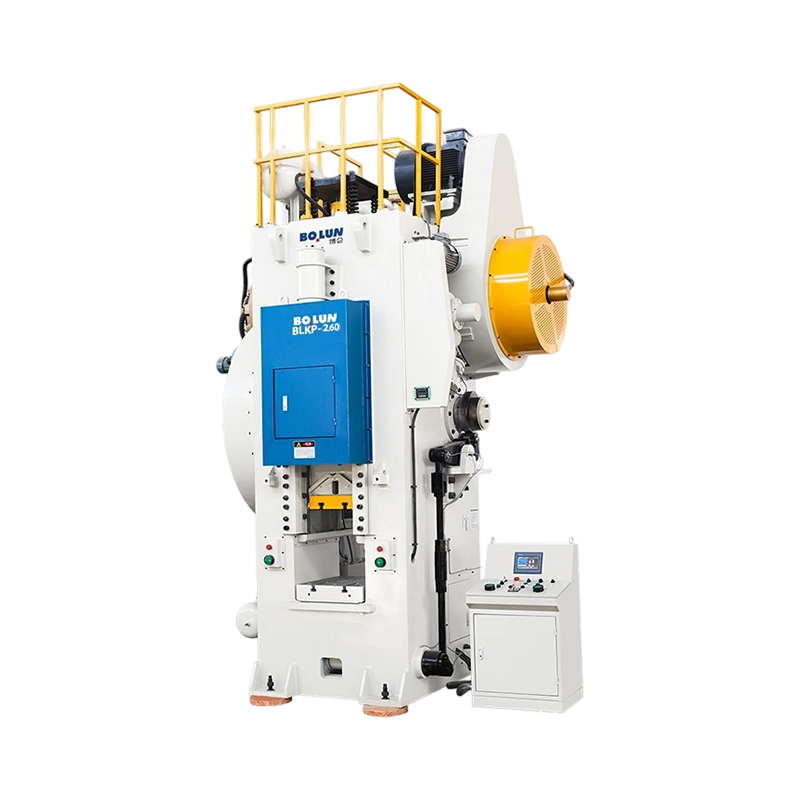
You can read more about what a cold forging press machine is in our industry notes. Among industrial cold forging press lines, the BLKP cold forging toggle-type series uses toggle transmission for a balanced stroke and high deformation capability, a design that suits parts requiring sustained force through a long forming distance.
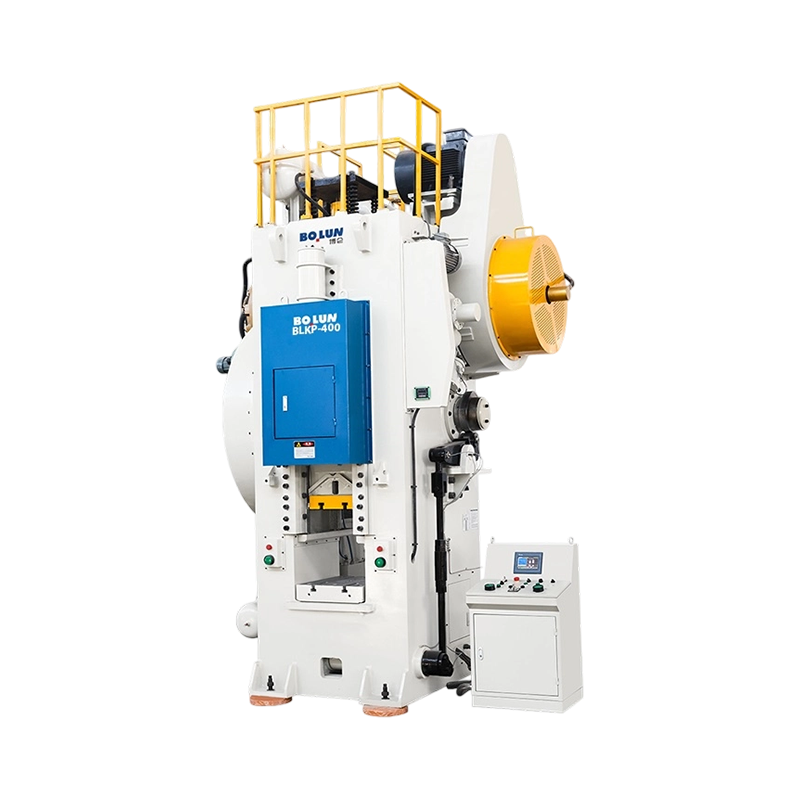 BLKP-400 Toggle-Type Cold Forging Press with 4000 kN CapacityThis 4000 kN knuckle-joint press offers 160 or 180 mm stroke options and an electric slide adjustment with hydraulic locking, making it suitable for upsetting, coining, and sizing where balanced force over long forming distances matters.View Product →
Material selection is the first thing to get right in a cold heading project, because it determines forming loads, tool life, and whether parts crack or fold.
The majority of cold headed parts are made from low-carbon steel wire in grades such as SAE 1008, 1010, and 1018. These grades have low flow stress, high ductility, and are easy to form in multi-station dies. Medium-carbon grades such as 1035 and 1045 raise the strength of finished parts but require noticeably higher forming forces. Alloy steels, including 4037 and boron-treated grades like 10B21 and 10B33, are specified where fastener property classes 8.8, 9.8, or 10.9 are required. Stainless steels such as 304, 316, and 410 form well but work-harden aggressively, so they need more forming stations and more robust lubrication. Non-ferrous wire, including aluminum alloys 6061 and 5056, brass, copper, and beryllium copper, is common for electrical components, terminals, and corrosion-resistant hardware.
Material properties also set the machine size. As carbon content, alloy content, or total strain increases, the required forming force rises quickly. If you plan to run several material families on one machine, size the machine for the strongest, hardest material in the mix, not just the current production schedule.
Why do manufacturers invest in cold heading machines when they already own lathes and machining centers? Five measurable advantages explain the choice.
First, material utilization is extremely high. Forming displaces material instead of cutting it away, so a fastener that once consumed several times its finished weight in bar stock can now be made with less than five percent process loss from the coil. Over millions of parts, the savings on raw steel alone justify the equipment.
Second, output speed is unmatched for solid parts. Single-blow headers run well above 400 parts per minute, and multi-station machines still produce hundreds of parts per minute for many product families. No chip-making process comes close to that rate for a solid metal component.
Third, work hardening improves mechanical properties. The material is strongest exactly where it has flowed the most, which is where fasteners need resistance: in the head fillet, the socket wall, and the shank. Cold forming often lets manufacturers use a lower-cost steel grade because the cold work adds strength that would otherwise require heat treatment.
Fourth, dimensional consistency comes from a rigid machine and repeatable tooling. Once the dies are dialed in, hundred-thousand-piece runs hold tight dimensions with little drift and very few rejects.
Fifth, surface quality is good. The die cavity impresses a smooth finish onto the part, often eliminating secondary grinding and polishing operations. The trade-off is the upfront cost of dies and setup; the process only becomes economical when the volumes are high enough to amortize that tooling.
Machining is the most common alternative for small solid parts, so it is the first process buyers compare against cold heading. Each has a clear economic zone.
| Criterion | Cold heading machine | CNC machining |
|---|---|---|
| Material utilization | 90-98 percent | 40-70 percent typical |
| Cycle time | 0.1 to 10 seconds per part | 5 seconds to several minutes |
| Part strength | Increased by work hardening | Dependent on bar stock; cut surfaces are not strengthened |
| Typical tolerance | +/- 0.05 mm on formed features | +/- 0.01 mm or better |
| Setup and tooling cost | High; dies are custom and part-specific | Moderate; program changes are quick |
| Flexibility | Low; dedicated tooling per part | High; easy design changes |
| Economic volume | Typically above 100,000 pieces per year | Economical from one-off upward |
Machining wins whenever quantities are small, geometry changes often, or tolerances are extremely tight. Cold heading wins whenever the part has a stable design, high annual volume, and enough symmetry to be formed in dies. Many plants use both: cold heading for the mainstream product and CNC machines for specials, prototypes, and low-volume variants.
A common hybrid flow is cold heading followed by thread rolling, then a light pointing or chamfering operation. The thread points and drive features are often easier to control with a quick secondary pass than by forming them alone, and the combination still costs far less per part than full machining.
Hot forging heats the metal to reduce its flow stress, which allows large parts and severe deformation with machines of modest tonnage. Cold heading replaces the furnace with force: the machine must overcome the full room-temperature yield strength of the material on every stroke.
For small parts, cold heading has decisive advantages. There is no scale, no oxidation loss, no thermal shrinkage, and no furnace energy. Tolerances are tighter because the die defines the final shape without shrinkage allowances, and the surface finish is smooth enough to run directly into thread rolling. Because cold working strengthens the material, many parts meet their mechanical properties with reduced heat treatment or none at all.
Hot forging remains the better choice when the part is large, when total deformation exceeds what the material can absorb cold, or when very high-strength steels with low room-temperature ductility are specified. It is also preferred for parts with thick sections that would require an impractically large cold press. As a rough guide, parts weighing above one kilogram are usually routed to hot or warm forging instead of cold heading, although the crossover point depends on geometry, material, and volume.
Stamping forms sheet metal; cold heading forms wire. The two processes are more complementary than competitive. A battery housing, for example, is a stamped and deep-drawn sheet part, while the battery terminals and contact posts inside it are usually cold headed.
Stamping produces thin-walled, flanged, and open shapes from flat sheet. Cold heading produces solid bodies, heads, shanks, and internally formed cavities from round wire. When a component is axisymmetric and solid, cold heading is faster and more material-efficient. When the part is a plate, bracket, or shell, stamping is the natural process.
Many product assemblies contain both types of parts. A fastener with a flanged head is made by heading; the retainer clip next to it is stamped. That is why press builders, including those that focus on cold forging equipment, usually offer both press families so plants can cover the full bill of materials.
Casting creates parts by solidifying liquid metal in a mold, which permits complex internal geometry but introduces porosity risk, variability in mechanical properties, and the need for substantial machining on functional surfaces. Cold heading is a solid-state process: the original grain structure of the wire is preserved, and the grain flow follows the contour of the part.
As a result, a cold headed part has superior strength, toughness, and fatigue resistance compared with a cast part of the same material and size. The trade-off is geometric freedom. Castings can be convoluted, hollow, and highly detailed. Headed parts are essentially variations of a cylinder: heads, shanks, sockets, flanges, and drive forms. For small high-volume parts such as terminals, pins, inserts, and socket blanks, cold heading almost always beats casting on cost per piece, consistency, and mechanical performance.
Cold heading machines produce the vast majority of the world's fasteners, plus a long list of engineered components that most consumers never see.
Larger automotive and industrial parts, such as heavy-duty studs, anchor bolts, and pipe fittings, run on vertical cold forging toggle presses that provide the stiffness and tonnage required for backward extrusion and heavy upsetting. If your product mix includes both small fasteners and larger formed components, it is common to run several machines in parallel rather than force all parts through one oversized line. A 400-ton toggle press might make suspension bolts in the morning and heavy terminal blanks in the afternoon, but only when the die space, stroke, and feed window cover both families.
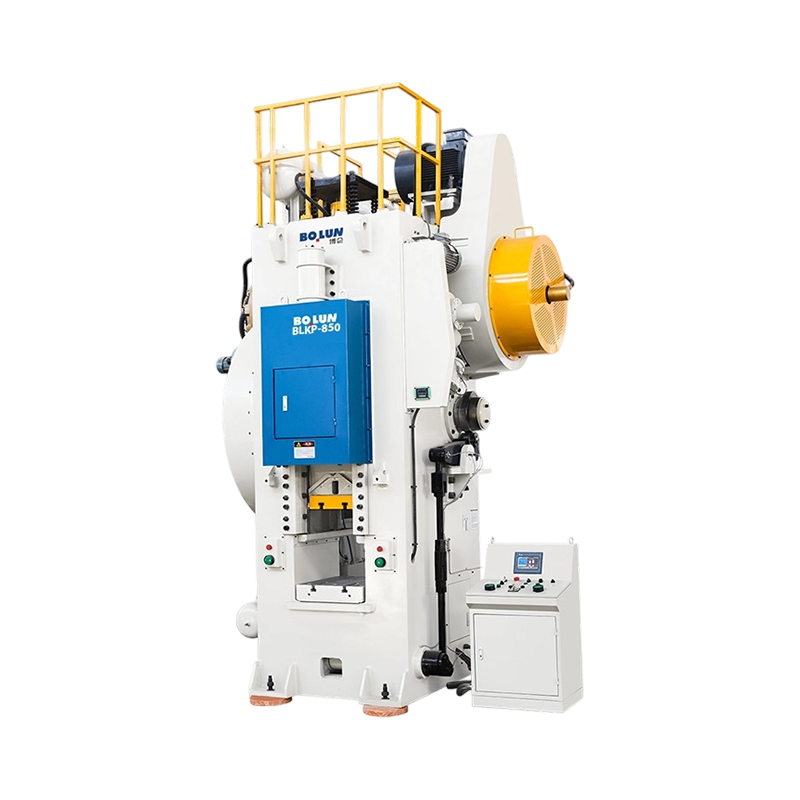 BLKP-850 Heavy-Duty Toggle Press for High-Load Cold ForgingRated at 8500 kN with an ultra-rigid frame and 180 mm bolster, this machine maintains stable performance under continuous heavy-duty operation, ideal for automotive and heavy machinery components requiring backward extrusion and heavy upsetting.View Product →
Choosing the right machine is a balancing act between required force, part geometry, material, speed, and budget. Start with the part family, not with the brochure, and answer these questions:
Frame structure is also a decision factor. Open-type C-frame presses are accessible and affordable for lighter work. Closed-type O-frame presses have a rigid, symmetric structure that resists deflection and tilting, which is essential for high tonnage and close tolerance cold forming. For very high deformation, a closed double-point or eccentric-gear drive distributes force evenly across the slide and protects both tooling and frame from eccentric loads.
Large projects also demand a long stroke. If a part must be ejected from deep dies, or if the extrusion length is long, stroke range and shut height become limiting factors. Do not size a machine by tonnage alone; check that the die space, slide stroke, and feed window fit your entire part family, including future variants.
Tonnage is the most quoted number on a cold heading machine, yet it is also the most frequently misapplied. The required forming force is the product of the projected area of deformation and the material's flow stress, modified by friction and geometric redundancy.
For upsetting a head on low-carbon steel, the flow stress at moderate strain is in the range of 800 to 1,200 MPa. For backward extrusion, or for alloy steel, it can exceed 1,800 MPa. As a simple example, upsetting a 20 mm diameter head from 10 mm wire produces a final head area of about 314 square millimetres. At a flow stress of 1,000 MPa, that requires roughly 314 kN of force, or about 32 metric tons. The same head with a deep socket formed by backward extrusion, or made in alloy steel, could demand two to three times that force.
The table below gives indicative wire-diameter ranges versus machine class for carbon steels; actual values depend on part complexity, material condition, and lubrication.
| Machine class | Typical wire diameter range | Typical application |
|---|---|---|
| 25-60 t | 1-6 mm | Nails, small screws, rivets |
| 60-160 t | 4-12 mm | Machine screws, bolts, pins |
| 160-400 t | 8-20 mm | Heavy-duty bolts, studs, automotive components |
| 400-850 t | 15-35 mm | Large fasteners, forged blanks, high-deformation work |
For a mid-sized vertical cold forging press, the BLKP650 class, rated at 6,500 kN, is a common choice when the forming depth is long and the stroke must remain balanced under heavy load. Sizing above your current needs is usually wise because product families tend to grow toward larger wire diameters over time.
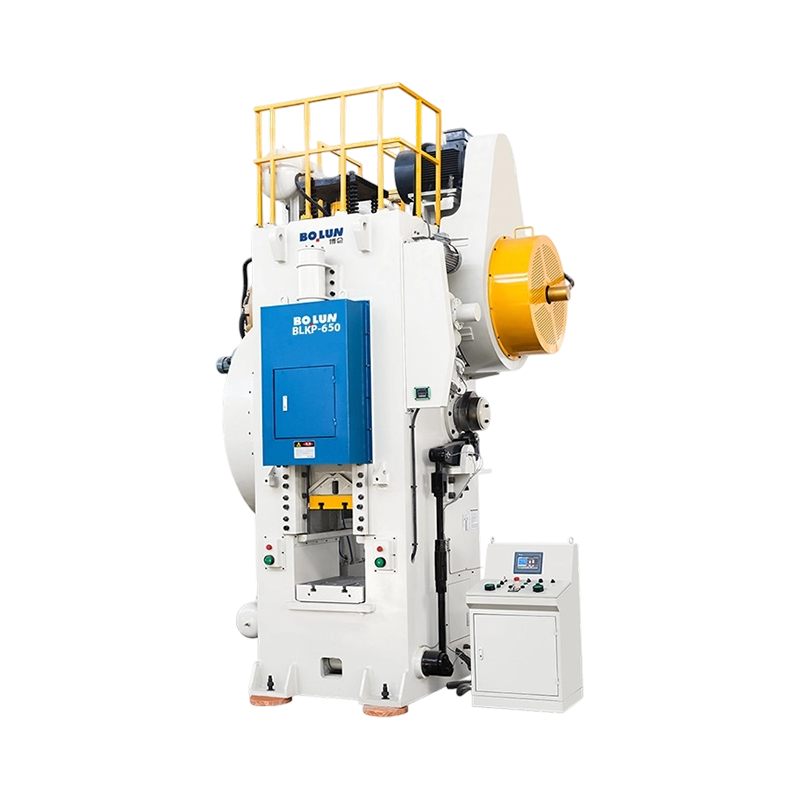 BLKP-650 Toggle Press for Deep Cold Forging and Stable StrokeWith 6500 kN capacity and an 8 mm pressure stroke, this press delivers controlled forming for thick-gauge parts, featuring an integrated ejector system and load detection for reliable operation in deep compression applications.View Product →
Tooling determines the real cost per part in cold heading. The die set includes inserts, punches, sleeve housings, pins, and strippers. For high-volume steel heading, tungsten carbide inserts are the standard choice, supported in steel shrink-fitted cases. Carbide inserts commonly last 500,000 to 2,000,000 pieces per cavity between regrinds for low-carbon steel parts. Punches wear faster, especially in backward extrusion, where contact pressures are extreme; many punches carry titanium or ceramic coatings to extend life.
Lubrication is not optional. The industry standard for steel is a zinc phosphate conversion coating followed by a stearate lubricant. Ordinary oil films cannot survive the contact pressures of cold extrusion, and the result of under-lubrication is galling and pickup on the dies within minutes. Stainless steel requires oxalate or similar conversion coatings, while aluminum and brass can run with lighter oils.
All of these failures trace back to alignment and machine stiffness. The punch and die must remain concentric within a few microns, and the slide must not tilt under load. A rigid frame, accurate gibbing, and a well-designed die-change system are worth as much as the nominal tonnage rating.
Because a cold heading machine runs at high speed, quality control must be continuous and automatic. Waiting for an off-line sampling result can produce tens of thousands of defective parts before the problem is seen.
The first line of defense is the machine's load-monitoring system. Modern cold forming presses track slide load on every stroke using strain gauges mounted on the frame. When the load curve deviates outside a defined window, the machine stops automatically. This catches a missing punch, a misfed wire, or a broken die within one or two cycles, which prevents a cascade of scrap.
Dimensional checks run both off-line and in-line. Off-line, inspectors measure head diameter, head height, shank length, socket depth, and thread runout on a sample basis. In-line, optical gauging systems can check 100 percent of parts at several hundred parts per minute, rejecting those outside tolerance without slowing the line.
Hardness testing is important for parts whose final strength depends on work hardening. The cold formed zones should meet minimum hardness or tensile requirements, and the test plan should target those zones specifically. For automotive and regulated industries, process capability studies with Cp and Cpk are expected. Cold heading lends itself to high capability when dies are fresh and the machine is stable, but capability erodes as dies wear, so tool-change intervals should be based on measured drift rather than habit.
Sustainability in metal forming is usually discussed in terms of furnace energy and greenhouse gas emissions. Cold heading avoids heating altogether, which is its strongest environmental credential.
Per part, cold heading consumes only the mechanical energy of the press, a fraction of the energy required to heat a blank in hot forging or to rotate a machining spindle for minutes. Material efficiency adds another dimension: by displacing metal instead of cutting it away, cold heading reduces both the embodied emissions of purchased raw material and the cost of handling and recycling swarf.
A plant that switches a high-volume fastener from machining to cold heading typically sees these results:
These benefits are real and measurable, but they follow from good process selection rather than from marketing claims. For a manufacturer with large fastener or component volume, the cold heading machine is one of the most energy-efficient metal-forming options available.
Capital cost is only the visible part of a cold heading investment. The total cost of ownership includes the machine, tooling, installation, utilities, maintenance, changeover time, and the cost of quality failures. A realistic budget model covers all of them.
Tooling is a perpetual cost that scales with volume and material hardness. It is prudent to budget 5 to 15 percent of the machine price per year for inserts, punches, and regrinding, with the higher end of that range associated with stainless steel or heavily extruded parts. Maintenance is modest but not negligible: lubrication systems, filters, gibs, and seals need scheduled attention, and a press running twenty-four hours per day at high speed will consume wear parts every year.
The payback calculation usually focuses on unit cost. Consider a bolt that costs $0.05 to produce by machining and $0.02 on a cold heading line. At ten million pieces per year, the annual saving of $300,000 pays for a mid-size machine within a few years. If the product mix includes multiple sizes across the machine's range, utilization becomes the driver of the result. A machine that runs only one shift at thirty percent utilization is harder to justify than one that runs three shifts at eighty percent.
Changeover cost is the least visible line item. A die change that takes two hours on a machine that runs hundreds of strokes per minute is expensive in lost output. Machines designed for quick die change, with hydraulic clamping and pre-set tooling cartridges, recover their premium quickly whenever lot sizes are small.
The machine is only as good as the company that designs, builds, and supports it. Technical due diligence should cover four areas before you sign an order.
Zhejiang Bolun High-Precision Machinery, for example, has spent two decades building metal-forming equipment and operates a full production chain from design and core component machining to final assembly. The company publishes its complete product line openly, and its product names describe the intended application rather than hiding it. A transparent machine builder will show you its factory, its test reports, and its quality system without being asked.
Several trends are changing what buyers should expect from a cold heading machine today.
Servo-driven forming is the largest change. A servo press does not use a flywheel and clutch; instead, servo motors drive the slide directly, or through a linkage, with software-controlled motion. The forming program can include slow contact, fast approach, a dwell at bottom dead center, and controlled extraction. For multi-stage cold forming, this reduces vibration, extends die life, and shortens non-forming time. Several press builders now combine a servo drive with a toggle mechanism to obtain both programmability and the high force near bottom dead center that cold forging requires.
Digital monitoring is spreading from stamping to cold forming. Machines generate a complete load-stroke curve for every part, and software learns the normal curve, then flags deviations in real time. This capability is becoming the standard quality mechanism on automatic high-speed lines because it catches tooling wear before products fall out of tolerance.
Automation is advancing at the material-handling level. Coil loaders, closed-loop wire straighteners, automatic die changers, and end-of-line packaging are commonly integrated into complete cells. A robot can now transfer warm or cold blanks between a heavy forging press and a trim press without operator involvement.
For buyers, the practical conclusion is that a new cold heading machine should be digital-ready. Load monitoring, remote diagnostics, and stored parameter sets translate directly into fewer defects, faster changeovers, and lower operating cost over the machine's life.
The cold heading machine is one of the most efficient production tools in manufacturing. It turns coiled wire into finished fasteners and engineered components at high speed, with little waste, increased strength, and excellent repeatability. But its economics depend on volume, correct tonnage sizing, proper tooling, and a capable machine builder behind the equipment.
Before you buy, define the part family precisely, calculate the required forming forces, budget for tooling as an ongoing expense, and visit the manufacturer to see quality control in practice. A well-selected cold heading machine runs for decades and becomes the lowest-cost station on your production floor. A poorly selected one is an expensive reminder of a missed specification. The difference is in the preparation.
A production manager at a mid-size metal component plant recently faced a probl...
A cold forging die rarely announces its failure in advance. One day the press r...
A fastener plant in Taizhou receives a request from an automotive tier-one supp...
When you are planning to produce medium or small metal parts in high volumes, t...
A tooling engineer quotes a new bracket program and specifies a 160-ton press. ...
Put a 160-ton open-frame press and a 160-ton closed-frame press side by side an...
Contact Us

+86-575-83362228

+86-13735238388

+86-575-83362999

+86-15158259588

Hangzhou Office Add: No. 332 Wangjiang East Road, Shangcheng District

No.1 Linjiang Road East, Xiaren, Jinting Town, Shengzhou City, Zhejiang Province, China
Ready to Begin?
Get in Touch

Now!

ZHEJIANG BOLUN
 English
 中文简体
中文简体